
05/11/2026
Fabrics by the Metre: The Complete Guide for Upholstery and Outdoor Use
Why Fabric Feels Personal
Fabric is the material we touch most. We sit on it, lean into it and wrap ourselves in it. A room with good fabrics feels warm and lived in. A room without them feels empty.
Most of us have a favourite piece. It might be an old armchair from a grandparent's living room. It might be the kitchen corner bench where the family meets for breakfast. Or it might be the boat cushions that smell of sun and lake water. These things hold memories, and fabric is a big part of them.
That is why choosing a fabric matters. A good one is not a throwaway item. It is the base for something that should last. Do you sew at home? Or do you run an upholstery business? Either way, every project starts with the right material.
Buying Fabric by the Metre: Smart and Flexible
With fabric by the metre, you pay only for what you need. There is less waste and less money tied up in stock. Upholsterers can price each job with care. Home sewers can take on a small project without buying a full roll.
Measure twice before you order. For patterned fabrics, add a little extra. The pattern repeat needs to line up at the seams.
How Much Fabric Do You Need?
The right amount depends on the shape, the padding and the pattern. These rough figures assume a fabric width of about 140 cm. Use them as a first guide.
- Dining chair seat: about 0.5 to 0.7 m
- Armchair or wing chair: about 5 to 7 m
- Two-seater sofa: about 8 to 10 m
- Three-seater sofa: about 12 to 14 m
- Two cushions, 50 x 50 cm: about 0.6 m
For large patterns, add 10 to 15 percent. If you are not sure, ask an upholsterer. They can tell at a glance how much a piece needs.
What Makes a Fabric Special?
Three things shape every fabric: the fibre, the weave and the finish. The fibre decides how it feels. The weave decides how strong and dense it is. The finish adds extra features, such as stain or water protection.
Feel and Handling
A high-quality fabric feels supple in the hand. It drapes well, yet holds its shape. It pulls cleanly over edges and corners when you upholster. And its pleasant feel stays the same after years of daily use.
Rub Count: The Martindale Test
For furniture fabrics, the key figure is the rub count. The Martindale test rubs the fabric again and again until it shows wear. For home furniture, around 20,000 rubs is often enough. Hotels, offices and restaurants need much higher values. Always ask for the test result.
Fabric Types at a Glance
Each project has its own needs. Use this overview to find the right group.
Upholstery Fabrics
Tough, stable and made for daily contact. The first choice for sofas, armchairs and headboards.
Outdoor Fabrics
Built to face sun, rain and wind. Ideal for garden furniture, patios and lounge cushions.
Performance Fabrics
High rub counts and strong finishes. Made for places where many people sit every day.
Marine Fabrics
Salt water, moisture and strong UV light are part of their job. They resist mould and fading.
Corner Bench and Chair Fabrics
Kitchens and dining rooms see a lot of spills. These fabrics are easy to clean and very hard-wearing.
Country-Style Fabrics
Checks, stripes and florals. They bring a calm, homely feel to any room.
Baroque and Period Fabrics
Damask, ornaments and a rich sheen. Perfect for antique furniture and restoration work.
Wool Fabrics
Wool balances heat and moisture in a natural way. It feels pleasant and is hard to ignite.
Decorative Fabrics
For curtains, cushions and table runners. They add accents and pull a room together.
Keep Its Value: Caring for Your Fabric
A good fabric can take a lot. But the right care helps it last much longer. That saves money and resources. The good news is that modern fabrics need far less effort than most people think.
Simple Habits That Make a Difference
- Vacuum the fabric once a week with a soft brush head. This keeps dust out of the fibres.
- Turn and swap loose cushions from time to time. Wear then spreads evenly.
- Keep furniture away from radiators and fires. Dry heat makes fibres brittle.
- Watch out for dark denim on light fabrics. The dye can rub off.
How to Deal with Stains
Act fast. Blot any liquid at once with a clean, white cloth. Never rub, as this pushes the stain deeper. Work from the outside in, so the mark does not spread. Let the area dry naturally.
Test any cleaner on a hidden spot first. This applies to every fabric, even tough performance fabrics.
Common Mistakes to Avoid
Quality Features That Really Count
How can you tell if a fabric will keep its promise? Four features matter most. They decide whether a cover looks tired after two years or still looks great after ten.
UV Protection: Colour That Lasts
Sunlight is a quiet enemy of every fabric. UV rays break down dyes and weaken fibres. This does not only happen outdoors. A sofa by a sunny window can fade fast if the fabric has no protection.
Lightfastness is rated from 1 to 8. For outdoor and marine fabrics, choose a rating of 7 or higher. Indoors, 5 or more is a good base. Solution-dyed yarns are the best choice. Their colour sits deep inside the fibre.
Easy Clean: Water Is All You Need
Easy-clean fabrics have a special finish. Dirt stays on top and does not soak in. Coffee, red wine and ketchup can often be removed with plain water and a soft cloth. No harsh cleaners needed.
This saves time and chemicals. Families with kids and pets love it. And for upholstery businesses, it means fewer complaints and happier clients.
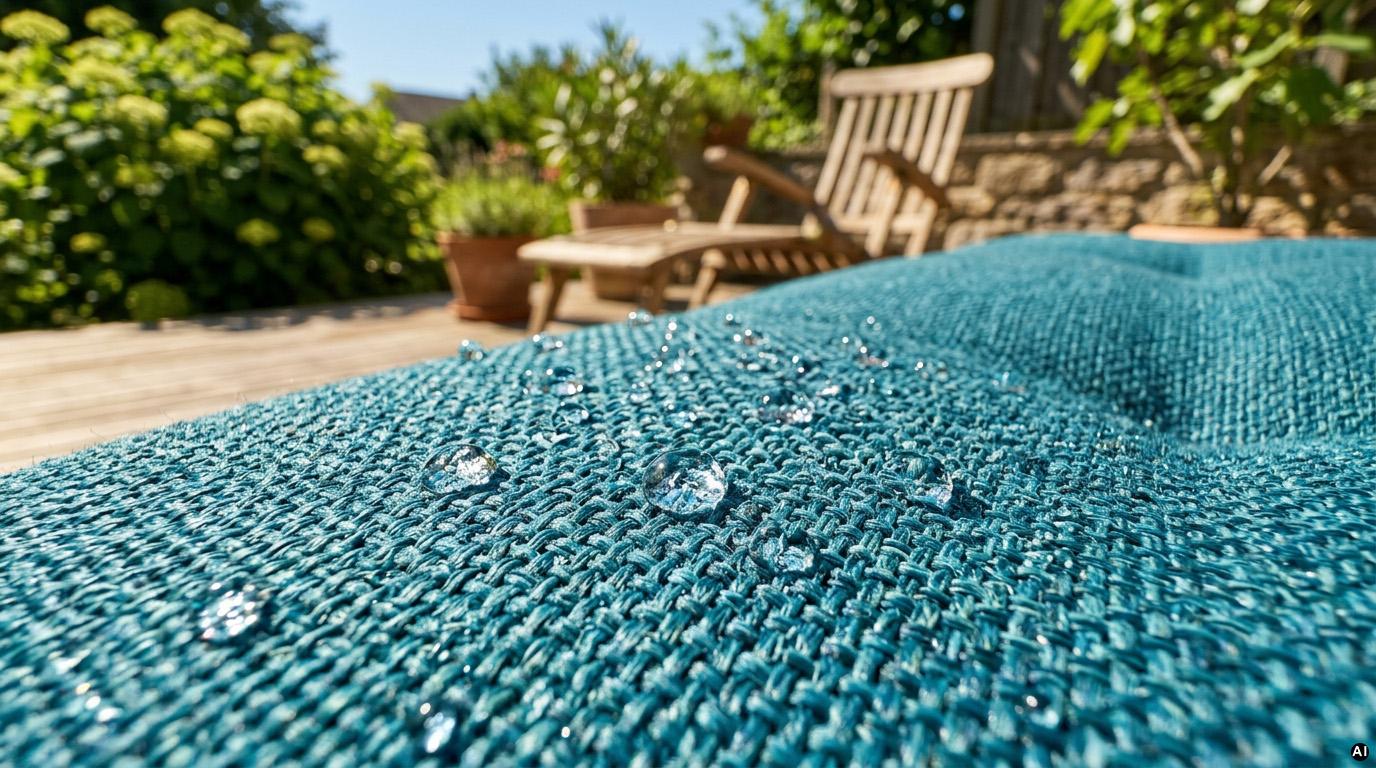
Water-Repellent Fabrics
Water-repellent means that drops bead up and roll off. The fabric still breathes. Moisture from the cushion can escape, so mould and musty smells do not form.
For garden furniture, boats and conservatories, this is a must. It also helps in the kitchen, where a glass of juice can tip over at any time.
Fabrics with Fire Safety Certificates
Public spaces have strict rules. Hotels, restaurants, cinemas and ships need fabrics with fire safety certificates. In Europe, EN 1021 parts 1 and 2 are common tests for upholstered furniture. Other markets have their own standards, such as BS 5852 in the UK. Marine use often calls for IMO approval.
Always ask for the certificate. It is your proof for authorities and insurers if something happens.
| Feature | What to look for | Best for |
|---|---|---|
| UV protection | Lightfastness 7+ outdoors, 5+ indoors | Garden, boat, conservatory |
| Easy clean | Cleans with water only | Family homes, restaurants, corner benches |
| Water-repellent | Drops bead up, fabric breathes | Patio, terrace, boat |
| Fire safety | EN 1021-1/-2, BS 5852, IMO | Hotels, offices, ships |
| Rub count | Martindale value to match the use | Sofas, chairs, contract use |
The Benefits Check: Why Recycled Fabrics from ProjectLeather Stand Out
Recycled fabrics are no longer a compromise. They match new fabrics in feel and durability. Often they are even tougher. The yarns are made for heavy use. At ProjectLeather, we combine this technology with true workshop quality.
Eco-Friendly Production
Recycled yarns can be made from used plastic bottles. This saves oil, water and energy in production. Waste becomes a raw material.
Full Performance
UV protection, easy clean and water-repellent finishes all work on recycled fabrics too. You give up nothing.
Supple Feel
The fabric is soft and pleasant to touch. It cuts, sews and stretches cleanly over edges.
Exactly by the Metre
Order the amount you need. From a single DIY cushion to a large contract job.
Endless Design Choices
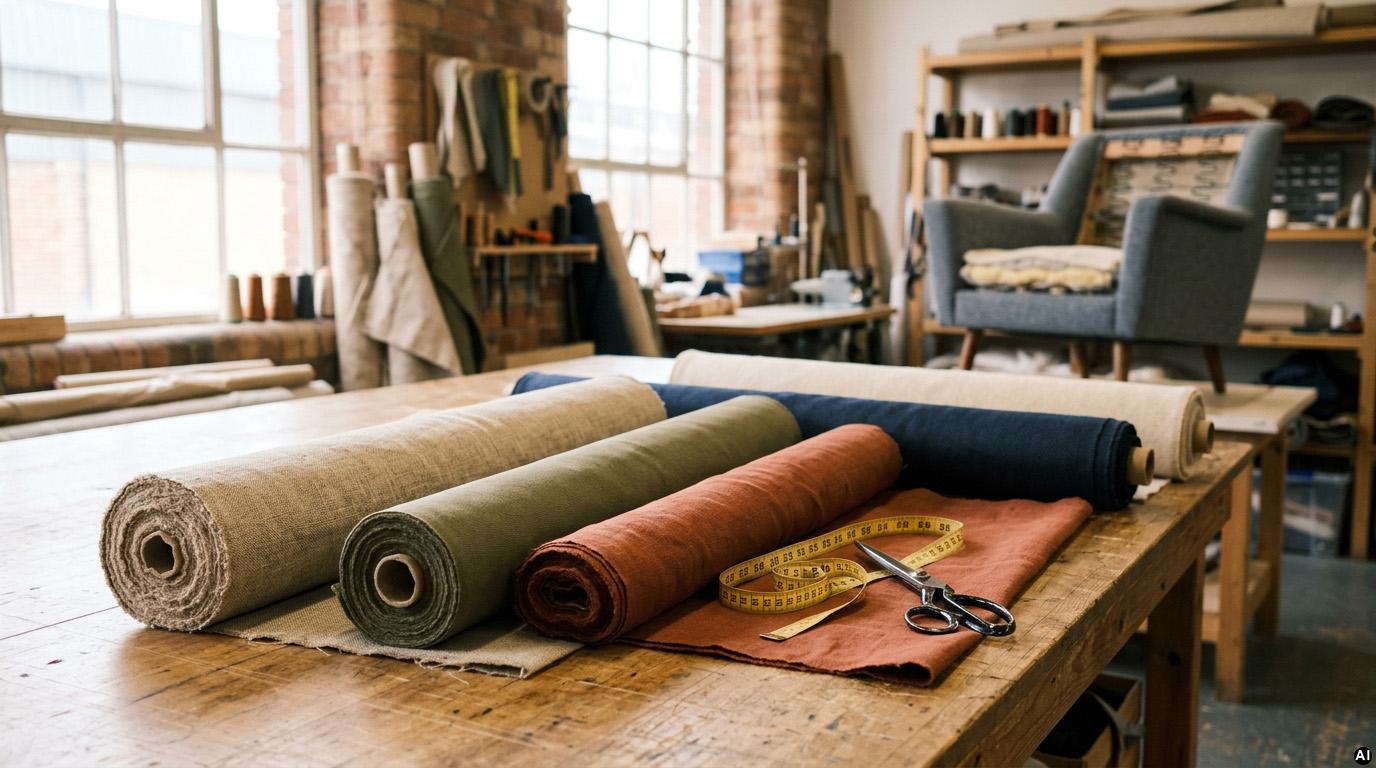
Colour is emotion. Warm terracotta feels welcoming. Deep blue calms. Fresh green brings energy. That is why we offer a huge range of colours, from soft natural shades to bold accent tones. Our fabrics suit a country cottage just as well as a city loft.
Embossing for Texture and Character
Embossing gives a fabric surface depth. It catches the light and invites touch. A fine texture, a classic pattern or a custom motif can make a piece truly unique. For period fabrics and contract projects, embossing is a strong design tool.
How to Choose the Right Colour
- Always check colours in daylight. Artificial light changes the tone.
- Hold the fabric next to your floor, walls and wood. See if it all works together.
- Light shades open up small rooms. Dark shades look elegant and hide marks.
- Outdoors, bold colours are fine. With good UV protection, they stay bright.
Sustainability as a Modern Lifestyle
Living sustainably does not mean giving up beautiful things. It means choosing with care. A fabric that lasts for years is already a sustainable choice. Made from recycled fibres, it does even more good.
More and more people reupholster old furniture instead of throwing it away. A family piece with a fresh cover keeps its story alive. That is upcycling at its best, and it shows real values.
What You Can Do
- Buy fabric by the metre in the exact amount to cut waste.
- Choose lasting quality over quick replacements.
- Pick easy-clean fabrics and use fewer cleaning products.
- Give old furniture a second life with a new cover.
Quick Answers to Common Questions
Can I use outdoor fabrics indoors?
Yes. Outdoor fabrics resist fading and are easy to clean. That makes them great for kitchens, kids' rooms and conservatories too.
Are recycled fabrics less durable?
No. Recycled yarns now reach the same rub counts as new ones. What counts is the weave and the finish, not where the fibre came from.
Which fabric suits a corner bench?
Pick an easy-clean fabric with a high rub count. Spills wipe off fast, and the cover stays smart even with daily use.
Conclusion: The Right Fabric Makes All the Difference
Upholstery fabrics for the sofa, outdoor fabrics for the garden, baroque fabrics for an antique piece: the fabric shapes the result. Look for UV protection, easy cleaning and fire safety where needed. Care for your cover a little, but often.
With recycled fabrics from ProjectLeather, you choose something that looks good, feels good and lasts. Order your samples and feel the quality for yourself.
Order samples now