
25/03/2026
Leather vs. Synthetic: Why Quality Matters for Makers
Why Quality Makes the Difference for Your Project
Anyone facing a new Do-it-yourself project – whether it is the upholstery of a beloved armchair, the manufacturing of a robust bag, or the construction of individual boat seats – is inevitably faced with the question of material: Genuine leather or the synthetic alternative?
While artificial leather often tempts with a low price, genuine leather is a high-quality natural material that tells stories. In our online shop, makers find exactly the quality that sets a project apart from the crowd. But what are the technical and haptic differences really? We have analyzed the most important aspects for you.
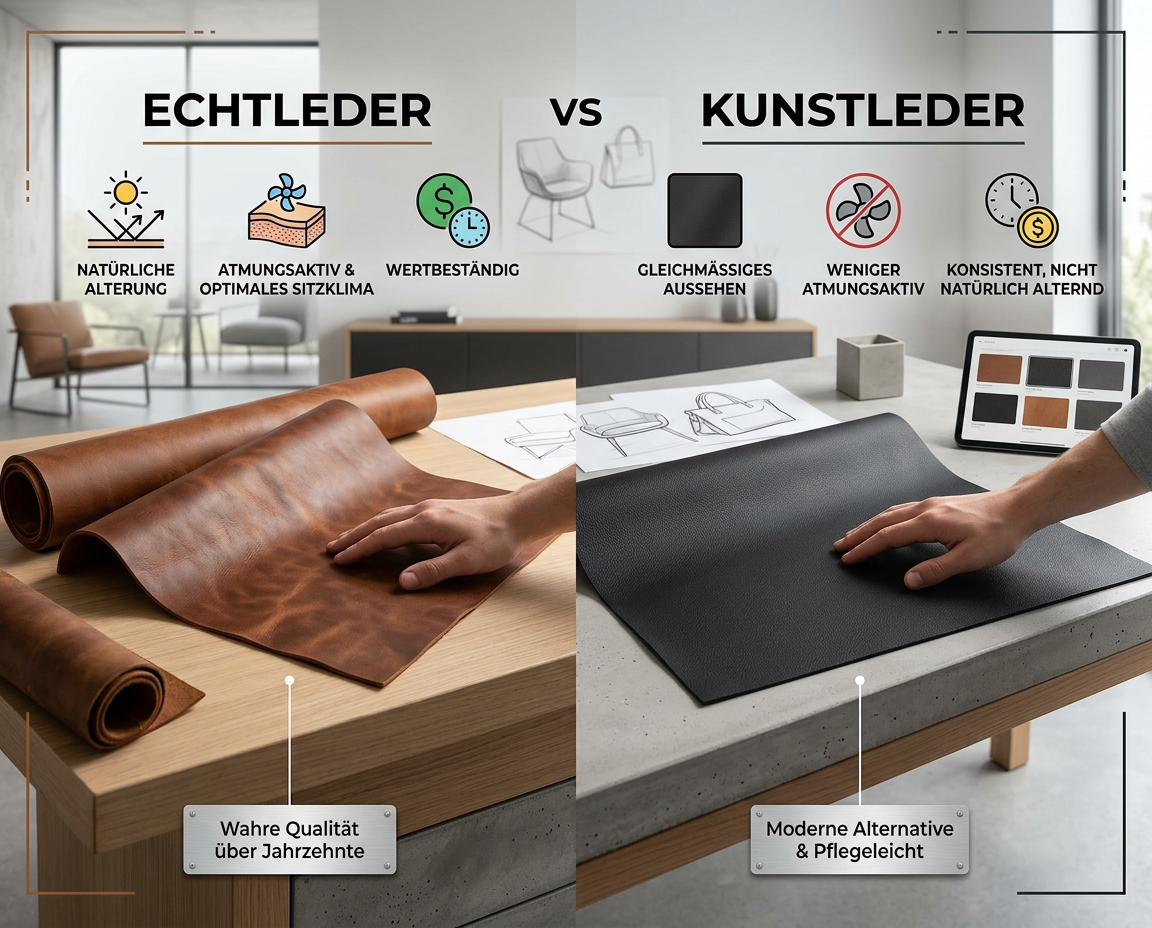
1. The Patina: A Material that Matures with You
Artificial leather usually consists of a textile carrier fabric coated with a layer of PVC or polyurethane (PU). The problem: this layer is rigid. Over time, the plasticizers evaporate, the surface becomes brittle and peels off unsightly – a process that cannot be reversed.
Genuine leather, on the other hand, is a living material. Whether cowhide, furniture leather, or fine nappa leather – through use, UV light, and touch, it develops an incomparable patina. It gains character, becomes softer, and gains charisma. A high-quality leather product does not get "old" over the years, but becomes a valuable unique piece.
2. The Microclimate: Breathability & Comfort
High-quality leather hides have a natural fiber structure that can absorb moisture and release it back into the environment. This ensures an excellent temperature balance – a decisive advantage in upholstery work and furniture making. In summer, you don't stick to a genuine leather armchair, and in winter, the material quickly adapts to body heat.
Synthetic fabrics, on the other hand, often act like a plastic film: the lack of air circulation leads to an unpleasant sweating effect, especially with clothing or seating furniture.
3. Processing for Makers: From Upholstery Leather to Craft Leather
For your projects with ProjektLeder, processability is crucial. Genuine leather is more forgiving: it can be stretched, skived wonderfully at the edges, and the cut edges do not fray. Whether you process whole leather hides or use craft leather and leather scraps for smaller accessories – the quality remains tangible.
Artificial leather tends to tear at the seams when the tensile load becomes too high, as the carrier fabric gives way under the plastic layer. Anyone who values longevity and a professional feel therefore relies on the original.

The direct comparison
Genuine leather
- Extremely durable (decades)
- Unique haptics & scent
- Breathable & temperature-regulating
- Repairable & easy to maintain
- Higher purchase price
- Natural characteristics (scars, insect bites)
Artificial leather
- Very cost-effective
- Perfectly uniform surface
- Wide selection of colors
- Short lifespan
- Not breathable (risk of sweating)
- Not biodegradable
Our Conclusion
Anyone implementing a project that involves a lot of time and work should not compromise on the material. Genuine leather is not a short-lived trend, but a faithful companion for generations. It significantly enhances every workpiece and offers a level of comfort that synthetic fabrics simply cannot match.
Discover our range of finest genuine leather and artificial leather for your next project now!