
14/11/2026
Upholstery Faux Leather: How to Choose the Right Cover for Sofas, Chairs and Benches
Upholstery faux leather and the joy of a good seat
We remember furniture by how it feels. The chair where we read late at night. The bench where the family sits for Sunday lunch. When the cover is right, we hardly think about it. When it is wrong, we notice every day.
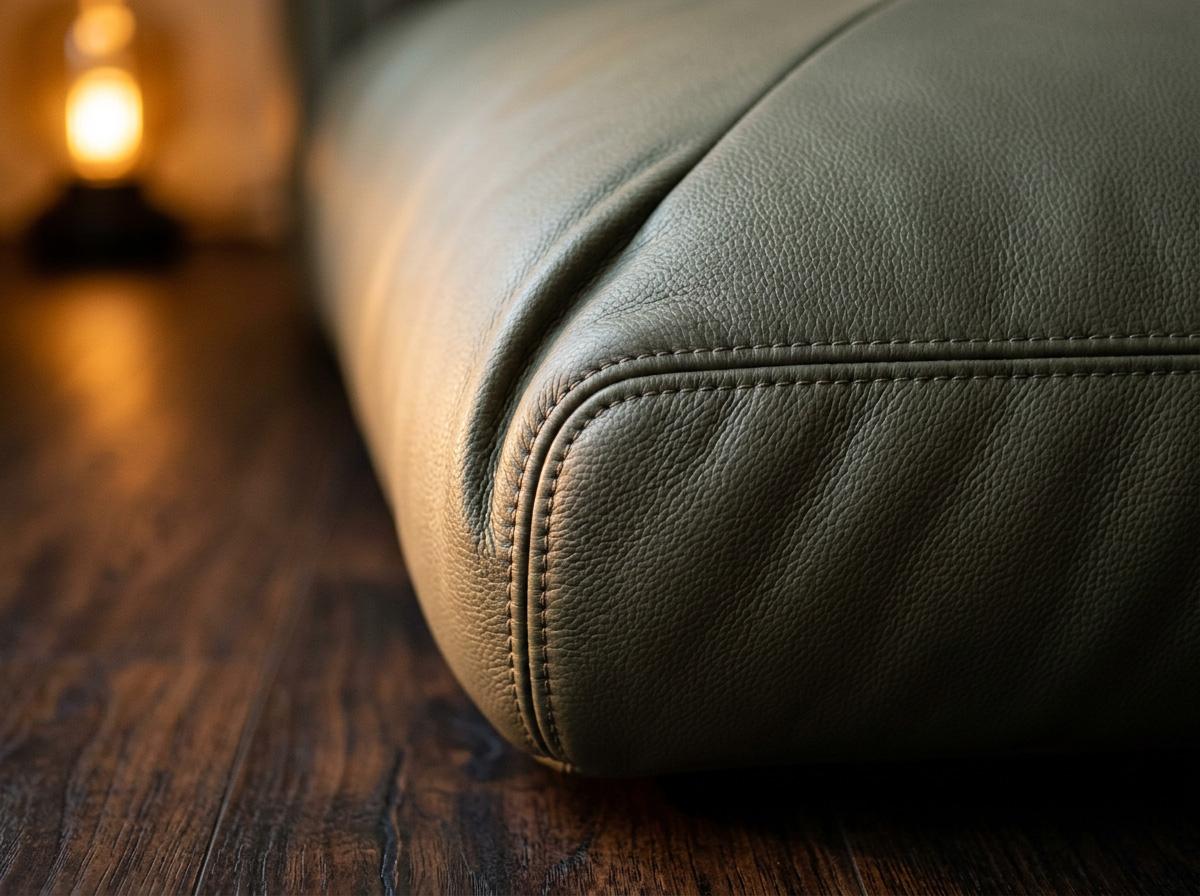
Upholstery faux leather gets a lot right. It looks like real leather, feels soft and supple, and shrugs off daily life. Spilled juice, muddy paws or sticky fingers? A damp cloth usually does the trick. That is why it has become a favourite with families, hotels and upholstery workshops alike.
Below you will find the key quality checks, a simple care routine and four ProjectLeather collections that suit very different projects.
Five things to check before you buy
| What to check | What good looks like |
|---|---|
| Backing fabric | Firm, with a little stretch for tight wrapping |
| Rub count | 35,000 cycles or more for home seating |
| Width | 140 cm, so long benches need fewer seams |
| Fire tests | Test reports such as BS 5852 and EN 1021 |
| Chemistry | Free of phthalates and harmful dyes |
Faux leather made for bags or jackets is often thinner and less tough. For furniture, always pick a true upholstery grade. It is built to take pressure, pulling and constant rubbing, and to be stapled tight over foam and wood. The difference shows after a year of daily use, not on day one.
How the material is built
The base layer
On the back you will find a woven or knitted polyester base. This layer gives strength and decides how well the cover follows curves.
The coating
PVC makes the cover tough and easy to clean. PU feels lighter and often softer. Many grades blend both.
The top finish
A thin lacquer carries the embossed grain. It controls sheen and helps resist stains and wear.
Together, these three layers turn a technical material into something that feels close to leather. The better they work together, the longer the cover stays smooth, supple and free of cracks.
Four surfaces, four moods
Milled grain
A fine, even pebble grain, like quality cowhide. Elegant and forgiving with small scratches.
Soft nappa
Very soft with a classic leather grain. Ideal for lounge chairs and hotel seating.
Smooth
Clean and modern. Perfect for minimal designs and surfaces that need quick wiping.
Quilted
Padding is stitched in for a sculpted, cushioned look. Great for headboards and feature walls.
Martindale: matching rub count to use
- Cushions and wall panels20,000+
- Home sofas and armchairs35,000+
- Dining chairs and kitchen benches50,000+
- Bars, hotels and public spaces100,000+
Four upholstery faux leather collections we recommend
You can order every one of them by the metre. Each has its own clear strength.
Softy: the soft all-rounder
Best for: sofas, armchairs, motorhomes.
A fine milled grain and a very soft hand. Over 100,000 rub cycles, fire-tested to BS 5852 and EN 1021-1, and 31 colours from pure white to midnight blue.
Skai® Sotega: true nappa feel
Best for: hotels, restaurants, lounges.
Soft-nappa feel with a classic leather grain. So convincing that many people take it for the real thing. A broad colour range for contract work.
Pure Kombination: two looks, one shade
Best for: headboards, wall panels, benches.
Every shade comes twice: quilted with about 10 mm padding and smooth at 1.2 mm. Light fastness reaches the top rating of 8, so it works outdoors too.
Mediterran: made for the weather
Best for: boats, garden seating, conservatories.
Stands up to UV, salt water and frost down to −23 °C. A smart choice wherever seats meet the weather. Bring cushions inside over winter to make them last even longer.
Quality features that make the difference
- UV protection: Sunlight fades weak dyes. Look for a light fastness of 5 or more indoors, and 7 to 8 for patios and conservatories.
- Easy clean: For everyday dirt, a damp microfibre cloth with nothing added is all it takes.
- Water-repellent: Drinks stay on the surface, so the foam underneath stays dry.
- Fire certificates: Bars, hotels and public venues often need tested covers. In the UK, BS 5852 is the usual reference. Always confirm the level needed with your local fire officer.
Care that keeps the cover looking new
- Weekly: dust with a soft, dry cloth.
- As needed: go over it with a microfibre cloth dipped in lukewarm water.
- For marks: use a mild, neutral soap, then rinse with clean water.
- Now and then: refresh with a faux leather care kit such as SEDICUR®.
A little routine goes a long way. Covers that are cleaned gently and kept out of harsh sun often look fresh for many years. That protects the value of your furniture and saves you from early replacement.
Why ProjectLeather for upholstery faux leather
Cut to your length
Order what one stool needs, or enough for a full seating area. No waste, no guesswork.
Clear test data
Rub count, light fastness and fire results are listed for each collection.
Fast dispatch
Many colours are in stock and ship within days.
Friendly advice
From DIY fans to upholstery workshops, we help you pick grade, colour and quantity.
Colour and texture for every interior
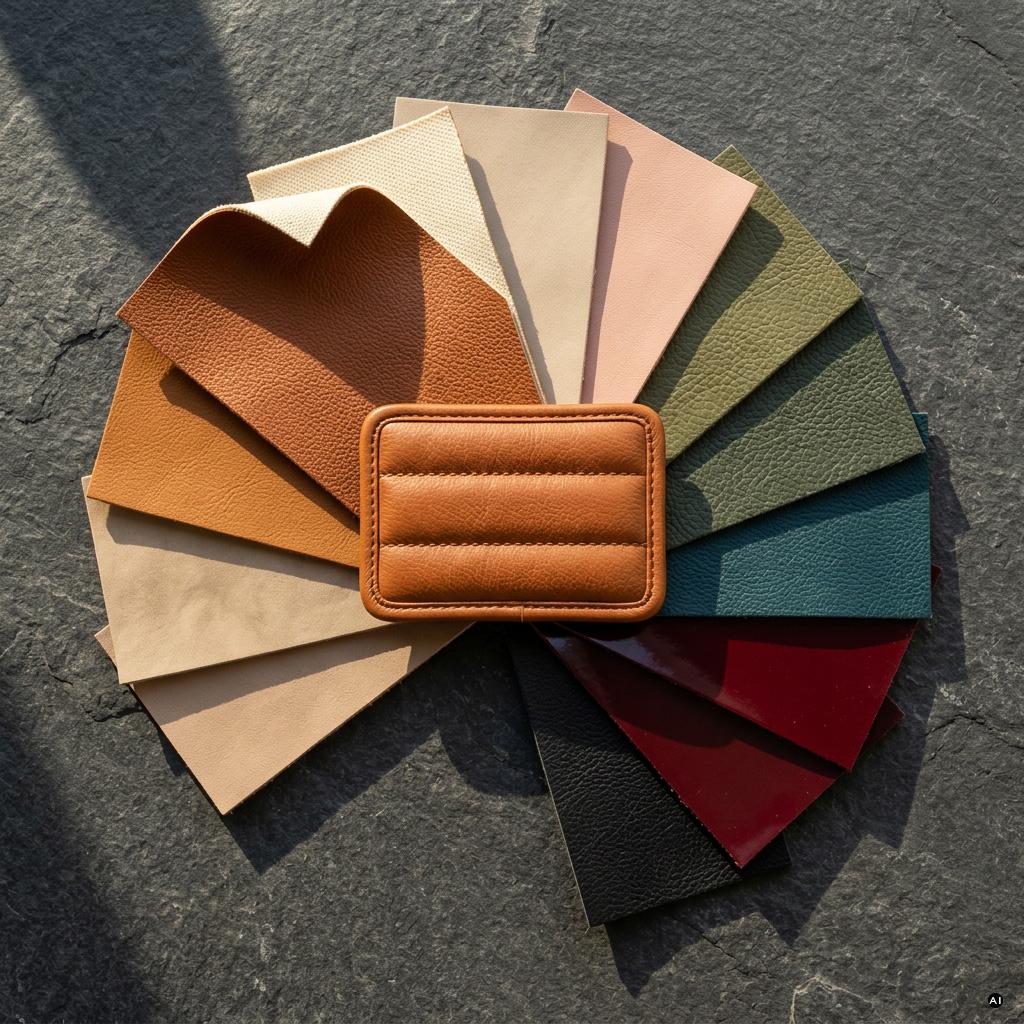
Softy alone comes in 31 shades, and Skai® Sotega adds many more. Here are three easy starting points. Light tones make small rooms feel bigger, while darker shades hide everyday marks.
Embossing adds character
The embossed grain shapes how light moves across the surface. A fine grain feels calm, a bold one feels lively. Quilting adds depth and comfort. For dramatic walls and headboards, embossed designer leathers offer even stronger patterns.
Reupholster instead of replace
Many older sofas and chairs have solid frames that will last for decades. A fresh cover gives them a second life. You save money, keep good furniture out of landfill and end up with a piece nobody else has. A 1960s armchair in a fresh olive or moss tone suddenly looks bang up to date.
Production has moved on too. According to the maker, Softy comes from European production with high environmental standards. Many grades are phthalate-free. And the longer a cover lasts, the smaller its footprint per year of use. Durability is the quiet side of eco-friendly production.
Where upholstery faux leather shines
| Setting | Why it works |
|---|---|
| Family living room | Wipes clean after kids and pets |
| Kitchen bench | Shrugs off crumbs and spills |
| Motorhome and caravan | Light, practical, dries fast |
| Classic car | Stretchy enough for seats and door cards |
| Bar and restaurant | High rub count and fire tests |
| Boat and patio | UV- and salt-water-resistant grades |
When upholstery faux leather is the smart choice
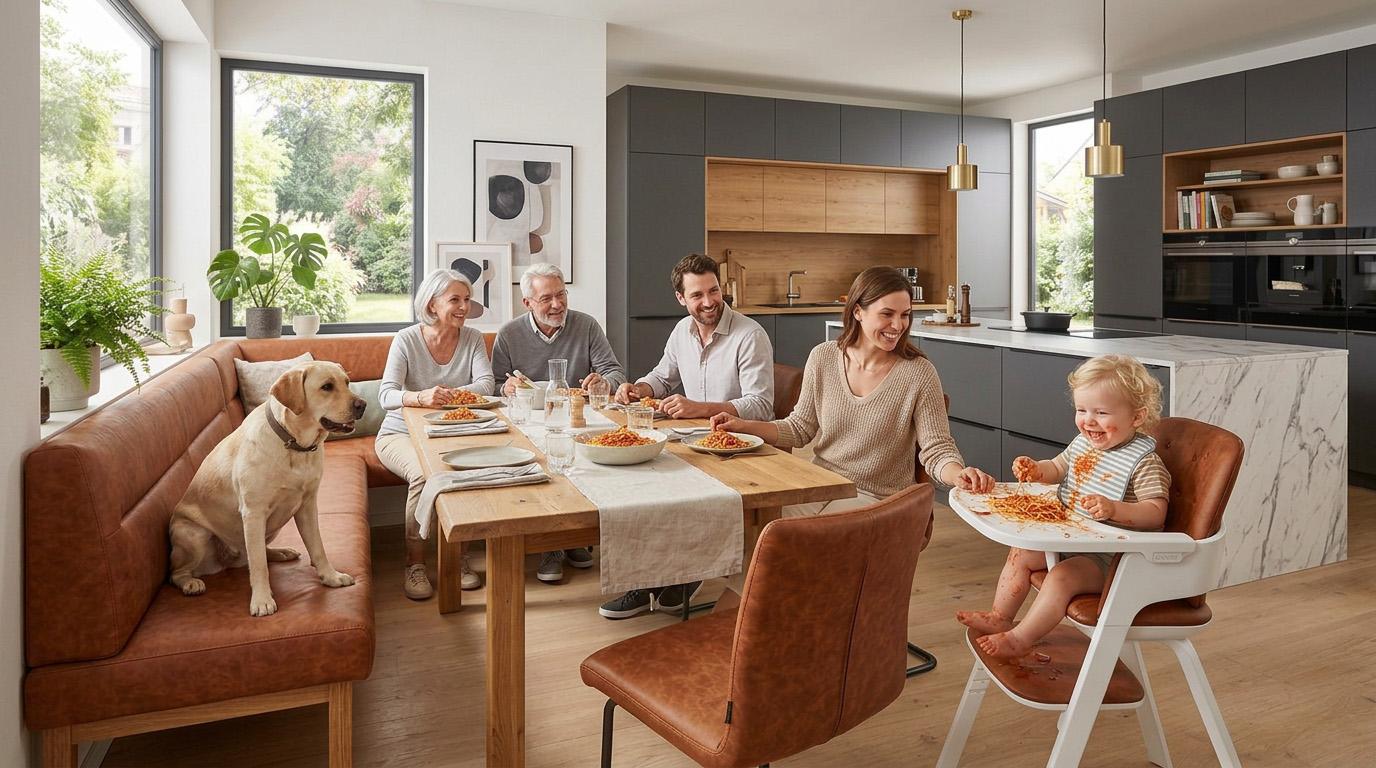
- Your home has small children, dogs or cats.
- Seats need frequent cleaning, as in cafés, offices or waiting rooms.
- You love the look of leather but prefer an animal-free material.
- The cover must cope with damp, as in a motorhome, on a boat or by the pool.
- You want a quality result on a sensible budget.
If you dream of a deep, cosy sofa to sink into, a soft upholstery fabric may suit you better. Both can also work side by side.
Faux leather, real leather or fabric?
Each material has its place. This quick comparison helps you decide.
| Point | Upholstery faux leather | Real leather | Furniture fabric |
|---|---|---|---|
| Cleaning | Wipe with water | Needs special care | Often needs stain remover |
| Colour range | Very wide, even tone | Natural variation | Wide, with patterns |
| Price per metre | Moderate | High | Low to high |
| Animal-free | Yes | No | Usually yes |
| Feel | Smooth, supple | Warm, ages with patina | Soft, textile |
Many people mix materials. A faux leather seat with fabric back cushions is easy to clean and still cosy.
Common mistakes and how to avoid them
Cutting too tight
Without enough margin, the cover will not hold well underneath. Leave extra and trim later.
Pulling unevenly
Too much tension on one side causes diagonal creases. Always work on opposite sides in turn.
Using pins
Every hole stays visible. Clips or masking tape are the better choice.
Working in the cold
In a chilly garage, the material turns stiff. Room temperature makes everything easier.
DIY: recover a dining chair seat
A chair seat is the perfect first project. You need a staple gun, sharp scissors and an hour or two.
- Unscrew the seat and pull out the old staples.
- Replace the foam if it has gone flat.
- Cut the faux leather with 6 to 8 cm extra on every side.
- Warm it gently with a hairdryer to make it more pliable.
- Fix one staple at the centre of the front, back, left and right. Then fill the gaps outwards.
- Pleat each corner in small folds, cut off what is left over and refit the seat to the frame.
One metre at 140 cm wide usually covers two to four seats, depending on size. Once you have done one chair, the rest of the set goes much faster.
Your questions answered
Does faux leather get sticky in summer?
Grained surfaces stick to skin much less than smooth ones. On very hot days, a throw adds extra comfort.
Can I sew it on a home machine?
Yes. Use a leather needle, a long stitch of about 3.5 mm and a roller or Teflon foot. Hold layers with clips, since pin holes stay visible.
How much do I need for a sofa?
That depends on size, shape and the number of cushions. Measure every part, or send us photos with sizes. We will gladly help you estimate the length.
Will it crack over time?
Good upholstery grades stay supple for years. Regular cleaning, a little care product and no harsh solvents keep the top coat healthy.
Is it suitable for homes with pets?
Hair wipes off easily. With sharp claws, choose a grained finish, as small scratches show less.
Conclusion: upholstery faux leather for furniture that lasts
Upholstery faux leather gives you the look of leather with the toughness of modern furniture fabrics. Check the feel, the rub count, light fastness and fire tests, and you will enjoy your cover for years.
Want to feel the difference first? Order samples and hold them up against your floor, walls and wood. We are happy to help with your project.
Request / order samples