
07/11/2026
Upholstery Fabrics: Weaves, Ratings and Care Explained
The Piece of Furniture That Feels Like Home
Think of the seat you head for at the end of the day. Maybe it is a deep sofa, maybe a favourite armchair by the window. You know how it feels before you even sit down. It is your spot. That feeling comes mostly from the fabric.
Upholstery fabric is what we touch, see and live with every day. We notice it more than we think. A soft velvet feels rich and calm. A nubby bouclé adds warmth. A crisp linen look keeps a room fresh. The fabric gives a piece of furniture its personality.
So a new cover is a real chance to change a room. It can make an old piece feel new again. This guide walks you through what matters, from fibres and weaves to care and colour. It is written for home sewers and for pros.
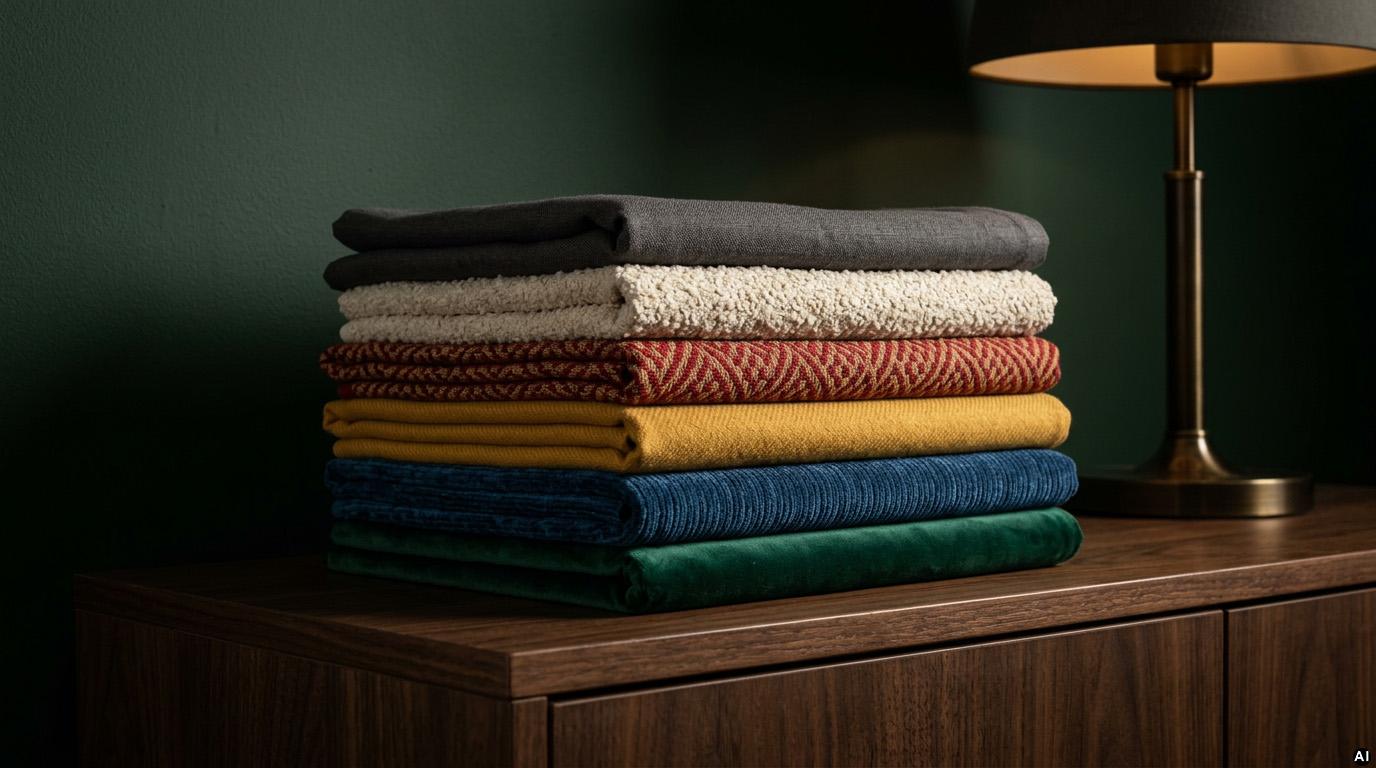
Inside the Fabric: What Makes Upholstery Different
Upholstery fabrics work much harder than fabrics for clothes. They are pressed, stretched and rubbed for years. That is why they are denser, heavier and often given a special finish.
Fibres at a Glance
- Wool: warm, breathable and naturally flame-resistant Natural
- Cotton: soft and pleasant, but takes stains more easily Natural
- Linen: strong, cool to the touch and full of texture Natural
- Polyester: very hard-wearing, holds its shape, easy to clean Synthetic
- Acrylic: keeps its colour well, even in bright light Synthetic
Many modern fabrics mix both kinds of fibre. The result feels good and still copes with daily wear. In production, the blend is tuned to how the fabric will be used.
Six Popular Weaves
Plain Weave
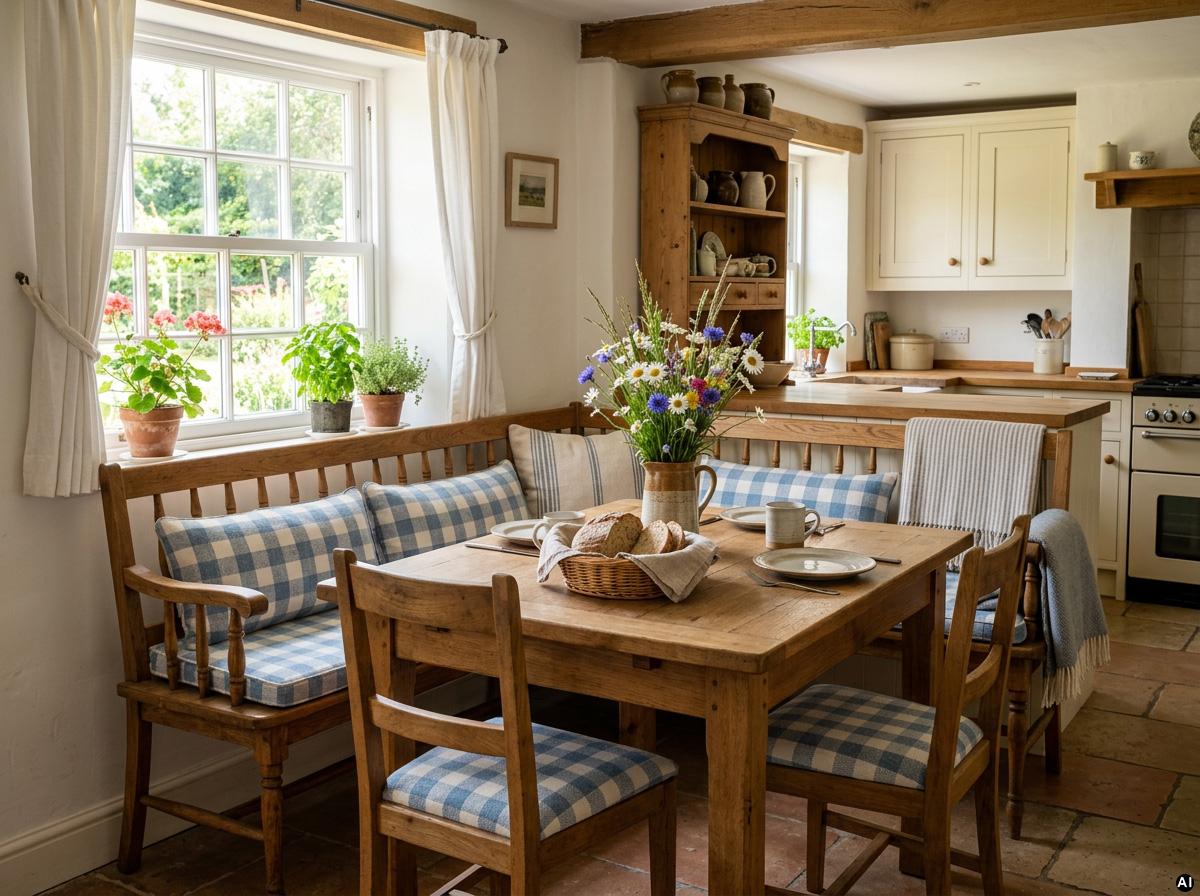
Smooth, tight and versatile. Add checks and you get classic country-style fabrics.
Velvet
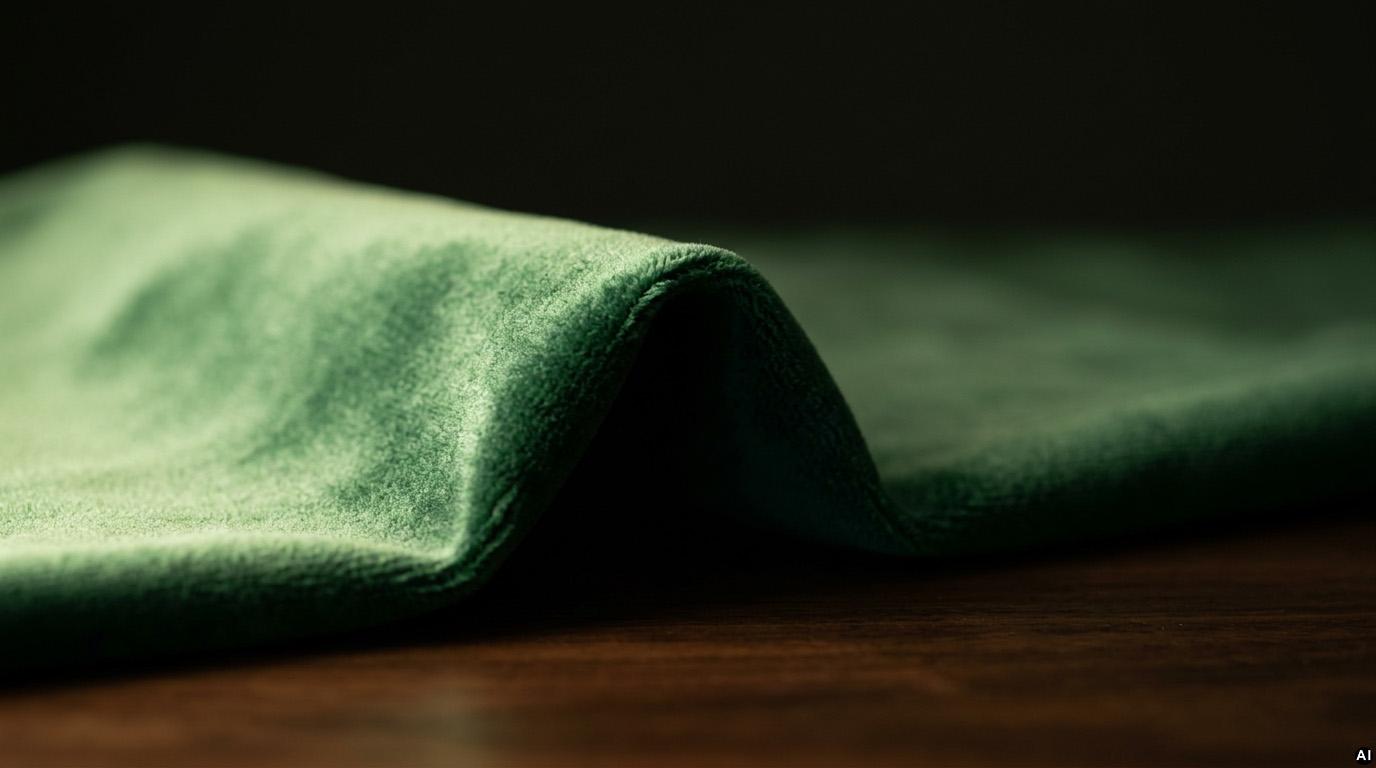
A short, dense pile with depth and a soft sheen. It feels luxurious under the hand.
Bouclé
Tiny yarn loops create a cosy, textured surface. Perfect for curved, modern shapes.
Chenille
Fuzzy, caterpillar-like yarn that invites you to curl up.
Jacquard
Patterns woven right into the cloth. Typical for baroque and period fabrics.
Wool Fabrics
Dense, warm and robust. Tweed and herringbone add a timeless touch.
Reading the Label: Four Key Ratings
A fabric data sheet tells you more than any sales pitch. These four values are worth checking.
| Rating | What it shows | Good value for home use |
|---|---|---|
| Rub count | Abrasion resistance (Martindale test) | 25,000+ |
| Pilling grade | How easily bobbles form, scale 1 to 5 | 4 or higher |
| Lightfastness | How well the colour resists light, scale up to 8 | 5 or higher |
| Weight | Density in grams per square metre | about 350 to 650 g/m² |
Fabric Finder: The Right Fabric for Every Piece
How a piece is used matters more than anything else. Use this table to find a starting point.
| Furniture and use | Suitable fabrics | Rub count |
|---|---|---|
| Family sofa with kids and pets | Tight plain weave or chenille with easy-clean finish | 40,000+ |
| Reading chair | Velvet, bouclé, wool fabrics | 25,000+ |
| Headboard or ottoman | Finer qualities, decorative fabrics with a firm hand | 10,000+ |
| Dining chairs and corner benches | Corner bench and chair fabrics, country-style fabrics | 30,000+ |
| Hotel, office or restaurant | Performance fabrics with fire certification | 50,000+ |
| Antique or period furniture | Baroque and period fabrics, jacquard | 20,000+ |
Four Features of a Great Upholstery Fabric
UV Protection
Big windows flood rooms with light, but sunlight slowly breaks down dyes. Velvet and strong colours show it first. Choose a lightfastness rating of 5 or more for pieces near a window. Solution-dyed yarns keep their colour longest.
Easy Clean
A fine finish wraps every fibre, so stains stay on the surface. In most cases, water and a microfibre cloth are all you need. No harsh cleaners means a longer life for the fabric. Even light colours become a safe choice.
Water-Repellent
Spilled drinks bead up instead of soaking into the foam. No rings, no smells. You just wipe and go. The fabric still breathes, so it stays comfortable on warm days.
Fire Certification
Hotels, offices and restaurants must meet fire rules. European projects usually require testing under EN 1021, parts one and two. In the UK, BS 5852 applies, while US contracts often name California TB 117-2013. Always request the test report.
Care Guide by Fabric Type
Each weave has its own needs. Some like a brush, some like air. Match your care routine to your fabric and it will look good for years.
| Fabric | Routine care | For stains |
|---|---|---|
| Plain weave | Vacuum weekly | Blot with lukewarm water |
| Velvet | Brush with the pile | Blot gently, never rub |
| Bouclé | Vacuum on low power | Use little water, dry well |
| Chenille | Lift the pile with a soft brush | Do not scrub when wet |
| Wool | Air it out and brush | Cold water only, no heat |
| Jacquard | Vacuum with care | Leave to a professional |
Pilling Is Not a Fault
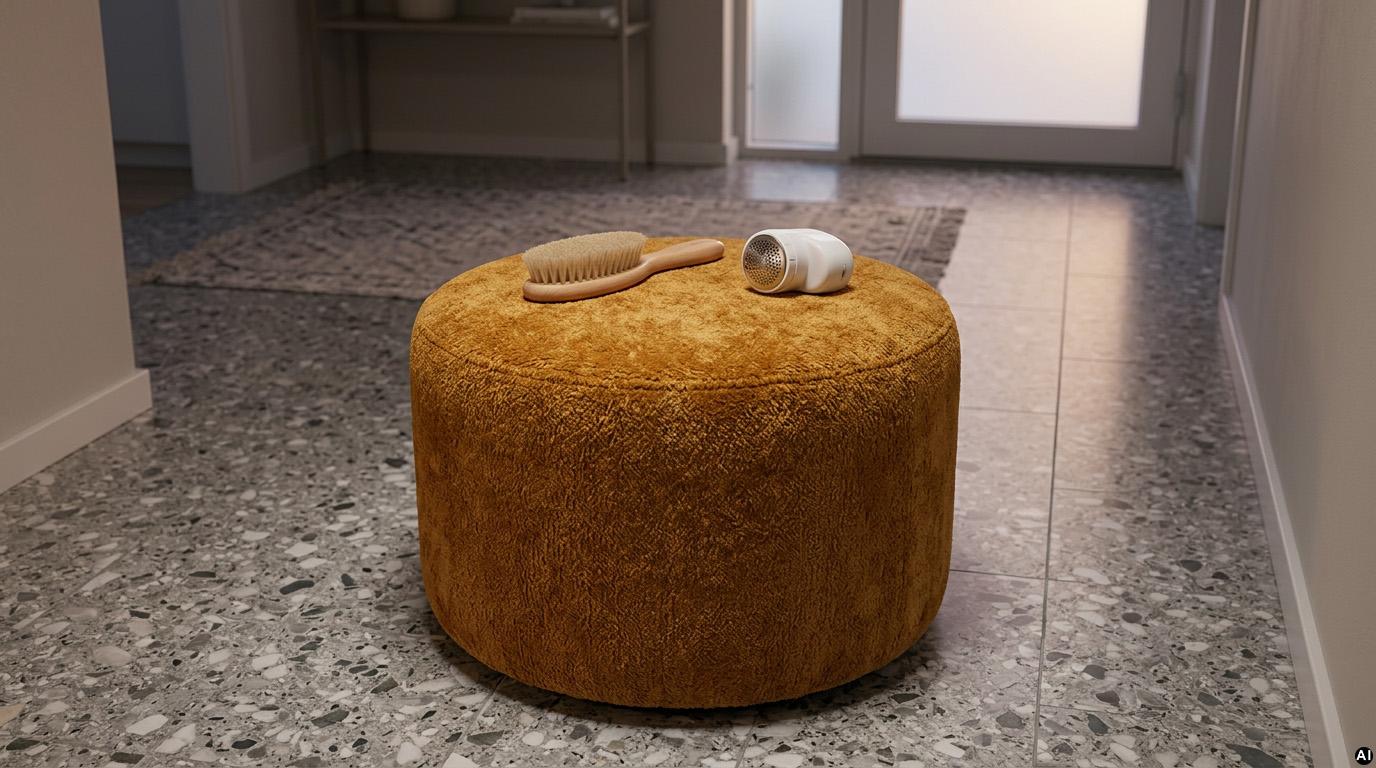
New covers often form small bobbles in the first weeks. Loose fibre ends twist together through friction. A fabric shaver removes them in minutes. After a while, the pilling usually stops on its own. Then the surface stays calm and smooth.
Care Mistakes to Avoid
The Benefits Check: Why Choose ProjectLeather Upholstery Fabrics
A good cover has to look great, feel good and last. That is not too much to ask. We build our range around exactly that.
Wide Range
Plain weaves, velvet, bouclé, chenille, jacquard and wool in one place.
Clear Data
Rub counts and features help you pick with confidence.
Smart Finishes
Many qualities resist fading, stains and spills.
By the Metre
Order what you need, from one footstool to a hotel lounge.
Easy to Work
Supple fabrics that sew and stretch cleanly for pros and DIYers alike.
Made Responsibly
We value eco-friendly production and fabrics that are built to last.
Colour, Texture and Embossing
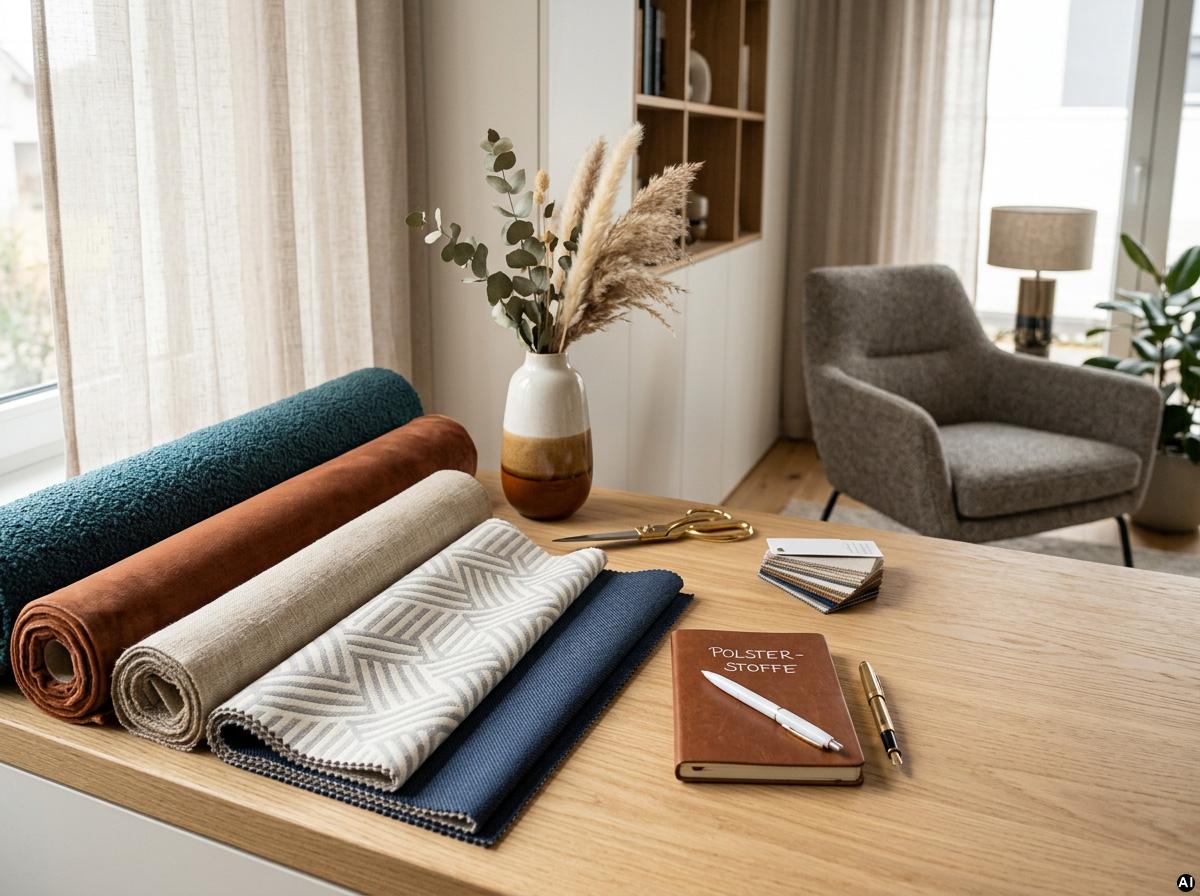
Our colour range is huge. Soft neutrals like putty, greige and stone feel calm and timeless. Jewel tones like emerald, sapphire and ruby make a bold statement on velvet. Earthy shades like ochre, cinnamon and olive bring warmth to any room.
How to Use Colour Well
- Keep large sofas neutral and change the look with cushions. It is cheap and quick to do.
- Let a single armchair be the bold accent. One brave piece is often enough.
- View velvet from different angles, as its shade shifts with the light.
- Use matching decorative fabrics for curtains to pull the room together.
Embossed Upholstery
Embossing turns a flat surface into a fine relief. On velvet, it creates elegant patterns that change with the light. Subtle textures, diamonds or floral motifs are all possible. It is a refined choice for period furniture and high-end interiors. Even a plain colour gains real depth.
Reupholster, Don't Replace
A well-made sofa has a solid frame and good springs. Both can last for decades. That is worth keeping. What wears out is the cover and the padding. Both can be replaced. Renewing them gives you a piece that feels new, without the waste of buying new.
Reupholstering fits a modern, mindful lifestyle. It is about quality over quantity and keeping pieces you love. Pair it with a long-lasting fabric from eco-friendly production and the choice makes sense on every level.
Your Path to a New Cover
- Check the frame and springs, ideally with an upholsterer.
- Choose weave, colour and ratings based on how the piece is used.
- Work out how much fabric you need, including pattern repeat.
- Have it reupholstered or do it yourself.
- Enjoy it for years with the right care.
Buying Checklist
- Who uses the piece, and how often?
- Does it stand in direct sun?
- Are there kids or pets at home?
- Do rub count and pilling grade match the use?
- Is a fire certificate required?
- Have you seen a sample in your own light?
Mini Glossary
- Pattern repeat
- The length after which a pattern repeats. It affects how much extra fabric you need.
- Pile
- The upright fibres on velvet that give depth and sheen.
- Nap direction
- The way the pile lies. All pieces must be cut facing the same way.
- Pilling
- Small bobbles of fibre that form on the surface through friction.
- Finish
- The final treatment in production, such as stain or fire protection.
Workshop Tips for Upholsterers
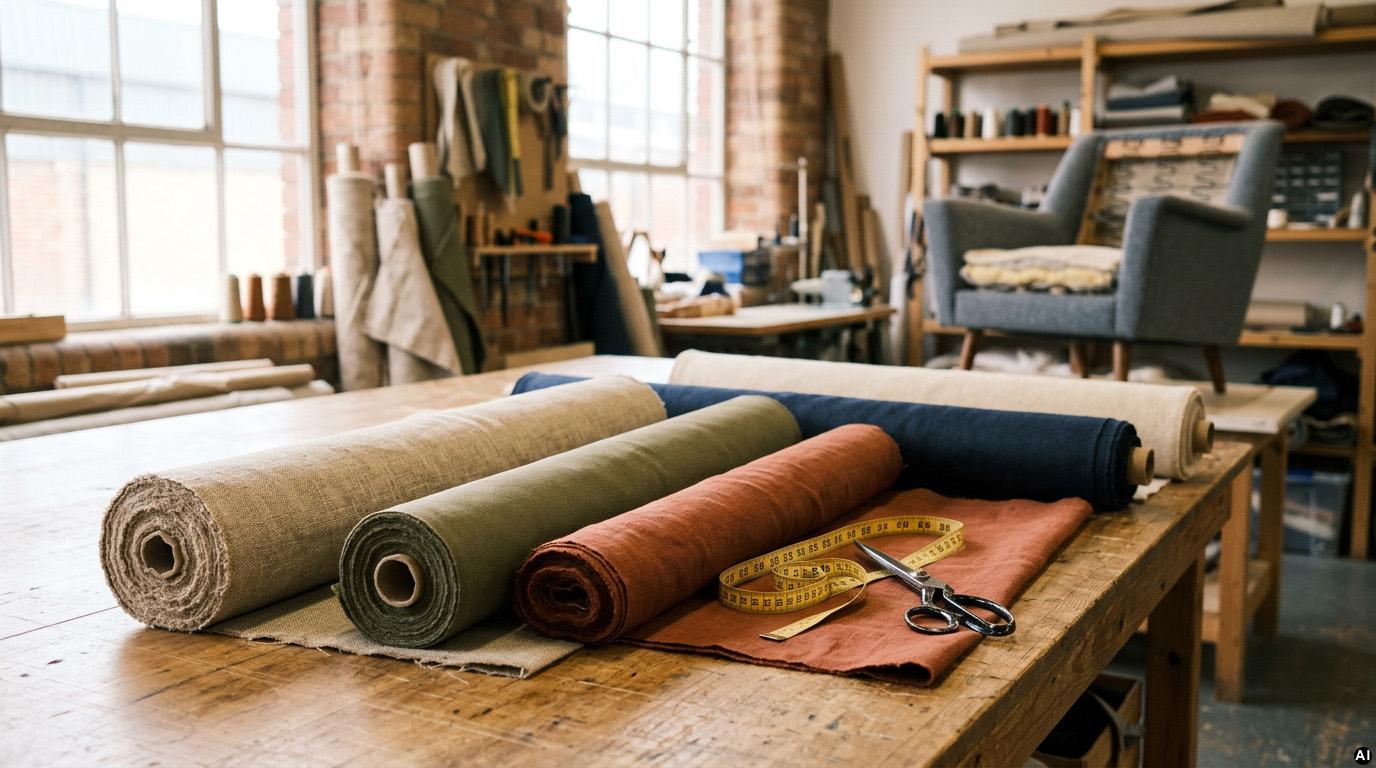
Each weave behaves a little differently on the cutting table. These tips help you get a clean result.
- Velvet: cut every piece with the pile running the same way, or seat and back will look like two shades.
- Bouclé: finish raw edges quickly, as the loops can unravel. A slightly longer stitch helps.
- Jacquard: centre the motif before cutting and allow extra fabric for the repeat.
- Wool: a little steam helps you ease the fabric smoothly around curved arms.
Frequently Asked Questions
Is velvet a good choice for a family sofa?
Yes, if you choose a sturdy furniture velvet. Modern polyester velvets are very tough and often have a stain-resistant finish. Look for at least 40,000 rubs. Then it will cope with daily family life.
Is bouclé hard to look after?
Not really. Regular gentle vacuuming keeps it fresh. The main risk is pet claws catching in the loops, so think twice if you have a cat.
Which fabric is easiest to clean?
A tightly woven synthetic with an easy-clean finish. Many everyday stains come off with just water and a soft cloth.
Can I use wool fabrics in a hotel or restaurant?
Yes. Wool is naturally flame-resistant and very durable. You will still need a valid fire test certificate for public spaces.
How do I test a sample properly?
Place it on the actual piece of furniture. Look at it in the morning, at noon and under lamp light in the evening. Run your hand over it in both directions. Sit on it if you can.
Conclusion: The Cover Makes the Piece
Upholstery fabric shapes how furniture looks, feels and lasts. Pick the weave for your style and the ratings for your use. Good lightfastness, simple cleaning and, for public spaces, a fire certificate make life easier.
At ProjectLeather you will find upholstery fabrics for every project, from a DIY cushion to a hotel lobby. Order samples and see colour and texture on your own furniture. Then take your time and choose. A good choice will serve you for many years.
Order upholstery samples