
22/03/2026
The Art of Leather Tanning: History & Innovation
Introduction: The Art of Leather Manufacturing
Animal hides are classified according to various characteristics, during which animal hides are processed into leather. The process of leather tanning involves the tanning of animal hides to make them durable and protect them from rotting.
Leather tanning is a centuries-old craft that is still carried out in a traditional manner today. Various methods such as vegetable tanning, mineral tanning, and synthetic tanning are used. Each method has its own advantages and disadvantages and is selected according to the desired end product.
Tanning is an elaborate process that can take several weeks. During this process, the animal hides are soaked in water, tannins, and other biological chemicals to make them supple and durable. After soaking, the hides are dried, dyed, and further processed until they have finally become high-quality leather.
Leather manufacturing is an art that requires a lot of experience and specialized knowledge. Only with the right know-how and the suitable materials can high-quality leather be produced. Through the careful selection of tanning methods and substances, the quality of the end product can be significantly influenced. Perfect products are thus achieved with the perfect leather for the respective application, such as leather for upholstered furniture, leather for cars, leather for clothing, etc.
Overall, the introductory stage is a decisive step in leather manufacturing that determines the quality of the end product. Through the correct choice of tanning methods and substances, high-quality leather can be produced that can be used for a wide range of purposes.

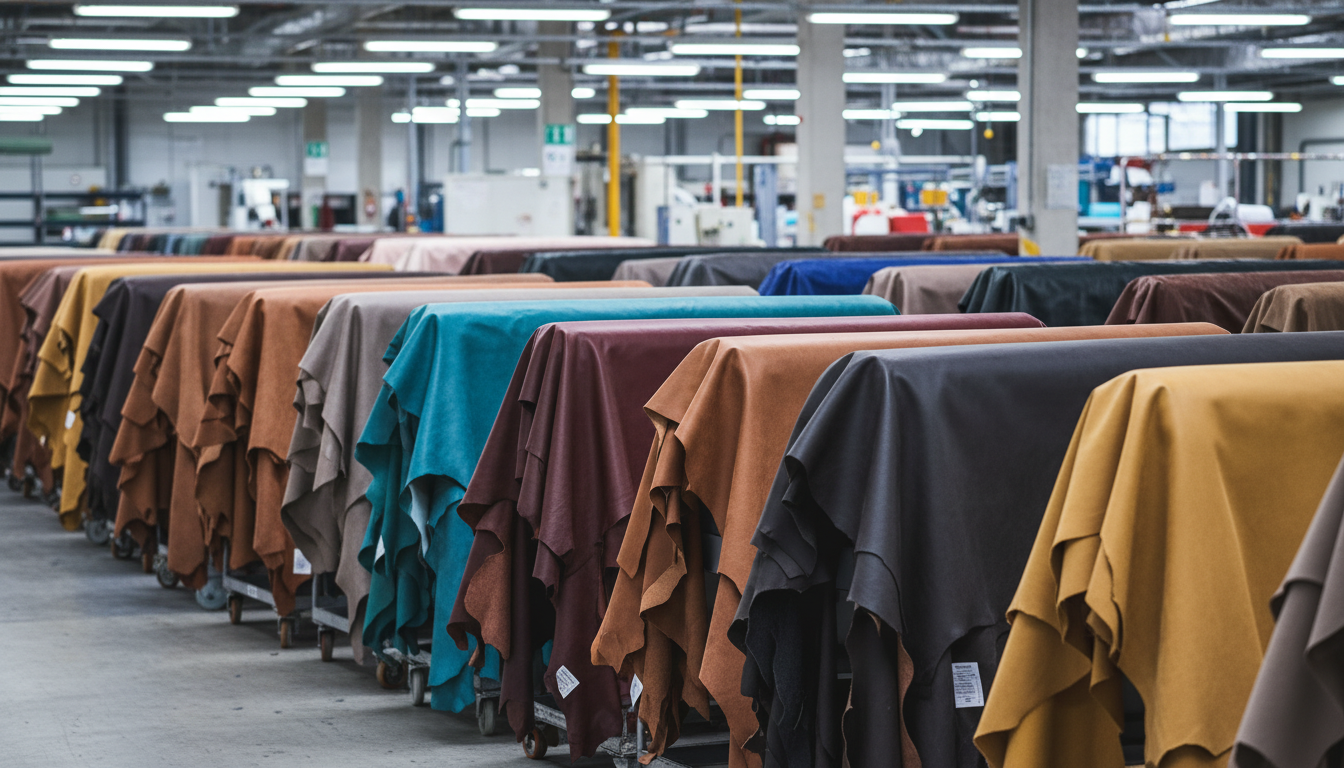
Leather hides for the manufacturing or reupholstering of sofas and chairs.
What is Leather Tanning?
Leather tanning is an important process in leather production, in which animal hides are transformed into durable and long-lasting leather. Tanning is a crucial step to improve the durability, color, and texture of the leather.
There are various methods of leather tanning, including vegetable tanning, chrome tanning, and aluminum tanning. In vegetable tanning, natural tannins from plants are used, while in chrome tanning, chrome salts are used to tan the leather. Aluminum tanning, on the other hand, uses aluminum salts to treat the leather.
The tanning process begins with the animal hide being cleared of fat, hair, and other impurities. Subsequently, the hide is soaked and treated with tanning agents to make the leather supple and resistant. After tanning, the leather is dried, dyed, and subjected to further finishing steps to achieve the desired texture and appearance.
Overall, leather tanning is a complex process that requires expertise and experience. Through the careful treatment of animal hides, high-quality leather products can be manufactured that are both functional and aesthetically pleasing.
Leather tanning more than 60 years ago.

Historical Background of Leather Production
The production of leather has a long history that dates back to antiquity. The art of tanning animal hides into leather was already known in the ancient world and was practiced by cultures all over the world. Through the process of leather tanning, animal hides were made durable and could thus be used for a wide variety of purposes.
The tanning of leather is a complex process that involves various steps. First, the animal hides are cleaned and dehaired to prepare them for further processing. Subsequently, the actual tanning takes place, in which the animal hides are treated with the help of tanning agents to make them supple and durable.
Historically speaking, leather production was an important branch of the economy that shaped entire cities and regions. In many European countries, numerous leather tanneries emerged during the Middle Ages and the Early Modern period, ensuring the supply of leather products.
Over time, the technique of leather production has evolved and been refined. Nowadays, in addition to vegetable tanning agents, synthetic agents are also used to produce leather. Nevertheless, traditional leather tanning remains an art that craftsmen and leather manufactories all over the world continue to cultivate.
The production of leather is therefore not only an important historical aspect but also a significant cultural one that persists to this day. Through the art of leather tanning, animal hides are transformed into high-quality and versatile materials that find use in the fashion, furniture, and automotive industries, as well as in many other sectors.
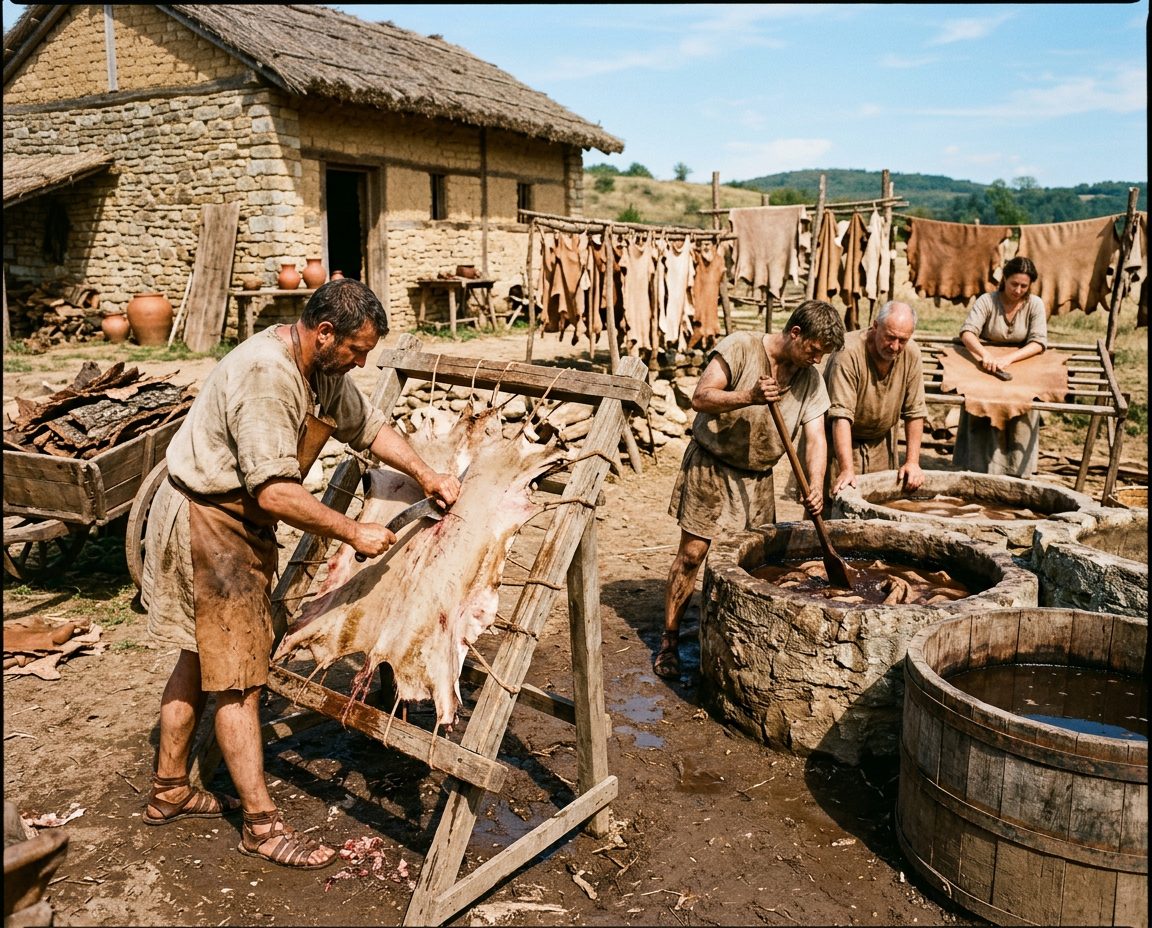
Leather production in antiquity.
Origin of Leather Tanning
As early as the Stone Age, animal hides were tanned to produce clothing, shoes, and other everyday objects. The earliest methods of leather tanning were very primitive and based primarily on the use of natural materials such as plant extracts and animal fats.
Over the centuries, the technique of leather tanning has evolved and been refined. Nowadays, chemical tanning agents are used, which accelerate the process and make the leather higher in quality. Nevertheless, there are still companies that use traditional methods and where the leather is tanned in a natural way.
Leather tanning therefore has a long history and remains an important part of leather production to this day. Through it, animal hides are processed into durable and versatile material that is used in many areas of daily life.
Leather production in the Stone Age

The Different Methods of Leather Production
Tanning leather is the process in which animal hides are processed into leather. This procedure is crucial for leather production, as it determines the durability, color, and texture of the end product. There are various methods of leather tanning that can be applied depending on the desired result.
The traditional method of leather tanning is vegetable tanning, in which natural substances such as tannins from plant materials are used to preserve the leather. This method is time-consuming but environmentally friendly and produces high-quality and durable leather.
Another common method is chrome tanning, in which chrome salts are used to preserve the leather. This method is faster than vegetable tanning and results in a soft and supple leather suitable for many industrial applications.
There are also other methods of leather tanning, such as aldehyde tanning and fat tanning, each having its own advantages and disadvantages. The choice of tanning method depends on various factors, such as the intended use of the leather and the personal preferences of the manufacturer.
Overall, there are many different methods of leather production, all of which contribute to producing high-quality and long-lasting leather. It is important to select the right tanning method for the respective project to obtain a high-quality end product.
Tanning of Animal Hides into Leather
The tanning of animal hides into leather is a crucial step in leather production. This process, also called leather tanning, transforms animal hides into the high-quality material that we find in numerous products of daily life.
Tanning makes it possible to preserve the hides from rotting and at the same time make them supple, durable, and resistant. There are different methods of tanning, all of which have the goal of stabilizing and changing the proteins in the skin.
In vegetable tanning, vegetable tanning agents such as barks or fruits are used to treat the hides. This method is very environmentally friendly, as no chemical substances are used.
Chromatic tanning, on the other hand, takes place with the help of chrome salts. This method is faster and more efficient, but also more harmful to the environment. It is therefore important that the tanning is carried out properly to avoid environmental damage.
Tanning is a complex process that requires a lot of experience and expertise. A wrong step can lead to the leather not having the desired properties or to the environment being polluted.
Overall, the tanning of animal hides into leather is a fascinating process that has been practiced for centuries. It is important that we are aware of how our leather is produced and that we choose environmentally friendly methods to protect our nature.
Modern Techniques in Leather Tanning
Leather production is a process that has been practiced for centuries and has continued to evolve over time. Modern techniques in leather tanning have contributed to making this process more efficient and environmentally friendly.
The tanning of animal hides into leather is a crucial step in leather production. Previously, this process was mainly carried out with vegetable tanning agents such as oak or spruce bark. Nowadays, however, synthetic tanning agents are also used, which accelerate the process and improve the quality of the end product.
An example of a modern technique in leather tanning is chrome tanning. In this process, chrome salt is used to stabilize the leather and make it water-repellent. This method is particularly effective and has contributed to shortening the tanning time and reducing water and energy consumption.
Another modern technique is drum tanning, where the animal hides rotate in large drums to distribute the tanning agent evenly. This method ensures a uniform color and texture in the leather and has the advantage of requiring fewer chemicals and water.
Overall, modern techniques in leather tanning have contributed to making leather production more efficient and environmentally friendly. Through the use of synthetic tanning agents, chrome-free tanning methods, and innovative manufacturing techniques, the quality of the end product is improved while simultaneously reducing environmental impact.
The leather industry has made great progress in the development of sustainable and environmentally friendly tanning methods in recent years. By using modern techniques, we can ensure that we produce high-quality leather without excessively polluting the environment.

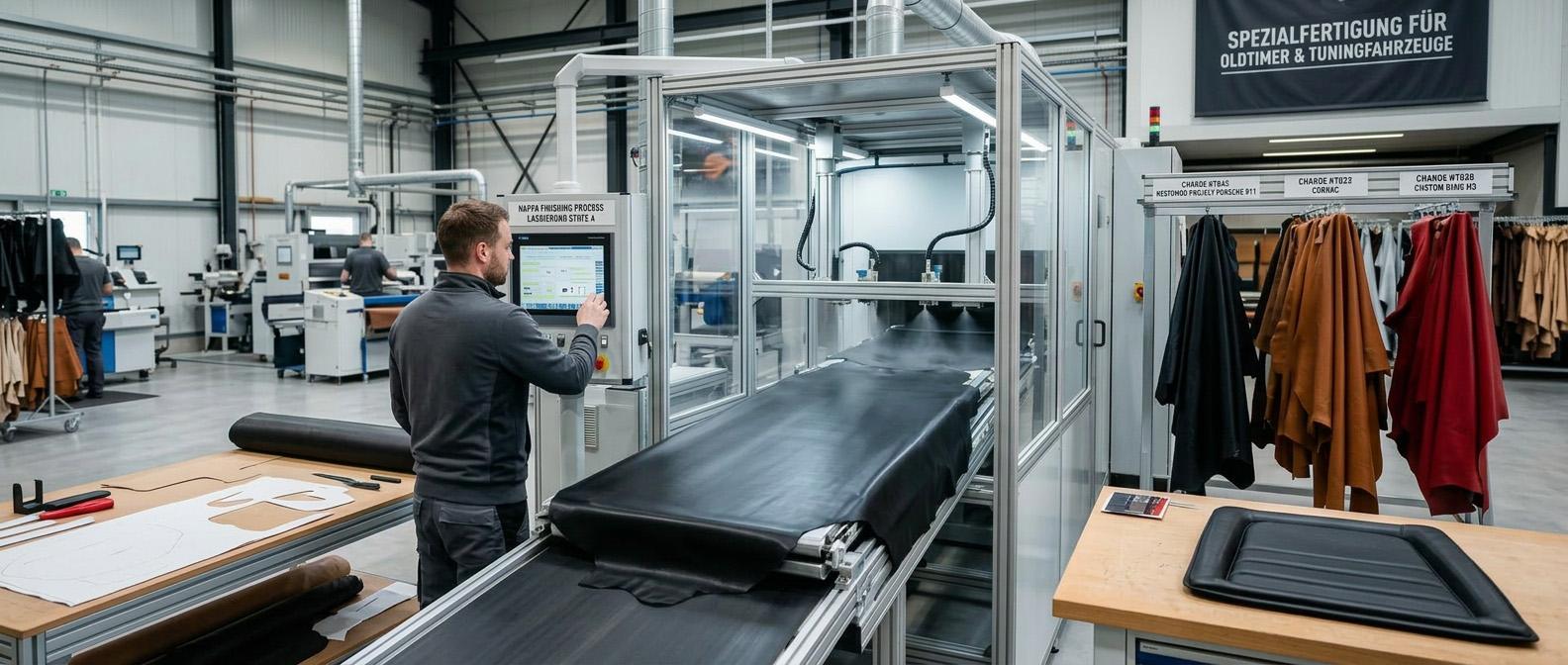
Modern, environmentally friendly tannery.
Sustainable Practices in the Leather Industry
The leather industry belongs to one of the oldest sectors in the world and is responsible for the production of high-quality products from animal hides. An important step in leather production is tanning, in which the animal hide is brought into a permanently durable and usable state.
Traditionally, leather was tanned through the use of toxic chemicals such as chrome, which led to significant environmental impacts. Fortunately, the industry has introduced sustainable practices in recent years to minimize the effects on the environment.
A sustainable practice in leather production is the use of vegetable tanning agents, which are obtained from natural materials such as bark, leaves, and fruits. These tanning agents are biodegradable and less harmful to the environment than traditional chemicals.
Another important step is the introduction of closed water cycles in tanneries to reduce water pollution. By reusing and treating water, not only is the environment protected, but costs are also saved.
Furthermore, many companies rely on the traceability of the leather supply chain to ensure that the animal hides are sourced ethically and sustainably. This helps to prevent illegal poaching and abuse of animals.
Overall, it is encouraging to see that the leather industry is increasingly committed to sustainable practices to minimize environmental impacts and appeal to responsible consumers. Through the introduction of environmentally friendly tanning methods and transparent supply chains, we can all contribute to leading the leather industry toward a more sustainable future.
Small tannery with a purely natural tanning process.

Eco-Friendly Tanning Methods
Leather is a versatile material that is used in many areas of daily life. It is made from animal hides that are subjected to a special process of tanning. Leather tanning is an important step in leather production, as it makes the animal hide durable and flexible.
Traditionally, animal hides were tanned with the help of chemicals such as chrome salts, which, however, can have negative impacts on the environment. Chemicals from tanning can reach the groundwater and pollute the environment. For this reason, it is important to develop eco-friendly tanning methods.
There are various eco-friendly tanning methods that can be used to produce leather in a sustainable way. One possibility is vegetable tanning, in which plant substances such as bark, leaves, or fruits are used to tan the animal hide. This method is gentler on the environment, as no harmful chemicals are used.
Another eco-friendly tanning method is tanning with vegetable oils and fats. This method is particularly well-suited for the production of soft leather and avoids the use of harmful chemicals.
By using eco-friendly tanning methods, we can contribute to reducing the environmental impact caused by leather production. It is important that companies and consumers choose sustainable methods in leather production and thus make a contribution to environmental protection.
We at the company ProjektLeder strive to repeatedly acquire tanneries that dye purely ecologically.
Fair Trade and Ethical Standards
Leather is a versatile and popular material that is used in many products of daily life. From shoes to bags to furniture - leather is present everywhere. But how is leather actually created and what influence does leather production have on the environment and the people involved in it?
Leather production begins with the tanning of animal hides into leather. This process usually takes place with the help of chemicals to ensure the durability and quality of the leather. Unfortunately, many of these chemicals are harmful to the environment and can endanger both the workers in the tanneries and the consumers.
To counteract these negative effects, it is important to pay attention to fairer trade and ethical standards in the leather industry. This means that the workers are fairly remunerated, work under safe conditions, and the environment is protected. There are now various certifications and labels that indicate that the leather used was produced under fair and ethical conditions.
As consumers, we can contribute to making the leather production process fairer and more sustainable through conscious consumption. By purchasing products made of certified leather and informing ourselves about the origin and the manufacturing conditions, we can make a contribution to a fairer and more environmentally friendly leather industry. Such as, for example, when buying automotive leather.
It is up to all of us to take responsibility and ensure that the leather production process takes place ethically and sustainably. Only in this way can we ensure that the beauty and versatility of leather is preserved in the future.
Conclusion and Outlook on the Future of Leather Production
After having dealt extensively with leather production, we can draw a conclusion and take a look into the future. The tanning of animal hides into leather is a tradition-rich craft that has been practiced for centuries. Through various tanning processes such as vegetable tanning, mineral tanning, or chrome tanning, high-quality leather is created, which is used in numerous industries.
However, leather production also has negative impacts on the environment, especially with the use of environmentally harmful chemicals in tanning. To minimize the ecological consequences, alternative, sustainable tanning methods are increasingly being sought. A promising approach is the use of vegetable tanning agents, which are more environmentally friendly and do not impair the quality of the leather.
The future of leather production thus lies in the further development of sustainable tanning processes that both protect the environment and guarantee the quality of the leather. It is important that manufacturers and consumers alike take responsibility and opt for environmentally friendly products. Only in this way can the leather industry remain sustainable and viable for the future.
Overall, it can be stated that leather production plays an important role in various branches of industry and there continues to be a high demand for high-quality leather. With the focus on sustainability and environmental protection, we can ensure that leather production will be operated successfully and responsibly in the future as well.
We at ProjektLeder also follow these goals, day after day.