18/05/2026
BMW Leather Guide: From Dakota to Individual
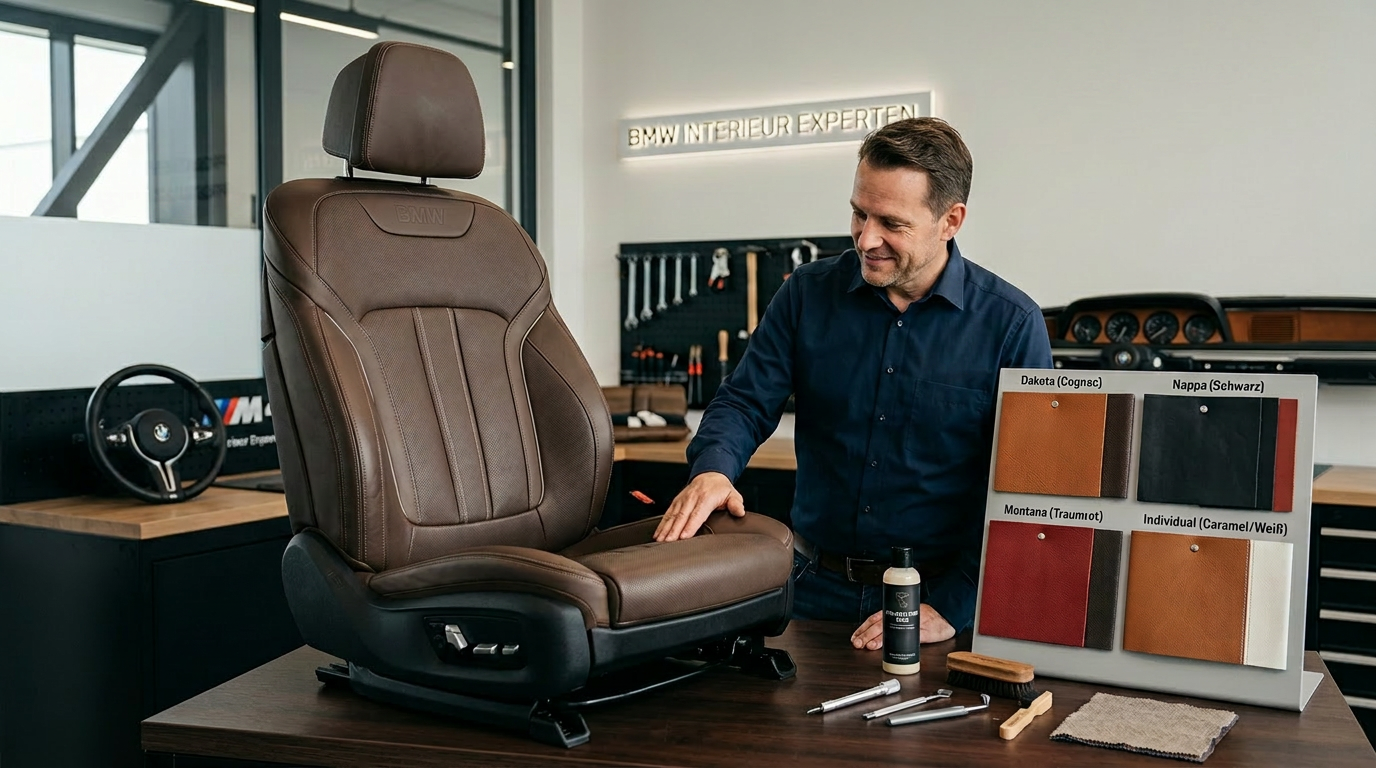
The evolution of Bavarian interior culture. Discover material properties, value retention, and authentic restoration at ProjektLeder.


Leather. Faux leather. Fabrics - Genuine quality.
€139.50
Content: 1 lenear metre / €139.50
Available, delivery time: 2-5 days
Design without limits: ALCANTARA® Avant is a premium upholstery fabric developed specifically for high-end applications. With its distinctive suede-like appearance and exceptionally soft handle, it offers a stylish, contemporary alternative to traditional leather. Whether in a first-class aircraft cabin, aboard a luxury yacht, or within exclusive residential and automotive interiors, ALCANTARA® Avant sets the benchmark worldwide.
What sets ALCANTARA® Avant apart from ordinary fabrics is the combination of remarkable durability and rigorous safety certification. Its integrated woven backing gives the material excellent dimensional stability while remaining supple enough for demanding upholstery work.
With its slip-resistant surface and velvety touch, ALCANTARA® Avant is a genuine all-rounder for demanding designers — from luxury suites to aircraft cockpits.
Well suited to seating, wall panelling and surfaces in aircraft and yachts.
Luxurious finishes for hotels, restaurants and cruise ships.
A great fit for exclusive sofas, armchairs and upholstered furniture in commercial and residential spaces.
The velvety surface of ALCANTARA® Avant isn't just a visual pleasure — it also performs exceptionally well. The material is breathable, low-maintenance, and manufactured to strict environmental standards. It delivers a climate-neutral, animal-free solution that brings luxury and environmental responsibility together.
Caring for ALCANTARA® Avant is refreshingly simple, helping preserve its elegant suede-like appearance over time:
We're happy to send you genuine samples so you can check the velvety texture and colour range of ALCANTARA® Avant for yourself.
In summary: ALCANTARA® Avant is the right choice for any project that demands durability, an elegant finish and internationally recognised safety standards (IMO, FAR) — a modern classic for aviation, automotive, marine and high-end interior design.
| Eigenschaft | Wert | Beschreibung |
|---|---|---|
| Product number: | ALC_Av-chic-grey | |
| Abrasion cycles: | ≥ 30.000 Touren martindale - ≥ 150.000 Ende | |
What is meant by abrasion cycles (Martindale test) in genuine leather, synthetic leather, and fabrics? Abrasion cycles indicate how many rubbing movements (cycles) a material can withstand before showing visible wear or breakdown. This value is crucial for assessing abrasion resistance, especially in heavily used applications like upholstery, car seats, or clothing. The higher the number of cycles, the more durable the material. In genuine leather: · Abrasion resistance varies depending on the finish and surface treatment. · High-quality upholstery leather often withstands 10,000 to over 50,000 cycles. · The natural grain and type of finish heavily influence results. Relevant standards: - DIN EN ISO 17076-1 – Determination of abrasion resistance of leather (Martindale method) - ISO 5470-1 – Abrasion test using Taber Abraser (less common for leather) In synthetic leather: · Durability depends on the PU or PVC coating quality and the backing material. · Premium synthetic leather can achieve up to 100,000 abrasion cycles or more. · Lower-quality versions may crack or peel prematurely. Relevant standards: - ISO 12947-2 – Determination of abrasion resistance of coated textiles (Martindale) - ISO 5470-1 – Abrasion test using Taber Abraser In fabrics (textiles): · Abrasion resistance depends on the fiber type, weave, and finishing. · Standard upholstery fabrics: approx. 15,000–30,000 cycles · Contract or outdoor fabrics: up to and beyond 100,000 cycles Relevant standards: - ISO 12947-2 – Martindale method for determining abrasion resistance - DIN EN ISO 12947-1 to -4 – cover test setup, procedure, and evaluation Conclusion: Abrasion cycles (Martindale test) are a reliable measure of how well a material resists wear from friction. Especially in automotive, furniture, and textile sectors, high resistance ensures longer durability. Key testing standards include DIN EN ISO 17076, ISO 12947, and ISO 5470. | ||
| Allergenic dyes: | nicht nachweisbar | |
What are allergenic dyes in genuine leather, synthetic leather, and fabrics? Allergenic dyes are chemical coloring agents that can trigger allergic reactions in sensitive individuals, usually through skin contact. These dyes are used in textile and leather processing to color materials. Some of these substances are considered harmful to health and are therefore regulated or banned by law, especially in products that come into direct contact with the skin. In genuine leather Certain azo dyes or chromium-based dyes used in leather production are known allergens. - Chromium VI, which can form during improper tanning processes, is particularly sensitizing and strictly monitored. - High-quality leather should be chromium-free or treated with tested, low-allergen dyes. - Leather certified by OEKO-TEX® or similar environmental/health standards is usually free from allergenic substances. In synthetic leather Synthetic leather is typically dyed using synthetic pigments and PU or PVC coatings. These coatings can contain problematic dyes, especially in low-grade products. High-quality synthetic leather sold in the EU is subject to the REACH regulation and is generally free from banned azo dyes. Caution is advised with imported goods from non-EU countries without certification. In fabrics (textiles) In textiles, allergenic dyes are especially critical since they often come into direct contact with the skin (e.g., clothing, bedding). Azo dyes, disperse dyes, and reactive dyes are particularly known for causing contact allergies. Many of these substances are banned or heavily restricted in Europe—especially for baby or skin-contact products. - Textiles certified by OEKO-TEX® or GOTS are generally considered safe. Conclusion: Allergenic dyes can be found in genuine leather, synthetic leather, and textiles when unregulated dyeing processes are used. For health-conscious or sensitive individuals, it is recommended to purchase certified, toxin-tested materials, especially for products that come into direct contact with the skin. | ||
| Enviromental properties: | Hersteller Klimabilanz: CO₂-neutral seit 2009 (Zertifizierung durch TÜV SÜD), Öko-Tex Zertifizierung: Standard 100, umweltschonende Herstellung | |
What is meant by environmental properties and their impact in genuine leather, synthetic leather, and fabrics? Environmental properties refer to how materials affect the environment throughout their life cycle – from production to use and disposal. These include energy consumption, emissions, chemical usage, biodegradability, recyclability, and social impacts. For consumers, producers, and regulators, such factors are increasingly crucial for sustainable material choices. In genuine leather · When responsibly produced, leather can be sustainable, especially through vegetable tanning, low emissions, and local sourcing. · Chrome tanning poses environmental and health risks, particularly with poor waste management. · Leather is biodegradable unless heavily coated or chemically treated. Relevant standards and regulations: · DIN EN ISO 14001 – Environmental management systems · DIN EN ISO 17075-1/-2 – Determination of chromium(VI) in leather · REACH Regulation (EC) No. 1907/2006 – Chemical safety in the EU In synthetic leather · Typically made from PVC or PU, synthetic leather relies on fossil fuels. · Its production can be energy-intensive and result in non-biodegradable waste. · High-quality PU is often lower in emissions than PVC but less biodegradable than leather. Relevant standards and regulations: · ISO 14040 / ISO 14044 – Life Cycle Assessment (LCA) · OEKO-TEX® Standard 100 – Testing for harmful substances in textiles · ISO 12460-3 – Formaldehyde emissions from plastics In fabrics (textiles) · Environmental impact varies by fiber type: natural fibers like cotton are biodegradable but may involve high water and pesticide usage. · Synthetic fibers like polyester are recyclable but petroleum-based and slow to degrade. · Textiles may be treated with environmentally harmful dyes, finishes, or plasticizers. Relevant standards and regulations: · ISO 14001 – Environmental management · GOTS (Global Organic Textile Standard) – ecological textile certification · OEKO-TEX® Standard 100 Conclusion: Environmental impacts of leather, synthetic leather, and fabrics depend on material type, production methods, and disposal. While genuine leather can be sustainable under eco-friendly practices, synthetic materials offer opportunities through recycling or low-emission manufacturing. Key standards like ISO 14001, REACH, and OEKO-TEX® support informed and sustainable material decisions. | ||
| Fire behavior: | Aviation/Luftfahrt FAR/JAR 25.853 App. F Part 1, BS 5852 S 0, DIN EN 1021-1+2 EUFAC-Richtlinie, IMO FTPC 2010 Part 8 | |
What is meant by fire behavior in genuine leather, synthetic leather, and fabrics? Fire behavior describes how a material reacts to fire or high heat exposure – such as whether it burns, how quickly it ignites, whether it drips, smokes, or releases toxic gases. This property is particularly important when selecting materials for furniture, vehicle interiors, public buildings, aviation, or protective clothing. In many areas of application, binding standards such as DIN, EN, and ISO apply, which define, test, and classify the fire behavior of materials. Genuine Leather Genuine leather is naturally flame-resistant and typically only burns under direct, prolonged flame exposure. It chars when burning and does not form melting drips. Chrome-tanned leather may show improved fire performance. Relevant standards for upholstery leather and furniture leather include: - DIN EN ISO 8191-1 / -2: Fire behavior of upholstered furniture – ignition source cigarette and match - DIN EN 1021-1 / 1021-2: Ignitability of upholstered furniture by smoldering cigarettes and small open flames - DIN EN ISO 6940 / 6941: Determination of vertical flame spread of textiles and composite materials such as coated leather - DIN EN ISO 4589-2: Oxygen index for assessing flammability of leather - ISO 3795 / DIN 75200: Burning behavior of materials in automotive interiors (e.g. leather seats or door panels) - FAR 25.853: Standard for materials used in aircraft (for aircraft-grade upholstery leather) In many applications, genuine leather meets the requirements for flame resistance even without additional flame-retardant treatments. Synthetic Leather Synthetic leather is usually made from polyurethane (PU) or polyvinyl chloride (PVC) and exhibits critical fire behavior without treatment: melting, dripping, and smoke development are possible. Its exact reaction depends on the material composition and any flame-retardant additives used. High-quality synthetic leather is often tested according to the following standards: - DIN EN 1021-1 and 1021-2 (Ignition behavior of upholstered furniture) - DIN 4102-B1/B2 (Building products: flame-resistant/normal flammability) - ISO 3795 / DIN 75200 (Automotive interiors) - FMVSS 302 (U.S. standard for vehicle interiors) Fabrics (Textiles) The fire behavior of textiles varies significantly depending on fiber type and treatment: - Cotton burns easily - Polyester melts and drips - Wool is relatively flame-resistant Textiles can also be treated with flame retardants. Relevant standards include: - DIN EN 13501-1 (Fire classification of construction products) - DIN EN 1021-1 / 1021-2 (Ignitability of upholstered furniture) - DIN 4102-B1/B2 (Classic fire protection standard) - DIN EN ISO 6940 / 6941 (Flame spread tests) - NF P92-503 (French classification M1–M4) - FAR 25.853 (Aviation standard) Conclusion: Fire behavior is a key safety criterion in material selection. Genuine leather is naturally relatively flame-resistant and often meets regulatory requirements without additional chemicals. In contrast, synthetic leather and textiles usually require flame-retardant treatment to comply with standards such as DIN EN 1021, DIN 4102, ISO 6941, or FAR 25.853. In public, commercial, or safety-critical areas, compliance with these standards is essential. | ||
| Light constancy: | ≥ 5 gemäß EN ISO 105 – B02 | |
What is meant by light fastness in genuine leather, synthetic leather, and fabrics? Light fastness refers to a material’s ability to retain its color and surface properties when exposed to prolonged natural or artificial light (especially UV radiation). It is a key quality factor for materials exposed to sunlight over time, such as furniture upholstery, car seats, or outdoor textiles. In genuine leather · Genuine leather can fade or discolor under intense light exposure—depending on the quality of the dye and surface treatment. · Fully dyed leather with lightfast pigments has higher light fastness. · This is particularly important in the automotive and furniture sectors for maintaining long-term appearance. Relevant testing standards: · DIN EN ISO 105-B02 (Determination of light fastness of leather) · DIN EN ISO 105-B06 (Combined assessment of light and heat exposure – heat and light fastness) In synthetic leather · Synthetic leather reacts differently to UV radiation depending on its base (PU, PVC). · High-quality PU synthetic leather with UV-stabilized treatments shows better light fastness than basic PVC materials. · Poor light fastness may cause discoloration, brittleness, or surface degradation. Relevant testing standards: · DIN EN ISO 105-B02 · ISO 4892-2 (Artificial weathering with xenon arc light) In fabrics (textiles) · Textiles made of synthetic fibers (e.g., polyester, acrylic) are generally more light-resistant than natural fibers like cotton or linen. · Color fastness is crucial for curtains, upholstery, sun protection, or outdoor clothing. · Even dyed fabrics may darken or fade under light exposure. Relevant testing standards: · DIN EN ISO 105-B02 · ISO 105-B04 (For outdoor applications with xenon arc light) · ISO 4892-2 (Artificial light aging) Conclusion: Light fastness is an essential material property for all applications where products are exposed to sunlight or artificial light. It helps preserve the color and surface integrity of materials over time. The most important standards for evaluating light fastness include DIN EN ISO 105-B02, B06, B04, and ISO 4892-2. | ||
| Material composition: | 68% Polyster, 32% Polyurethan | |
Was versteht man unter Materialzusammensetzung bei Kunstleder und Stoffen? Die Materialzusammensetzung beschreibt, aus welchen Rohstoffen ein Material besteht – also die prozentuale Aufteilung der einzelnen Komponenten, aus denen ein Stoff oder ein Kunstleder hergestellt wurde. Diese Information ist wichtig für: Pflegehinweise Tragekomfort / Haptik Haltbarkeit / Strapazierfähigkeit Nachhaltigkeit / Recyclingfähigkeit Allergiepotenzial 1. Materialzusammensetzung bei Kunstleder Kunstleder ist ein synthetisches Material, das echtes Leder optisch und haptisch imitieren soll. Typischerweise besteht es aus zwei Hauptbestandteilen: Trägermaterial (Textilbasis): Meist Polyester oder Baumwollgewebe Beschichtung (Deckschicht): Meist PVC (Polyvinylchlorid) oder PU (Polyurethan) Beispiel für die Materialzusammensetzung eines Kunstleders: 60 % Polyurethan (PU), 40 % Polyester 2. Materialzusammensetzung bei Stoffen (Textilien) Bei Stoffen gibt die Zusammensetzung an, welche Fasern in welchem Anteil verwendet wurden. Das ist bei Kleidung, Möbelbezügen oder Vorhängen üblich. Naturfasern: Baumwolle, Wolle, Leinen, Seide Synthetische Fasern: Polyester, Polyamid, Elastan, Acryl Beispiel für die Materialzusammensetzung eines Kleidungsstücks: 80 % Baumwolle, 18 % Polyester, 2 % Elastan Warum ist das wichtig? - Für die richtige Pflege (Waschanleitung, Bügeln) - Für Allergiker oder Menschen mit empfindlicher Haut - Für umweltbewusste Entscheidungen (z. B. Vermeidung von Mikroplastik) - Für die Beurteilung der Qualität oder Haltbarkeit | ||
| Rub fastness: | ≥ 3/4 nass (White Scale) gemäß EN ISO 105/X12, ≥ 4 trocken (White Scale) gemäß EN ISO 105/X12 | |
What is rub fastness in genuine leather, synthetic leather, and fabrics? Rub fastness refers to the resistance of a dyed or coated material to mechanical friction. It indicates how much color or coating rubs off or transfers to other materials under dry or wet conditions. This property is especially important for furniture, clothing, or automotive interiors. In genuine leather · Rub fastness is critical for maintaining color and finish on the leather surface. · Pigmented leathers may show color transfer if rub fastness is low. · Testing is done under both dry and wet conditions. Relevant standard: · DIN EN ISO 11640 – Leather – Determination of color fastness to rubbing In synthetic leather · For PU or PVC-coated synthetic leather, pigment adhesion to the surface is key. · Poor rub fastness leads to visible abrasion or color transfer. · Crucial in high-use areas like seating or steering wheels. Relevant standards: · DIN EN ISO 105-X12 – Textiles – Determination of color fastness to rubbing · DIN EN ISO 11640 – also applicable to coated materials In fabrics (textiles) · Rub fastness is an essential quality for garments, curtains, seat covers, etc. · Dark, highly saturated fabrics often have lower rub fastness. · Dry and wet rub fastness may differ significantly. Relevant standard: · DIN EN ISO 105-X12 – Standard method for assessing color fastness to rubbing Conclusion: Rub fastness is crucial for the appearance, functionality, and usability of leather, synthetic leather, and fabrics. It ensures that colors do not transfer onto clothing or surrounding surfaces. The key test standards are DIN EN ISO 11640 for leather and DIN EN ISO 105-X12 for synthetic leather and textiles. | ||
| Rückseite/Gewebe/Trägermaterial: | Zusammensetzung: 45% Baumwolle, 55% Kanecaron® | |
Das stabilisierende Gewebe (Trägermaterial) Dieses Material ist ein fest aufkaschiertes Textilgewebe. Der Zweck: Dieses zusätzliche Gewebe nimmt dem Material die extreme Eigenelastizität. Es sorgt für Reißfestigkeit, Formstabilität und verhindert, dass sich der Stoff unter Belastung dauerhaft überdehnt oder ausbeult. Der Trennschnitt im Werk: Bei der Herstellung des Vliesstoffes wird der mit Polyurethan getränkte Mikrofaserblock in der Mitte durchgeschnitten. Die äußere Schicht bildet die bekannte Velours-Oberfläche, während auf die Unterseite für die Cover-Variante das Stützgewebe aufgebracht wird. | ||
| Weight: | 450 g/m² | |
Was versteht man unter dem Gewicht pro Quadratmeter (g/m²) bei Kunstleder und Stoffen? Das Gewicht pro Quadratmeter (auch Flächengewicht genannt) gibt an, wie schwer ein Quadratmeter eines Materials ist, gemessen in Gramm pro Quadratmeter (g/m²). Es ist ein wichtiges Qualitäts- und Anwendungskriterium für textile Materialien und Kunstleder. 1. Bedeutung bei Kunstleder Beim Kunstleder zeigt das Gewicht pro m²: - Dicke & Strapazierfähigkeit: Ein höheres Gewicht deutet oft auf ein robusteres, dickeres Material hin. - Haptik & Verarbeitung:Schwereres Kunstleder fühlt sich oft hochwertiger an, ist aber weniger flexibel. Einsatzbereiche: - 300–400 g/m²: dünnes, flexibles Kunstleder für Bekleidung oder Deko - 500–800 g/m²: Standard für Möbel oder Fahrzeuginterieur - 800–1.200+ g/m²: sehr robust für Taschen, Sitzbezüge, Outdoor-Anwendungen 2. Bedeutung bei Stoffen Bei Stoffen beeinflusst das Gewicht: - Transparenz / Blickdichte - Wärmeleistung - Faltenwurf & Fall - Verwendungszweck Warum ist das Gewicht pro m² wichtig? - Vergleichbarkeit: Zwei Stoffe aus gleichem Material können sich unterschiedlich anfühlen – das Gewicht macht den Unterschied. - Verarbeitung: Für Näharbeiten oder Polsterprojekte muss man wissen, ob das Material zu schwer oder zu leicht ist. - Qualitätsmerkmal: Oft (aber nicht immer) steht ein höheres Gewicht für bessere Qualität. | ||
| Width: | 142 cm ± 2% | |
Breite bei Kunstleder & Stoffen Die Breite gibt die nutzbare Materialbreite pro Rolle an (meist in cm). Wichtig für Zuschnitt, Verschnittminimierung und Flächenberechnung. Typische Breiten: Kunstleder: 140 cm (Standard), 150–160 cm (Taschen/Sattel), Sondermaße 120–180 cm. Achtung: Nicht dehnbar – Nutzbreite kann durch Beschichtung leicht abweichen. Stoffe: 140 cm (Bekleidung/Deko), 150–160 cm (Jersey, Leinen), 280–300 cm (Bettwäsche/Vorhänge). Unter 100 cm bei Spezialstoffen. Warum ist die Breite wichtig? Bestimmt die benötigte Länge für deine Fläche (z. B. 2 m × 140 cm = 2,8 m²). Große Breiten sparen Verschnitt (z. B. für durchgehende Vorhänge oder Polster). Bei dehnbaren Stoffen: Nutzbreite kann etwas kleiner sein als angegeben. Tipp: Miss deine Schnittteile vor dem Kauf – so vermeidest du Überraschungen! | ||
| Gewicht: | 1.05 kg | |
 | Blog
18/05/2026
The evolution of Bavarian interior culture. Discover material properties, value retention, and authentic restoration at ProjektLeder.

Discover why genuine leather is the most sustainable choice. Learn about longevity, haptics, and eco-friendly production at ProjektLeder.

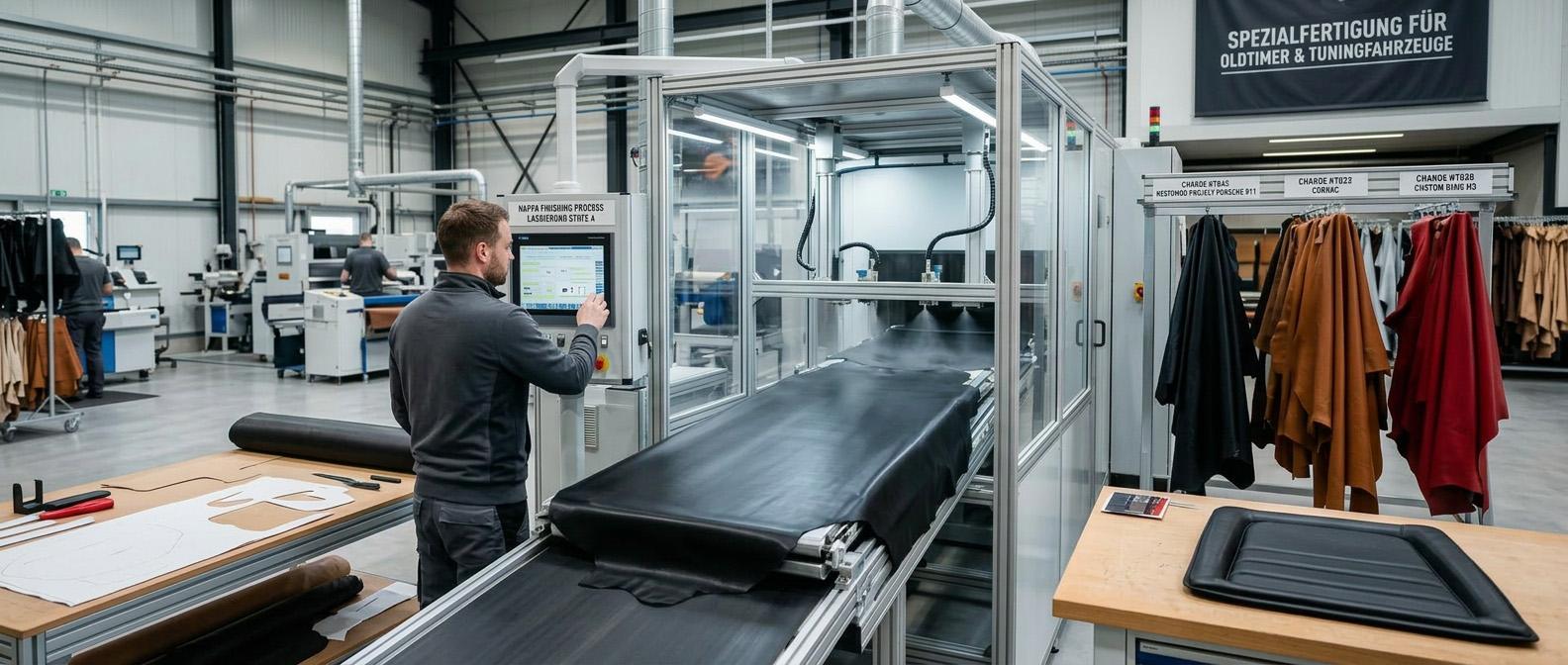
Elevate your restoration. Bespoke car leather for classics & tuning. OEM standards, UV protection & 3 color samples. Quality by ProjectLeather.
01/05/2026
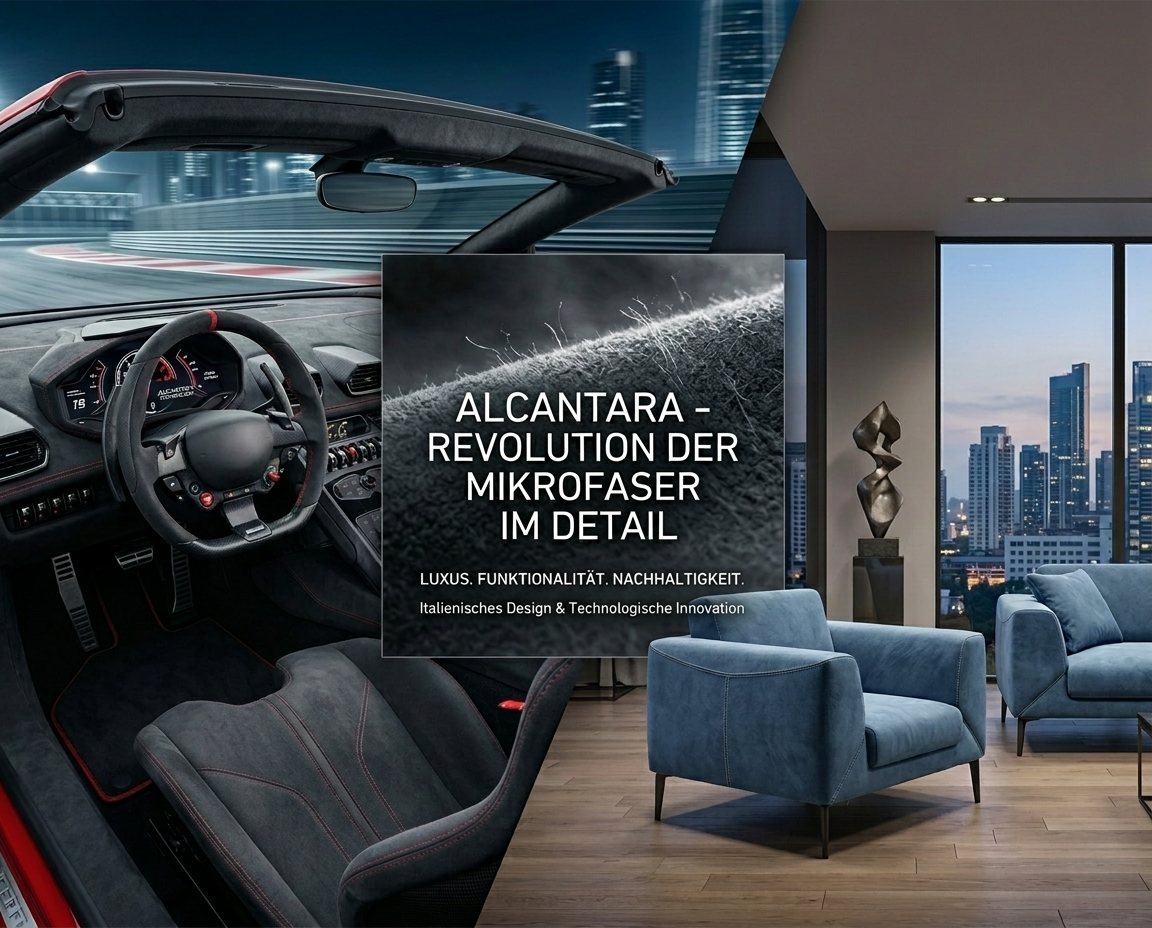
Discover the fusion of Italian style and high-tech fibers. Learn why Alcantara is the ultimate choice for automotive and furniture excellence.