

18/05/2026
BMW Leather Guide: From Dakota to Individual
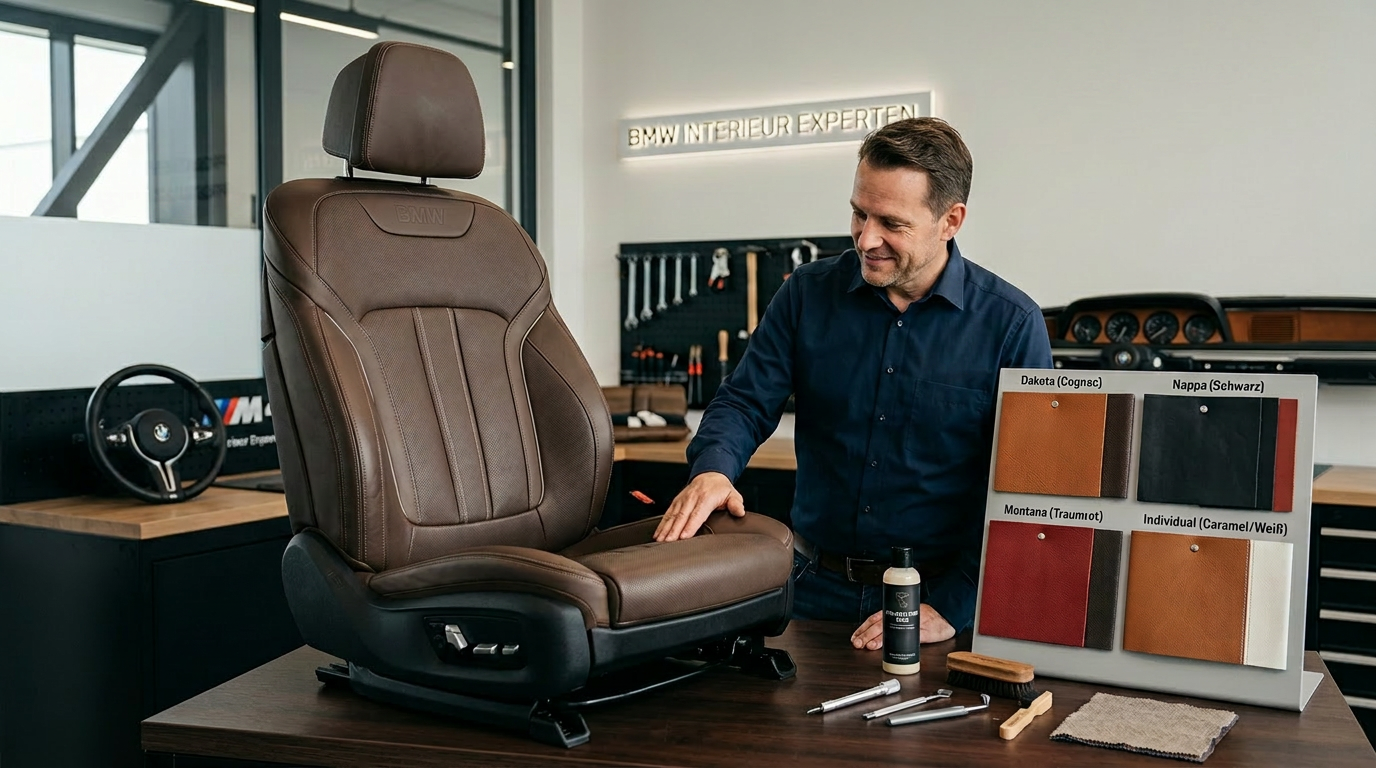
The evolution of Bavarian interior culture. Discover material properties, value retention, and authentic restoration at ProjektLeder.


Leather. Faux leather. Fabrics - Genuine quality.
€136.50
Content: 1 lenear metre / €136.50
Available, delivery time: 2-5 days
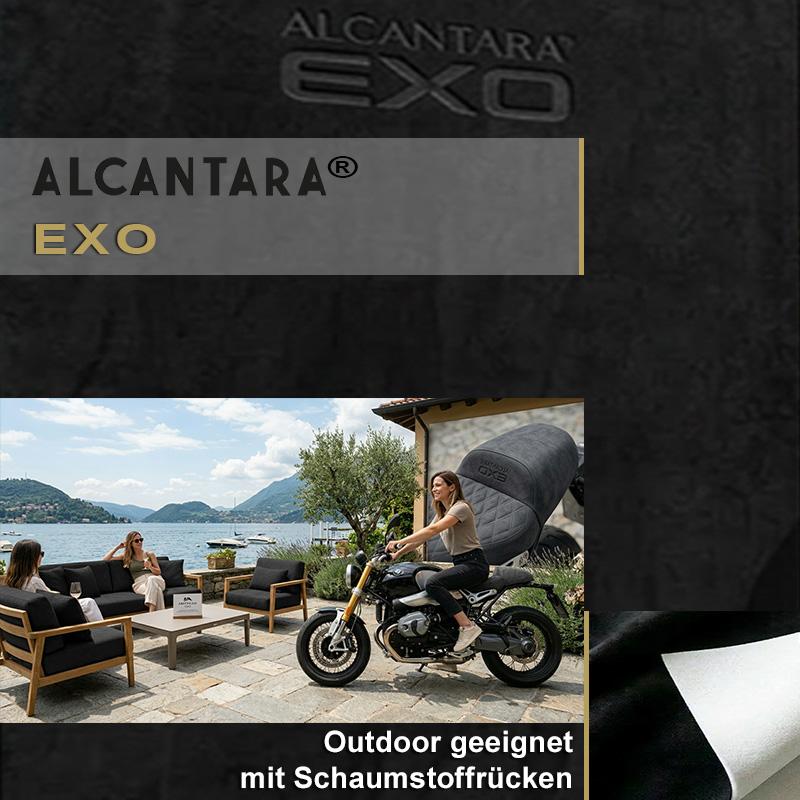
Alcantara EXO with a foam backing was built for one purpose: upholstery work that has to survive real-world conditions, not just look good in a showroom. It's a high-tech material that keeps the unmistakable, luxurious suede look while adding genuine resistance against weather, wear and daily abuse — exactly where standard microfibre fabric starts to fall short.
Seats, partial reupholstery, side panels and steering wheels.
A top pick for non-slip, weatherproof motorcycle seats.
Resistant to salt water and UV — ideal for upholstery on deck.
For heavily used chairs, sofas and premium accessories.
At its core, Alcantara EXO is a densely engineered matrix of synthetic fibres, bonded through a specialised production process. What sets it apart is a built-in, breathable high-tech membrane, which keeps the material permanently water-repellent and UV-resistant — all without compromising the signature soft-touch feel and refined surface texture.
This is a genuinely tough material: tear-resistant, hard-wearing and built to last. Its special finish keeps dirt, sweat and moisture from penetrating deep into the fibres, which makes maintenance refreshingly simple. A wide range of UV-stable colours also means the finish stays vivid for years, even under constant sun exposure.
Whether you run a professional upholstery workshop or you're a quality-focused hobbyist, Alcantara EXO delivers wherever comfort has to survive real exposure to the elements. It's the perfect combination of functional, high-tech textile engineering and the refined look of the finest suede. Invest in uncompromising durability for your next project — ProjektLeder is here to help!
| Eigenschaft | Wert | Beschreibung |
|---|---|---|
| Product number: | ALc_Exo | |
| Abrasion cycles: | ≥ 20.000 Touren martindale abrasion 12kPa, gemäß EN ISO 12947/4 - ≥ 150.000Ende, gemäß EN ISO 12947/2, ≥ 30.000 Touren martindale - ≥ 150.000 Ende | |
What is meant by abrasion cycles (Martindale test) in genuine leather, synthetic leather, and fabrics? Abrasion cycles indicate how many rubbing movements (cycles) a material can withstand before showing visible wear or breakdown. This value is crucial for assessing abrasion resistance, especially in heavily used applications like upholstery, car seats, or clothing. The higher the number of cycles, the more durable the material. In genuine leather: · Abrasion resistance varies depending on the finish and surface treatment. · High-quality upholstery leather often withstands 10,000 to over 50,000 cycles. · The natural grain and type of finish heavily influence results. Relevant standards: - DIN EN ISO 17076-1 – Determination of abrasion resistance of leather (Martindale method) - ISO 5470-1 – Abrasion test using Taber Abraser (less common for leather) In synthetic leather: · Durability depends on the PU or PVC coating quality and the backing material. · Premium synthetic leather can achieve up to 100,000 abrasion cycles or more. · Lower-quality versions may crack or peel prematurely. Relevant standards: - ISO 12947-2 – Determination of abrasion resistance of coated textiles (Martindale) - ISO 5470-1 – Abrasion test using Taber Abraser In fabrics (textiles): · Abrasion resistance depends on the fiber type, weave, and finishing. · Standard upholstery fabrics: approx. 15,000–30,000 cycles · Contract or outdoor fabrics: up to and beyond 100,000 cycles Relevant standards: - ISO 12947-2 – Martindale method for determining abrasion resistance - DIN EN ISO 12947-1 to -4 – cover test setup, procedure, and evaluation Conclusion: Abrasion cycles (Martindale test) are a reliable measure of how well a material resists wear from friction. Especially in automotive, furniture, and textile sectors, high resistance ensures longer durability. Key testing standards include DIN EN ISO 17076, ISO 12947, and ISO 5470. | ||
| Dimensionsstabilität: | Wasser 40°, ≥3%, gemäß EN ISO 6330 und EN25077 | |
Dimensionsstabilität bei Textilien & Leder Qualitätswissen für Ihren Einkauf – DIN EN ISO 5077 & DIN EN ISO 6330 Beim Kauf von hochwertigen Materialien wie Textilien, Bezugsstoffen oder Leder ist die Dimensionsstabilität (oft auch als Maßhaltigkeit, Schrumpfverhalten oder „Einlaufquote“ bezeichnet) ein entscheidendes Qualitätsmerkmal. Sie gibt an, wie stark sich ein Material durch Waschen, Trocknen oder Feuchtigkeitseinwirkung in seiner Form und Größe verändert. Hinweis zu den Normen: In der Praxis und im internationalen Handel wird dieses standardisierte Prüfverfahren durch das Zusammenspiel der Normen DIN EN ISO 5077 (Bestimmung der Maßänderung) und DIN EN ISO 6330 (Häusliche Wasch- und Trocknungsverfahren) geregelt (im Handel oft als EN 25077 / EN ISO 6630 referenziert). Was bedeuten die Normen genau? Prüfnorm Bedeutung & Verfahren im Detail DIN EN ISO 5077 (ehemals EN 25077) Das Messverfahren: Diese Norm legt fest, wie die Maßänderung (Schrumpfen oder Dehnen) exakt berechnet wird. Das Material wird vor der Behandlung im klimatisierten Zustand präzise vermessen (Länge und Breite) und mit feinen Markierungen versehen. Nach der Behandlung wird es erneut gemessen. Die Differenz wird in Prozent angegeben. DIN EN ISO 6330 (oft als ISO 6630 zitiert) Die Behandlungsart: Diese Norm definiert die standardisierten Wasch- und Trocknungsprozesse, die den hausgemachten Pflegezyklen nachempfunden sind. Sie legt Waschmaschinentypen, Waschmittelmengen, Temperaturen (von 30°C bis 92°C) sowie Trocknungsarten (z. B. Wäschetrockner, Liegendtrocknung oder Leinentrocknung) exakt fest, um reproduzierbare Ergebnisse zu garantieren. Warum ist Dimensionsstabilität für Sie im Onlineshop wichtig? Damit Ihre maßgefertigten Produkte, Polsterbezüge oder Kleidungsstücke auch nach Pflegezyklen perfekt in Form bleiben, sollten Sie auf die angegebenen Toleranzwerte achten: Hohe Dimensionsstabilität (geringer Schrumpf): Das Material behält nahezu vollständig seine ursprüngliche Passform. Hochwertige Polsterstoffe und vorbehandelte (sanforisierte) Textilien weisen meist Werte von unter 1 % bis maximal 3 % Abweichung auf. Naturmaterialien & Leder: Reine Naturfasern (wie Baumwolle oder Leinen) ohne chemische Ausrüstung neigen naturgemäß zu einem höheren Einsprung (oft 3 % bis 5 %). Echtes Leder wird nach diesen • • Textilnormen seltener direkt gewaschen, zeigt jedoch bei Feuchtigkeitseinfluss und anschließender Trocknung ebenfalls spezifische Maßänderungen, die bei der Verarbeitung berücksichtigt werden müssen. Typischer Ablauf der Qualitätsprüfung Bevor ein Stoff oder Material das Prädikat dieser Normen erhält, durchläuft es drei strikte Schritte: Konditionierung & Kennzeichnung: Das Material ruht in einem definierten Normklima, um eine neutrale Ausgangsfeuchtigkeit zu erreichen. Anschließend werden exakte Messstrecken markiert. Standardisierte Wäsche: Das Material wird nach den strengen Vorgaben der ISO 6330 gewaschen und getrocknet (z. B. Schongang bei 40°C mit anschließender Schranktrocknung). Auswertung: Nach erneuter Konditionierung wird der Abstand der Markierungen digital oder manuell geprüft. Ein negativer Prozentwert bedeutet, das Material ist eingelaufen (Schrumpfung); ein positiver Wert bedeutet, es hat sich ausgedehnt. Unser Qualitätsversprechen: In unseren Produktbeschreibungen finden Sie transparente Angaben zur Maßhaltigkeit, damit Ihre kreativen Projekte und Polsterarbeiten dauerhaft formstabil und schön bleiben. | ||
| Enviromental properties: | Hersteller Klimabilanz: CO₂-neutral seit 2009 (Zertifizierung durch TÜV SÜD), umweltschonende Herstellung | |
What is meant by environmental properties and their impact in genuine leather, synthetic leather, and fabrics? Environmental properties refer to how materials affect the environment throughout their life cycle – from production to use and disposal. These include energy consumption, emissions, chemical usage, biodegradability, recyclability, and social impacts. For consumers, producers, and regulators, such factors are increasingly crucial for sustainable material choices. In genuine leather · When responsibly produced, leather can be sustainable, especially through vegetable tanning, low emissions, and local sourcing. · Chrome tanning poses environmental and health risks, particularly with poor waste management. · Leather is biodegradable unless heavily coated or chemically treated. Relevant standards and regulations: · DIN EN ISO 14001 – Environmental management systems · DIN EN ISO 17075-1/-2 – Determination of chromium(VI) in leather · REACH Regulation (EC) No. 1907/2006 – Chemical safety in the EU In synthetic leather · Typically made from PVC or PU, synthetic leather relies on fossil fuels. · Its production can be energy-intensive and result in non-biodegradable waste. · High-quality PU is often lower in emissions than PVC but less biodegradable than leather. Relevant standards and regulations: · ISO 14040 / ISO 14044 – Life Cycle Assessment (LCA) · OEKO-TEX® Standard 100 – Testing for harmful substances in textiles · ISO 12460-3 – Formaldehyde emissions from plastics In fabrics (textiles) · Environmental impact varies by fiber type: natural fibers like cotton are biodegradable but may involve high water and pesticide usage. · Synthetic fibers like polyester are recyclable but petroleum-based and slow to degrade. · Textiles may be treated with environmentally harmful dyes, finishes, or plasticizers. Relevant standards and regulations: · ISO 14001 – Environmental management · GOTS (Global Organic Textile Standard) – ecological textile certification · OEKO-TEX® Standard 100 Conclusion: Environmental impacts of leather, synthetic leather, and fabrics depend on material type, production methods, and disposal. While genuine leather can be sustainable under eco-friendly practices, synthetic materials offer opportunities through recycling or low-emission manufacturing. Key standards like ISO 14001, REACH, and OEKO-TEX® support informed and sustainable material decisions. | ||
| Light constancy: | ≥7 (blue scale 1-8), gemäß EN ISO 105/B02, ≥3.5 (grey scale 1-5), gemäß ASTM G154/06 | |
What is meant by light fastness in genuine leather, synthetic leather, and fabrics? Light fastness refers to a material’s ability to retain its color and surface properties when exposed to prolonged natural or artificial light (especially UV radiation). It is a key quality factor for materials exposed to sunlight over time, such as furniture upholstery, car seats, or outdoor textiles. In genuine leather · Genuine leather can fade or discolor under intense light exposure—depending on the quality of the dye and surface treatment. · Fully dyed leather with lightfast pigments has higher light fastness. · This is particularly important in the automotive and furniture sectors for maintaining long-term appearance. Relevant testing standards: · DIN EN ISO 105-B02 (Determination of light fastness of leather) · DIN EN ISO 105-B06 (Combined assessment of light and heat exposure – heat and light fastness) In synthetic leather · Synthetic leather reacts differently to UV radiation depending on its base (PU, PVC). · High-quality PU synthetic leather with UV-stabilized treatments shows better light fastness than basic PVC materials. · Poor light fastness may cause discoloration, brittleness, or surface degradation. Relevant testing standards: · DIN EN ISO 105-B02 · ISO 4892-2 (Artificial weathering with xenon arc light) In fabrics (textiles) · Textiles made of synthetic fibers (e.g., polyester, acrylic) are generally more light-resistant than natural fibers like cotton or linen. · Color fastness is crucial for curtains, upholstery, sun protection, or outdoor clothing. · Even dyed fabrics may darken or fade under light exposure. Relevant testing standards: · DIN EN ISO 105-B02 · ISO 105-B04 (For outdoor applications with xenon arc light) · ISO 4892-2 (Artificial light aging) Conclusion: Light fastness is an essential material property for all applications where products are exposed to sunlight or artificial light. It helps preserve the color and surface integrity of materials over time. The most important standards for evaluating light fastness include DIN EN ISO 105-B02, B06, B04, and ISO 4892-2. | ||
| Rub fastness: | ≥ 3/4 nass (White Scale) gemäß EN ISO 105/X12, ≥ 4 (white scale 1-5) trocken, ≥ 3 (white scale 1-5) nass gemäß EN ISO 105/X12 | |
What is rub fastness in genuine leather, synthetic leather, and fabrics? Rub fastness refers to the resistance of a dyed or coated material to mechanical friction. It indicates how much color or coating rubs off or transfers to other materials under dry or wet conditions. This property is especially important for furniture, clothing, or automotive interiors. In genuine leather · Rub fastness is critical for maintaining color and finish on the leather surface. · Pigmented leathers may show color transfer if rub fastness is low. · Testing is done under both dry and wet conditions. Relevant standard: · DIN EN ISO 11640 – Leather – Determination of color fastness to rubbing In synthetic leather · For PU or PVC-coated synthetic leather, pigment adhesion to the surface is key. · Poor rub fastness leads to visible abrasion or color transfer. · Crucial in high-use areas like seating or steering wheels. Relevant standards: · DIN EN ISO 105-X12 – Textiles – Determination of color fastness to rubbing · DIN EN ISO 11640 – also applicable to coated materials In fabrics (textiles) · Rub fastness is an essential quality for garments, curtains, seat covers, etc. · Dark, highly saturated fabrics often have lower rub fastness. · Dry and wet rub fastness may differ significantly. Relevant standard: · DIN EN ISO 105-X12 – Standard method for assessing color fastness to rubbing Conclusion: Rub fastness is crucial for the appearance, functionality, and usability of leather, synthetic leather, and fabrics. It ensures that colors do not transfer onto clothing or surrounding surfaces. The key test standards are DIN EN ISO 11640 for leather and DIN EN ISO 105-X12 for synthetic leather and textiles. | ||
| Tensile strenght: | Länge ≥600 N/5cm | Quer ≥400 N/5cm gemäß UNI EN 29073/3 | |
What is tensile strength and its impact in genuine leather, synthetic leather, and fabrics? Tensile strength refers to the maximum amount of stretching force a material can withstand before breaking. It is a key indicator of durability, performance, and safety, especially in applications involving mechanical stress such as upholstery, automotive interiors, bags, straps, or garments. In genuine leather: · Natural leather has a fibrous structure that gives it high tensile strength. · Strength varies depending on the animal type, tanning method, thickness, and direction of the cut. · Chrome-tanned leather typically offers high strength with good flexibility. Relevant standards: - DIN EN ISO 3376 – Determination of tensile strength and elongation of leather - ISO 2589 – Measurement of leather thickness, relevant to tensile performance In synthetic leather: · Tensile strength depends on the quality of the textile backing and the surface coating (PU or PVC). · PU leather with textile backing is generally stronger than PVC types. · Poor-quality faux leather may crack, peel, or deform under stress. Relevant standards: - ISO 1421 – Determination of tensile strength for coated fabrics (strip or grab method) - ISO 2286-2 – Determination of thickness and mass per unit area of coated fabrics In fabrics (textiles): · Tensile strength varies based on fiber type (e.g. polyester, cotton), weave pattern, and finishing. · Technical textiles like Cordura have high resistance, while light cotton fabrics are more prone to tearing. · High tensile strength is critical for outdoor gear, workwear, and protective clothing. Relevant standards: - ISO 13934-1 – Tensile strength of textiles: Strip method - ISO 13934-2 – Tensile strength of textiles: Grab method Conclusion: Tensile strength is a key mechanical property for assessing the durability and load-bearing capacity of leather, synthetic leather, and fabrics. While genuine leather naturally performs well, the performance of artificial and textile materials depends heavily on their construction. Standards such as DIN EN ISO 3376, ISO 1421, and ISO 13934 provide reliable and consistent testing methods. | ||
| Thickness: | ≥ 1.3 mm | |
What is meant by thickness in genuine leather, imitation leather, and fabrics? Thickness is the physical height of a material, measured in millimeters (mm). It directly influences the robustness, flexibility, suitability for processing, and intended use of a material—be it genuine leather, imitation leather, or textiles. 1. Thickness in Genuine Leather Genuine leather is a natural product and varies in thickness depending on the animal species, its position on the hide, and the finishing process. It is measured in mm or oz (ounces per square foot, especially in English-speaking countries). Common thickness ranges: - Fine leather (e.g., gloves, clothing) 0.5 – 1.0 mm - Bags, accessories 1.2 – 2.0 mm - Belts, straps 3.0 – 4.0 mm - Saddle or tool leather 4.0 mm and more Thickness significantly affects stiffness and the range of applications. 2. Thickness of Synthetic Leather Synthetic leather usually consists of a backing fabric and a coating (e.g., PU or PVC). The thickness is determined by the combined height of both layers. Typical values: - Lightweight synthetic leather (e.g., clothing) 0.5 – 0.8 mm - Upholstery synthetic leather 0.9 – 1.2 mm - Automotive or outdoor 1.2 – 2.0 mm Thicker synthetic leather is more durable but more difficult to sew. 3. Thickness of Fabrics The thickness of fabrics is less frequently specified directly, but it is certainly relevant in technical textiles or for specific applications. The thickness depends heavily on the material, weave, and finish. Fabric Types - Lightweight fabrics (e.g., chiffon) 0.1–0.3 mm - Cotton fabrics 0.3–0.6 mm - Denim 0.6–1.0 mm - Fleece, softshell 1.0–2.5 mm - Technical upholstery fabrics up to 5 mm or more Thickness affects drape, thermal performance, and sewability. Conclusion: Thickness and Weight Two materials can have the same thickness but different weights (e.g., airy vs. dense structure). Conversely, a material can be heavy but thin (e.g., tightly woven nylon). | ||
| Upholstery and padding work: | heften möglich, kleben möglich, nähen möglich, spannen möglich, tackern möglich, weich und dehnfähig | |
What is meant by Saddlery & Upholstery Work? Saddlery and upholstery work refers to skilled craftsmanship involving the processing of leather, synthetic leather, or fabrics to cover, repair, or rebuild seating surfaces, furniture, vehicles, or accessories. Various techniques such as gluing, sewing, stapling, tacking, and stretching are used depending on the material, shape, and function of the respective project. Saddlery Work Saddlers are specialized craftsmen who traditionally work with leather – primarily in the following areas: - Vehicle interiors (e.g. car seats, door panels, steering wheels) - Equestrian equipment (e.g. saddles, bridles, halters) - Motorcycle seats, bags, tarpaulins, vintage car restoration The focus is on robust, functional, and often custom-made leatherwork, where the material is frequently glued, sewn, or stretched. Soft and stretchable leathers are particularly suitable for complex shapes. Upholstery Work Upholstery work refers to the restoration, re-covering, or renewal of seating surfaces, particularly in: -Sofas, armchairs, and chairs (furniture upholstery) - Restaurant or commercial furniture - Vintage car or boat seats - Caravan and motorhome interiors Upholstery materials such as foam, webbing, springs, and covers are used. The cover materials are stapled, tacked, sewn, or glued depending on the application. Through stretching and shaping, smooth, wrinkle-free surfaces are created with high durability and long lifespan. Conclusion: Saddlery and upholstery work are high-quality, primarily manual crafts aimed at enhancing the functionality and appearance of seating furniture or leather-covered products. They combine traditional craftsmanship with modern techniques and rely on versatile working methods such as gluing, sewing, stapling, tacking, and stretching – ideal for custom-made solutions in the furniture, automotive, or accessories sector. | ||
| Wasserabweisend: | Wasserdampfdurchlässigkeit: ≥300 gr/m²/Tag, gemäß UNI 4818/26, Wasserundurchlässigkeit: ≥2 meter H₂O, gemäß EN 20811 | |
Wasserabweisende Kunstleder sind besonders gut, weil sie sowohl hygienische, funktionale als auch wirtschaftliche Vorteile bieten. Ein zentraler Vorteil ist der Schutz vor dem Eindringen von Flüssigkeiten. Wasserabweisende Oberflächen verhindern, dass Wasser, Schweiß oder andere Flüssigkeiten in das Material eindringen. Dadurch bleibt das Trägermaterial trocken, was die Bildung von Bakterien, Schimmel und unangenehmen Gerüchen deutlich reduziert. Besonders in sensiblen Bereichen wie Medizin, Pflege oder Gastronomie ist dies ein entscheidender hygienischer Faktor. Zudem sind wasserabweisende Kunstleder leichter zu reinigen und zu desinfizieren. Flüssigkeiten bleiben auf der Oberfläche und können einfach abgewischt werden, ohne Rückstände zu hinterlassen. Das spart Zeit, erleichtert die regelmäßige Reinigung und unterstützt die Einhaltung hoher Hygienestandards. Ein weiterer Vorteil ist die längere Lebensdauer des Materials. Da Feuchtigkeit nicht in das Kunstleder eindringt, wird das Material weniger belastet. Es kommt seltener zu Aufquellen, Ablösungen oder Rissbildung. Dadurch bleiben Optik, Stabilität und Funktionalität über einen längeren Zeitraum erhalten. Nicht zuletzt bieten wasserabweisende Kunstleder auch praktischen Komfort. Sie fühlen sich angenehm an, trocknen schnell und sind widerstandsfähig gegenüber alltäglichen Beanspruchungen. Insgesamt machen diese Eigenschaften wasserabweisende Kunstleder zu einer besonders zuverlässigen und vielseitigen Lösung für viele Einsatzbereiche. | ||
| Weight: | ≥ 310 g/m² | |
Was versteht man unter dem Gewicht pro Quadratmeter (g/m²) bei Kunstleder und Stoffen? Das Gewicht pro Quadratmeter (auch Flächengewicht genannt) gibt an, wie schwer ein Quadratmeter eines Materials ist, gemessen in Gramm pro Quadratmeter (g/m²). Es ist ein wichtiges Qualitäts- und Anwendungskriterium für textile Materialien und Kunstleder. 1. Bedeutung bei Kunstleder Beim Kunstleder zeigt das Gewicht pro m²: - Dicke & Strapazierfähigkeit: Ein höheres Gewicht deutet oft auf ein robusteres, dickeres Material hin. - Haptik & Verarbeitung:Schwereres Kunstleder fühlt sich oft hochwertiger an, ist aber weniger flexibel. Einsatzbereiche: - 300–400 g/m²: dünnes, flexibles Kunstleder für Bekleidung oder Deko - 500–800 g/m²: Standard für Möbel oder Fahrzeuginterieur - 800–1.200+ g/m²: sehr robust für Taschen, Sitzbezüge, Outdoor-Anwendungen 2. Bedeutung bei Stoffen Bei Stoffen beeinflusst das Gewicht: - Transparenz / Blickdichte - Wärmeleistung - Faltenwurf & Fall - Verwendungszweck Warum ist das Gewicht pro m² wichtig? - Vergleichbarkeit: Zwei Stoffe aus gleichem Material können sich unterschiedlich anfühlen – das Gewicht macht den Unterschied. - Verarbeitung: Für Näharbeiten oder Polsterprojekte muss man wissen, ob das Material zu schwer oder zu leicht ist. - Qualitätsmerkmal: Oft (aber nicht immer) steht ein höheres Gewicht für bessere Qualität. | ||
| Width: | 142 cm ± 2% | |
Breite bei Kunstleder & Stoffen Die Breite gibt die nutzbare Materialbreite pro Rolle an (meist in cm). Wichtig für Zuschnitt, Verschnittminimierung und Flächenberechnung. Typische Breiten: Kunstleder: 140 cm (Standard), 150–160 cm (Taschen/Sattel), Sondermaße 120–180 cm. Achtung: Nicht dehnbar – Nutzbreite kann durch Beschichtung leicht abweichen. Stoffe: 140 cm (Bekleidung/Deko), 150–160 cm (Jersey, Leinen), 280–300 cm (Bettwäsche/Vorhänge). Unter 100 cm bei Spezialstoffen. Warum ist die Breite wichtig? Bestimmt die benötigte Länge für deine Fläche (z. B. 2 m × 140 cm = 2,8 m²). Große Breiten sparen Verschnitt (z. B. für durchgehende Vorhänge oder Polster). Bei dehnbaren Stoffen: Nutzbreite kann etwas kleiner sein als angegeben. Tipp: Miss deine Schnittteile vor dem Kauf – so vermeidest du Überraschungen! | ||
| Gewicht: | 1.05 kg | |
 | Blog
18/05/2026
The evolution of Bavarian interior culture. Discover material properties, value retention, and authentic restoration at ProjektLeder.
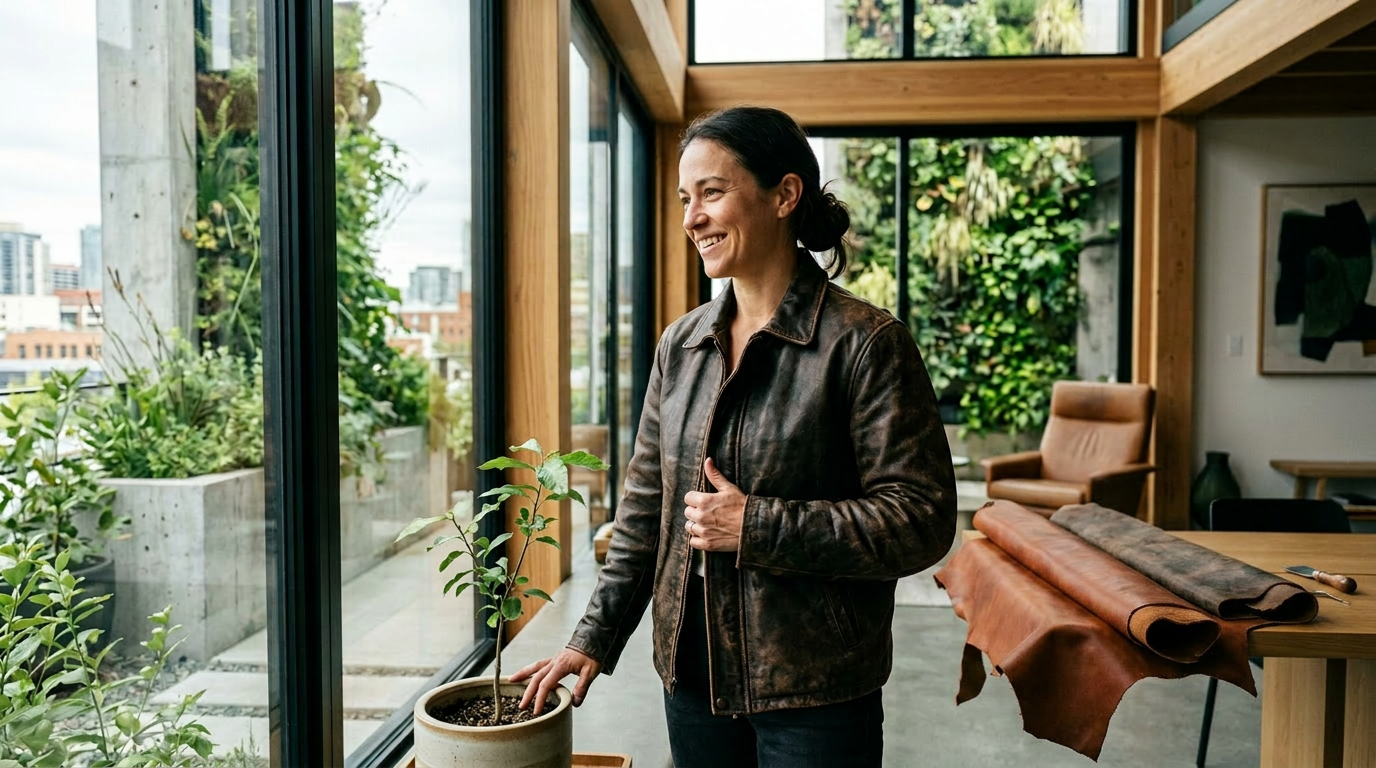
Discover why genuine leather is the most sustainable choice. Learn about longevity, haptics, and eco-friendly production at ProjektLeder.

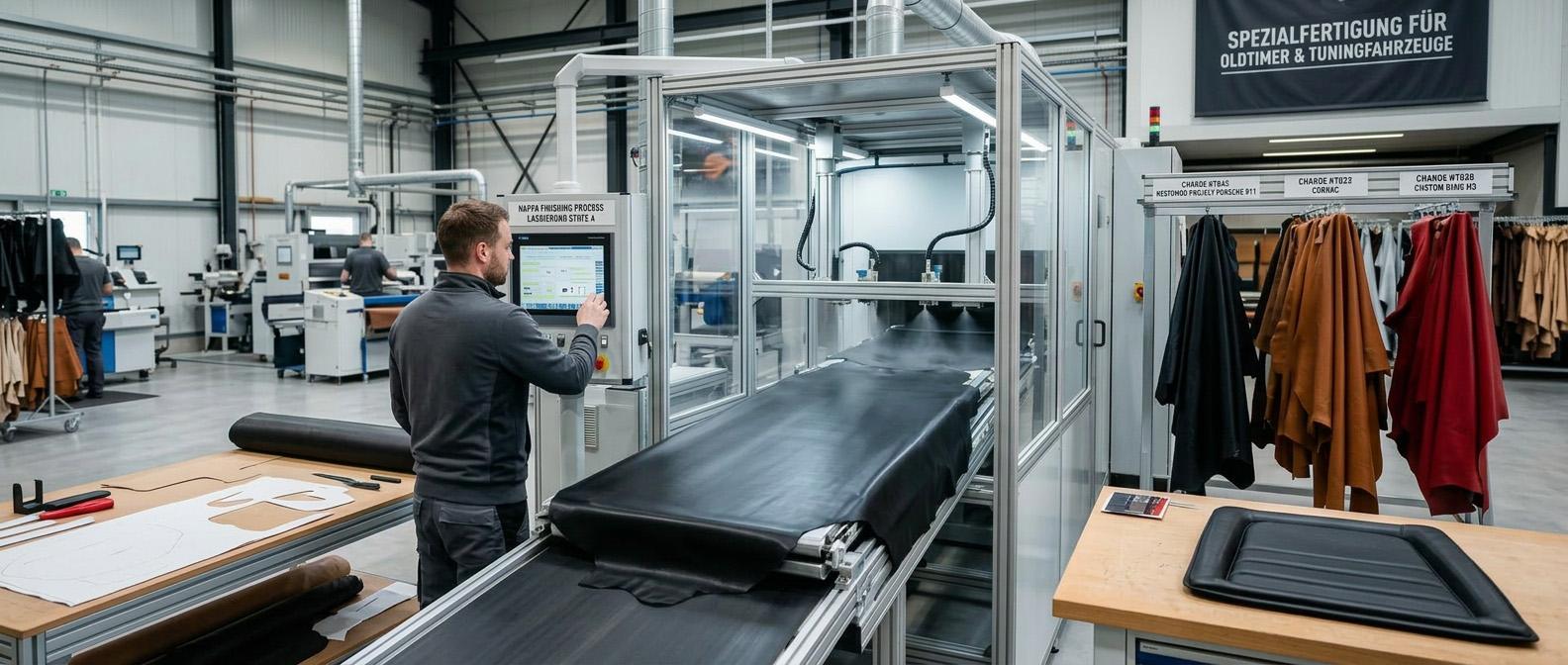
Elevate your restoration. Bespoke car leather for classics & tuning. OEM standards, UV protection & 3 color samples. Quality by ProjectLeather.
01/05/2026
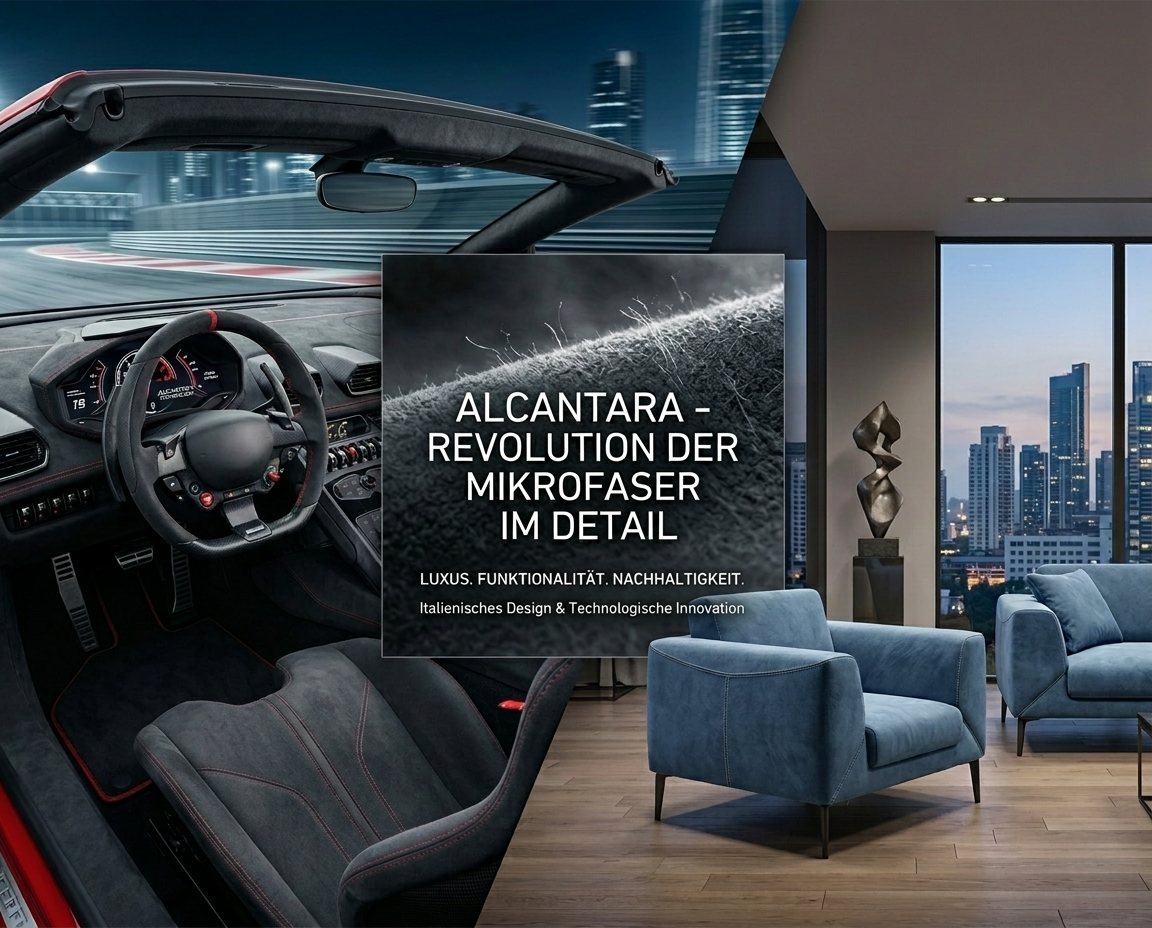
Discover the fusion of Italian style and high-tech fibers. Learn why Alcantara is the ultimate choice for automotive and furniture excellence.