18/05/2026
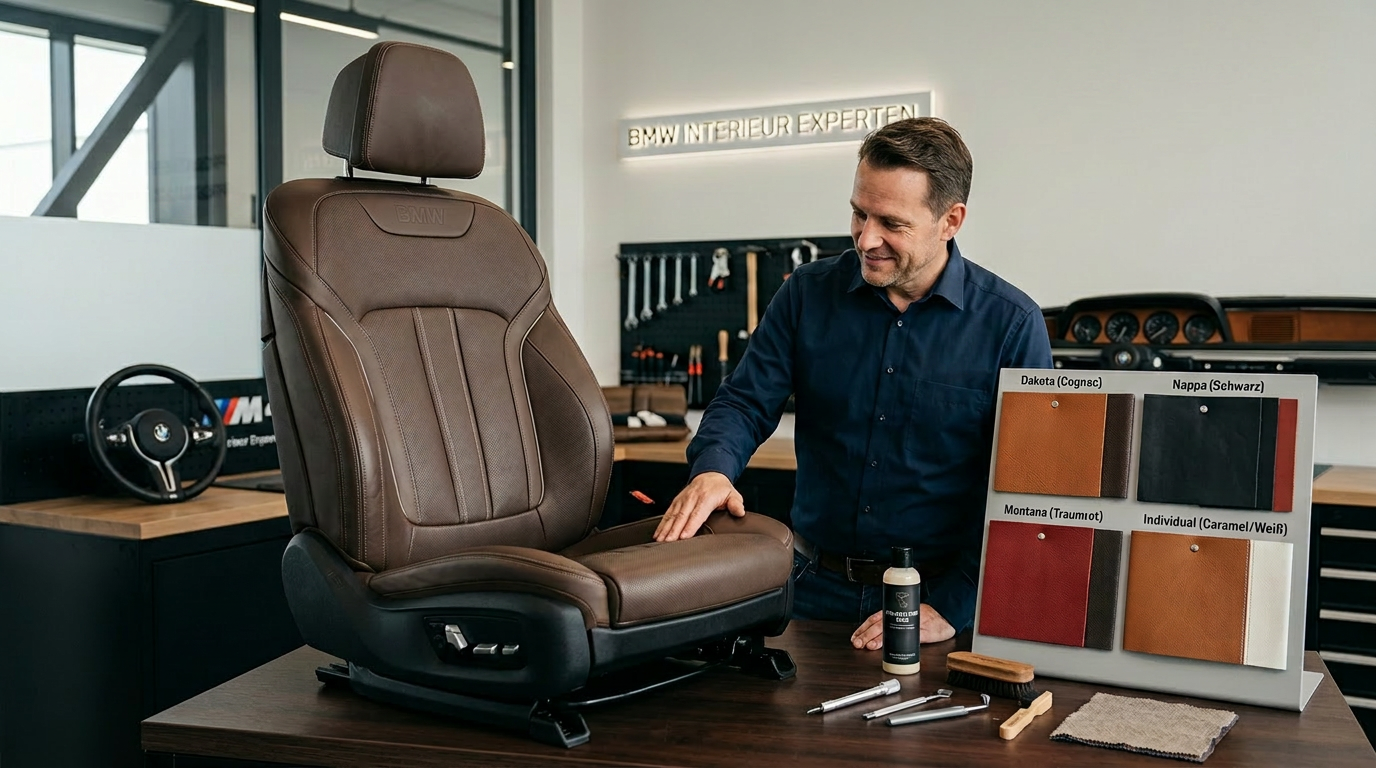
BMW Leather Guide: From Dakota to Individual
The evolution of Bavarian interior culture. Discover material properties, value retention, and authentic restoration at ProjektLeder.


Leather. Faux leather. Fabrics - Genuine quality.
€129.50
Content: 1 lenear metre / €129.50
Available, delivery time: 2-5 days
ALCANTARA® Pannel is the backing-free version of Alcantara, built for one job: wrapping around demanding, complex shapes without wrinkling or bunching. It's remarkably light, stretches with ease, and carries that unmistakable velvety suede finish people can't resist touching. That combination of feel and flexibility is exactly why carmakers, tech brands and interior designers around the world reach for it.
Dashboards, headliners, door trims and steering wheel spokes all benefit from its grip and finish.
Premium phone cases and cushioned padding for high-end headphones.
Wall coverings, bag linings and standout accents on garments and accessories.
The standard "Cover" version has a reinforcing backing. Pannel deliberately drops it. The payoff is a thinner, lighter fabric with genuine stretch — precisely what's needed when a surface has curves, corners and tight radii that ordinary upholstery fabric can't follow.
From Mercedes to BMW to Porsche, this is the fabric marques reach for when a cockpit needs a genuinely sporty, premium touch — and the same quality now finds its way into smartphones and audio gear too.
Production is climate-neutral from the outset. The fabric itself resists UV damage, so it won't fade under strong sunlight, and it helps keep surface temperatures comfortable no matter where it's applied.
Water and dirt barely stick to the surface, so a damp cloth is usually all it takes. When it needs a deeper clean, this version can go into the wash at up to 40 °C and still come out looking and feeling like new.
Bottom line: ALCANTARA® Pannel gives you the freedom to shape even the most demanding surfaces, ending up with that exclusive, velvety look that defines the premium segment.
Photos only tell you so much — Alcantara® is really something you need to feel. Get in touch and we'll send you an original sample so you can judge the stretch and colour depth for yourself.
| Eigenschaft | Wert | Beschreibung |
|---|---|---|
| Product number: | ALC_Pa-sienna-|-4914 | |
| AZO dyes: | umweltfreundliche Herstellung | |
Was versteht man unter AZO-Farbstoffen bei echtem Leder, Kunstleder und Stoffen? AZO-Farbstoffe sind synthetische Farbstoffe, die eine sogenannte Azo-Gruppe (-N=N-) in ihrer chemischen Struktur enthalten. Sie werden häufig zur Einfärbung von Textilien, Leder und Kunstleder verwendet, da sie intensive Farben und eine gute Haltbarkeit bieten. Einige dieser Farbstoffe können jedoch unter bestimmten Bedingungen aromatische Amine freisetzen, die als krebserregend oder allergieauslösend gelten. Deshalb sind viele AZO-Farbstoffe in der EU gesetzlich verboten oder stark eingeschränkt. Bei echtem Leder AZO-Farbstoffe wurden früher häufig zur Einfärbung von Leder verwendet. Heute dürfen in der EU keine AZO-Farbstoffe mehr eingesetzt werden, die verbotene aromatische Amine freisetzen. Hochwertiges Leder ist in der Regel AZO-frei und entsprechend zertifiziert (z. B. OEKO-TEX®, Blauer Engel). Leder aus unsicheren Herkunftsländern ohne Prüfung kann weiterhin belastet sein. Bei Kunstleder Kunstleder wird meist mit Farbpigmenten auf PU- oder PVC-Basis beschichtet, die ebenfalls AZO-Farbstoffe enthalten können. Auch hier sind viele problematische AZO-Verbindungen in Europa verboten. Qualitätsprodukte aus der EU unterliegen der REACH-Verordnung und sind in der Regel frei von verbotenen AZO-Stoffen. Günstige Importware kann ein Risiko darstellen, wenn keine Schadstoffprüfungen durchgeführt wurden. Bei Stoffen (Textilien) AZO-Farbstoffe waren lange Zeit weit verbreitet in der Textilfärbung, besonders bei intensiven Farben. In der EU ist die Verwendung bestimmter AZO-Farbstoffe, die krebserregende Amine freisetzen, verboten. Vor allem bei Textilien mit Hautkontakt (z. B. Unterwäsche, Bettwäsche, Babybekleidung) ist der Verzicht auf AZO-Farben gesetzlich geregelt. Zertifizierte Textilien (z. B. OEKO-TEX®, GOTS) sind auf AZO-Freiheit geprüft. Fazit: AZO-Farbstoffe können in Leder, Kunstleder und Stoffen vorkommen, wenn sie nicht nach geltenden Umwelt- und Gesundheitsstandards produziert wurden. In der EU gelten strenge Vorschriften, um gesundheitsschädliche Verbindungen zu verbieten. Verbraucher sollten auf Zertifizierungen und Herkunft achten, um gesundheitliche Risiken durch AZO-Farben zu vermeiden.synthetische Farbstoffe, die eine sogenannte Azo-Gruppe (-N=N-) in ihrer chemischen Struktur enthalten. Sie werden häufig zur Einfärbung von Textilien, Leder und Kunstleder verwendet, da sie intensive Farben und eine gute Haltbarkeit bieten. Einige dieser Farbstoffe können jedoch unter bestimmten Bedingungen aromatische Amine freisetzen, die als krebserregend oder allergieauslösend gelten. Deshalb sind viele AZO-Farbstoffe in der EU gesetzlich verboten oder stark eingeschränkt. **Bei echtem Leder** * AZO-Farbstoffe wurden früher häufig zur Einfärbung von Leder verwendet. * Heute dürfen in der EU keine AZO-Farbstoffe mehr eingesetzt werden, die verbotene aromatische Amine freisetzen. * Hochwertiges Leder ist in der Regel AZO-frei und entsprechend zertifiziert (z. B. OEKO-TEX®, Blauer Engel). * Leder aus unsicheren Herkunftsländern ohne Prüfung kann weiterhin belastet sein. **Bei Kunstleder** * Kunstleder wird meist mit Farbpigmenten auf PU- oder PVC-Basis beschichtet, die ebenfalls AZO-Farbstoffe enthalten können. * Auch hier sind viele problematische AZO-Verbindungen in Europa verboten. * Qualitätsprodukte aus der EU unterliegen der REACH-Verordnung und sind in der Regel frei von verbotenen AZO-Stoffen. * Günstige Importware kann ein Risiko darstellen, wenn keine Schadstoffprüfungen durchgeführt wurden. **Bei Stoffen (Textilien)** * AZO-Farbstoffe waren lange Zeit weit verbreitet in der Textilfärbung, besonders bei intensiven Farben. * In der EU ist die Verwendung bestimmter AZO-Farbstoffe, die krebserregende Amine freisetzen, verboten. * Vor allem bei Textilien mit Hautkontakt (z. B. Unterwäsche, Bettwäsche, Babybekleidung) ist der Verzicht auf AZO-Farben gesetzlich geregelt. * Zertifizierte Textilien (z. B. OEKO-TEX®, GOTS) sind auf AZO-Freiheit geprüft. **Fazit:** AZO-Farbstoffe können in Leder, Kunstleder und Stoffen vorkommen, wenn sie nicht nach geltenden Umwelt- und Gesundheitsstandards produziert wurden. In der EU gelten strenge Vorschriften, um gesundheitsschädliche Verbindungen zu verbieten. Verbraucher sollten auf Zertifizierungen und Herkunft achten, um gesundheitliche Risiken durch AZO-Farben zu vermeiden. | ||
| Abrasion cycles: | ≥ 30.000 Touren martindale - ≥ 150.000 Ende | |
What is meant by abrasion cycles (Martindale test) in genuine leather, synthetic leather, and fabrics? Abrasion cycles indicate how many rubbing movements (cycles) a material can withstand before showing visible wear or breakdown. This value is crucial for assessing abrasion resistance, especially in heavily used applications like upholstery, car seats, or clothing. The higher the number of cycles, the more durable the material. In genuine leather: · Abrasion resistance varies depending on the finish and surface treatment. · High-quality upholstery leather often withstands 10,000 to over 50,000 cycles. · The natural grain and type of finish heavily influence results. Relevant standards: - DIN EN ISO 17076-1 – Determination of abrasion resistance of leather (Martindale method) - ISO 5470-1 – Abrasion test using Taber Abraser (less common for leather) In synthetic leather: · Durability depends on the PU or PVC coating quality and the backing material. · Premium synthetic leather can achieve up to 100,000 abrasion cycles or more. · Lower-quality versions may crack or peel prematurely. Relevant standards: - ISO 12947-2 – Determination of abrasion resistance of coated textiles (Martindale) - ISO 5470-1 – Abrasion test using Taber Abraser In fabrics (textiles): · Abrasion resistance depends on the fiber type, weave, and finishing. · Standard upholstery fabrics: approx. 15,000–30,000 cycles · Contract or outdoor fabrics: up to and beyond 100,000 cycles Relevant standards: - ISO 12947-2 – Martindale method for determining abrasion resistance - DIN EN ISO 12947-1 to -4 – cover test setup, procedure, and evaluation Conclusion: Abrasion cycles (Martindale test) are a reliable measure of how well a material resists wear from friction. Especially in automotive, furniture, and textile sectors, high resistance ensures longer durability. Key testing standards include DIN EN ISO 17076, ISO 12947, and ISO 5470. | ||
| Allergenic dyes: | nicht nachweisbar | |
What are allergenic dyes in genuine leather, synthetic leather, and fabrics? Allergenic dyes are chemical coloring agents that can trigger allergic reactions in sensitive individuals, usually through skin contact. These dyes are used in textile and leather processing to color materials. Some of these substances are considered harmful to health and are therefore regulated or banned by law, especially in products that come into direct contact with the skin. In genuine leather Certain azo dyes or chromium-based dyes used in leather production are known allergens. - Chromium VI, which can form during improper tanning processes, is particularly sensitizing and strictly monitored. - High-quality leather should be chromium-free or treated with tested, low-allergen dyes. - Leather certified by OEKO-TEX® or similar environmental/health standards is usually free from allergenic substances. In synthetic leather Synthetic leather is typically dyed using synthetic pigments and PU or PVC coatings. These coatings can contain problematic dyes, especially in low-grade products. High-quality synthetic leather sold in the EU is subject to the REACH regulation and is generally free from banned azo dyes. Caution is advised with imported goods from non-EU countries without certification. In fabrics (textiles) In textiles, allergenic dyes are especially critical since they often come into direct contact with the skin (e.g., clothing, bedding). Azo dyes, disperse dyes, and reactive dyes are particularly known for causing contact allergies. Many of these substances are banned or heavily restricted in Europe—especially for baby or skin-contact products. - Textiles certified by OEKO-TEX® or GOTS are generally considered safe. Conclusion: Allergenic dyes can be found in genuine leather, synthetic leather, and textiles when unregulated dyeing processes are used. For health-conscious or sensitive individuals, it is recommended to purchase certified, toxin-tested materials, especially for products that come into direct contact with the skin. | ||
| Light constancy: | ≥3 (grey scale) Xenontest Beta, gemäß VDA 75202 / FAKRA | |
What is meant by light fastness in genuine leather, synthetic leather, and fabrics? Light fastness refers to a material’s ability to retain its color and surface properties when exposed to prolonged natural or artificial light (especially UV radiation). It is a key quality factor for materials exposed to sunlight over time, such as furniture upholstery, car seats, or outdoor textiles. In genuine leather · Genuine leather can fade or discolor under intense light exposure—depending on the quality of the dye and surface treatment. · Fully dyed leather with lightfast pigments has higher light fastness. · This is particularly important in the automotive and furniture sectors for maintaining long-term appearance. Relevant testing standards: · DIN EN ISO 105-B02 (Determination of light fastness of leather) · DIN EN ISO 105-B06 (Combined assessment of light and heat exposure – heat and light fastness) In synthetic leather · Synthetic leather reacts differently to UV radiation depending on its base (PU, PVC). · High-quality PU synthetic leather with UV-stabilized treatments shows better light fastness than basic PVC materials. · Poor light fastness may cause discoloration, brittleness, or surface degradation. Relevant testing standards: · DIN EN ISO 105-B02 · ISO 4892-2 (Artificial weathering with xenon arc light) In fabrics (textiles) · Textiles made of synthetic fibers (e.g., polyester, acrylic) are generally more light-resistant than natural fibers like cotton or linen. · Color fastness is crucial for curtains, upholstery, sun protection, or outdoor clothing. · Even dyed fabrics may darken or fade under light exposure. Relevant testing standards: · DIN EN ISO 105-B02 · ISO 105-B04 (For outdoor applications with xenon arc light) · ISO 4892-2 (Artificial light aging) Conclusion: Light fastness is an essential material property for all applications where products are exposed to sunlight or artificial light. It helps preserve the color and surface integrity of materials over time. The most important standards for evaluating light fastness include DIN EN ISO 105-B02, B06, B04, and ISO 4892-2. | ||
| Rub fastness: | ≥ 3/4 nass (White Scale) gemäß EN ISO 105/X12, ≥ 4 trocken (White Scale) gemäß EN ISO 105/X12 | |
What is rub fastness in genuine leather, synthetic leather, and fabrics? Rub fastness refers to the resistance of a dyed or coated material to mechanical friction. It indicates how much color or coating rubs off or transfers to other materials under dry or wet conditions. This property is especially important for furniture, clothing, or automotive interiors. In genuine leather · Rub fastness is critical for maintaining color and finish on the leather surface. · Pigmented leathers may show color transfer if rub fastness is low. · Testing is done under both dry and wet conditions. Relevant standard: · DIN EN ISO 11640 – Leather – Determination of color fastness to rubbing In synthetic leather · For PU or PVC-coated synthetic leather, pigment adhesion to the surface is key. · Poor rub fastness leads to visible abrasion or color transfer. · Crucial in high-use areas like seating or steering wheels. Relevant standards: · DIN EN ISO 105-X12 – Textiles – Determination of color fastness to rubbing · DIN EN ISO 11640 – also applicable to coated materials In fabrics (textiles) · Rub fastness is an essential quality for garments, curtains, seat covers, etc. · Dark, highly saturated fabrics often have lower rub fastness. · Dry and wet rub fastness may differ significantly. Relevant standard: · DIN EN ISO 105-X12 – Standard method for assessing color fastness to rubbing Conclusion: Rub fastness is crucial for the appearance, functionality, and usability of leather, synthetic leather, and fabrics. It ensures that colors do not transfer onto clothing or surrounding surfaces. The key test standards are DIN EN ISO 11640 for leather and DIN EN ISO 105-X12 for synthetic leather and textiles. | ||
| Tensile strenght: | Kette ≥220 N | Schuß ≥170 N gemäß UNI EN 29073/3 | |
What is tensile strength and its impact in genuine leather, synthetic leather, and fabrics? Tensile strength refers to the maximum amount of stretching force a material can withstand before breaking. It is a key indicator of durability, performance, and safety, especially in applications involving mechanical stress such as upholstery, automotive interiors, bags, straps, or garments. In genuine leather: · Natural leather has a fibrous structure that gives it high tensile strength. · Strength varies depending on the animal type, tanning method, thickness, and direction of the cut. · Chrome-tanned leather typically offers high strength with good flexibility. Relevant standards: - DIN EN ISO 3376 – Determination of tensile strength and elongation of leather - ISO 2589 – Measurement of leather thickness, relevant to tensile performance In synthetic leather: · Tensile strength depends on the quality of the textile backing and the surface coating (PU or PVC). · PU leather with textile backing is generally stronger than PVC types. · Poor-quality faux leather may crack, peel, or deform under stress. Relevant standards: - ISO 1421 – Determination of tensile strength for coated fabrics (strip or grab method) - ISO 2286-2 – Determination of thickness and mass per unit area of coated fabrics In fabrics (textiles): · Tensile strength varies based on fiber type (e.g. polyester, cotton), weave pattern, and finishing. · Technical textiles like Cordura have high resistance, while light cotton fabrics are more prone to tearing. · High tensile strength is critical for outdoor gear, workwear, and protective clothing. Relevant standards: - ISO 13934-1 – Tensile strength of textiles: Strip method - ISO 13934-2 – Tensile strength of textiles: Grab method Conclusion: Tensile strength is a key mechanical property for assessing the durability and load-bearing capacity of leather, synthetic leather, and fabrics. While genuine leather naturally performs well, the performance of artificial and textile materials depends heavily on their construction. Standards such as DIN EN ISO 3376, ISO 1421, and ISO 13934 provide reliable and consistent testing methods. | ||
| Thickness: | 0.83 mm | |
What is meant by thickness in genuine leather, imitation leather, and fabrics? Thickness is the physical height of a material, measured in millimeters (mm). It directly influences the robustness, flexibility, suitability for processing, and intended use of a material—be it genuine leather, imitation leather, or textiles. 1. Thickness in Genuine Leather Genuine leather is a natural product and varies in thickness depending on the animal species, its position on the hide, and the finishing process. It is measured in mm or oz (ounces per square foot, especially in English-speaking countries). Common thickness ranges: - Fine leather (e.g., gloves, clothing) 0.5 – 1.0 mm - Bags, accessories 1.2 – 2.0 mm - Belts, straps 3.0 – 4.0 mm - Saddle or tool leather 4.0 mm and more Thickness significantly affects stiffness and the range of applications. 2. Thickness of Synthetic Leather Synthetic leather usually consists of a backing fabric and a coating (e.g., PU or PVC). The thickness is determined by the combined height of both layers. Typical values: - Lightweight synthetic leather (e.g., clothing) 0.5 – 0.8 mm - Upholstery synthetic leather 0.9 – 1.2 mm - Automotive or outdoor 1.2 – 2.0 mm Thicker synthetic leather is more durable but more difficult to sew. 3. Thickness of Fabrics The thickness of fabrics is less frequently specified directly, but it is certainly relevant in technical textiles or for specific applications. The thickness depends heavily on the material, weave, and finish. Fabric Types - Lightweight fabrics (e.g., chiffon) 0.1–0.3 mm - Cotton fabrics 0.3–0.6 mm - Denim 0.6–1.0 mm - Fleece, softshell 1.0–2.5 mm - Technical upholstery fabrics up to 5 mm or more Thickness affects drape, thermal performance, and sewability. Conclusion: Thickness and Weight Two materials can have the same thickness but different weights (e.g., airy vs. dense structure). Conversely, a material can be heavy but thin (e.g., tightly woven nylon). | ||
| Weight: | 230 g/m² | |
Was versteht man unter dem Gewicht pro Quadratmeter (g/m²) bei Kunstleder und Stoffen? Das Gewicht pro Quadratmeter (auch Flächengewicht genannt) gibt an, wie schwer ein Quadratmeter eines Materials ist, gemessen in Gramm pro Quadratmeter (g/m²). Es ist ein wichtiges Qualitäts- und Anwendungskriterium für textile Materialien und Kunstleder. 1. Bedeutung bei Kunstleder Beim Kunstleder zeigt das Gewicht pro m²: - Dicke & Strapazierfähigkeit: Ein höheres Gewicht deutet oft auf ein robusteres, dickeres Material hin. - Haptik & Verarbeitung:Schwereres Kunstleder fühlt sich oft hochwertiger an, ist aber weniger flexibel. Einsatzbereiche: - 300–400 g/m²: dünnes, flexibles Kunstleder für Bekleidung oder Deko - 500–800 g/m²: Standard für Möbel oder Fahrzeuginterieur - 800–1.200+ g/m²: sehr robust für Taschen, Sitzbezüge, Outdoor-Anwendungen 2. Bedeutung bei Stoffen Bei Stoffen beeinflusst das Gewicht: - Transparenz / Blickdichte - Wärmeleistung - Faltenwurf & Fall - Verwendungszweck Warum ist das Gewicht pro m² wichtig? - Vergleichbarkeit: Zwei Stoffe aus gleichem Material können sich unterschiedlich anfühlen – das Gewicht macht den Unterschied. - Verarbeitung: Für Näharbeiten oder Polsterprojekte muss man wissen, ob das Material zu schwer oder zu leicht ist. - Qualitätsmerkmal: Oft (aber nicht immer) steht ein höheres Gewicht für bessere Qualität. | ||
| Width: | 142 cm ± 2% | |
Breite bei Kunstleder & Stoffen Die Breite gibt die nutzbare Materialbreite pro Rolle an (meist in cm). Wichtig für Zuschnitt, Verschnittminimierung und Flächenberechnung. Typische Breiten: Kunstleder: 140 cm (Standard), 150–160 cm (Taschen/Sattel), Sondermaße 120–180 cm. Achtung: Nicht dehnbar – Nutzbreite kann durch Beschichtung leicht abweichen. Stoffe: 140 cm (Bekleidung/Deko), 150–160 cm (Jersey, Leinen), 280–300 cm (Bettwäsche/Vorhänge). Unter 100 cm bei Spezialstoffen. Warum ist die Breite wichtig? Bestimmt die benötigte Länge für deine Fläche (z. B. 2 m × 140 cm = 2,8 m²). Große Breiten sparen Verschnitt (z. B. für durchgehende Vorhänge oder Polster). Bei dehnbaren Stoffen: Nutzbreite kann etwas kleiner sein als angegeben. Tipp: Miss deine Schnittteile vor dem Kauf – so vermeidest du Überraschungen! | ||
| Gewicht: | 1.05 kg | |
 | Blog
18/05/2026
The evolution of Bavarian interior culture. Discover material properties, value retention, and authentic restoration at ProjektLeder.

Discover why genuine leather is the most sustainable choice. Learn about longevity, haptics, and eco-friendly production at ProjektLeder.

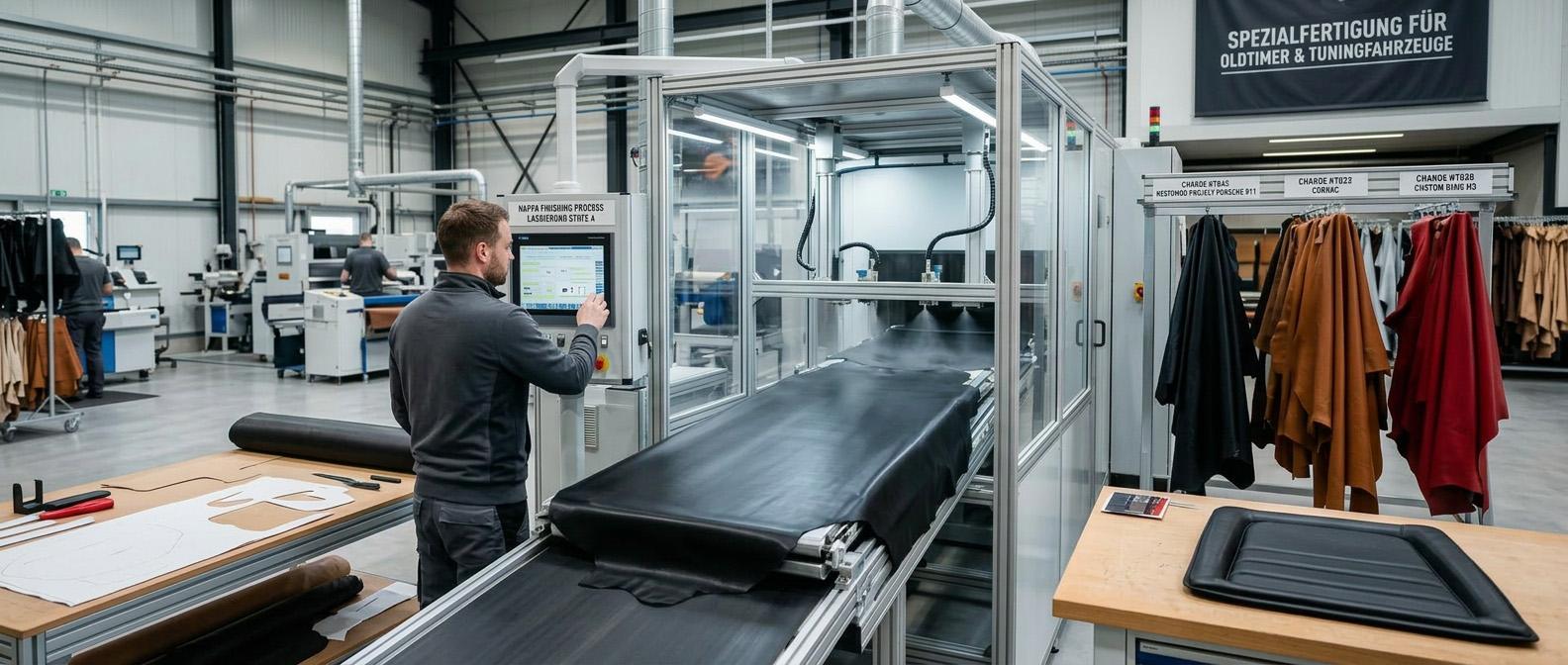
Elevate your restoration. Bespoke car leather for classics & tuning. OEM standards, UV protection & 3 color samples. Quality by ProjectLeather.

01/05/2026
Discover the fusion of Italian style and high-tech fibers. Learn why Alcantara is the ultimate choice for automotive and furniture excellence.