

18/05/2026
BMW Leather Guide: From Dakota to Individual
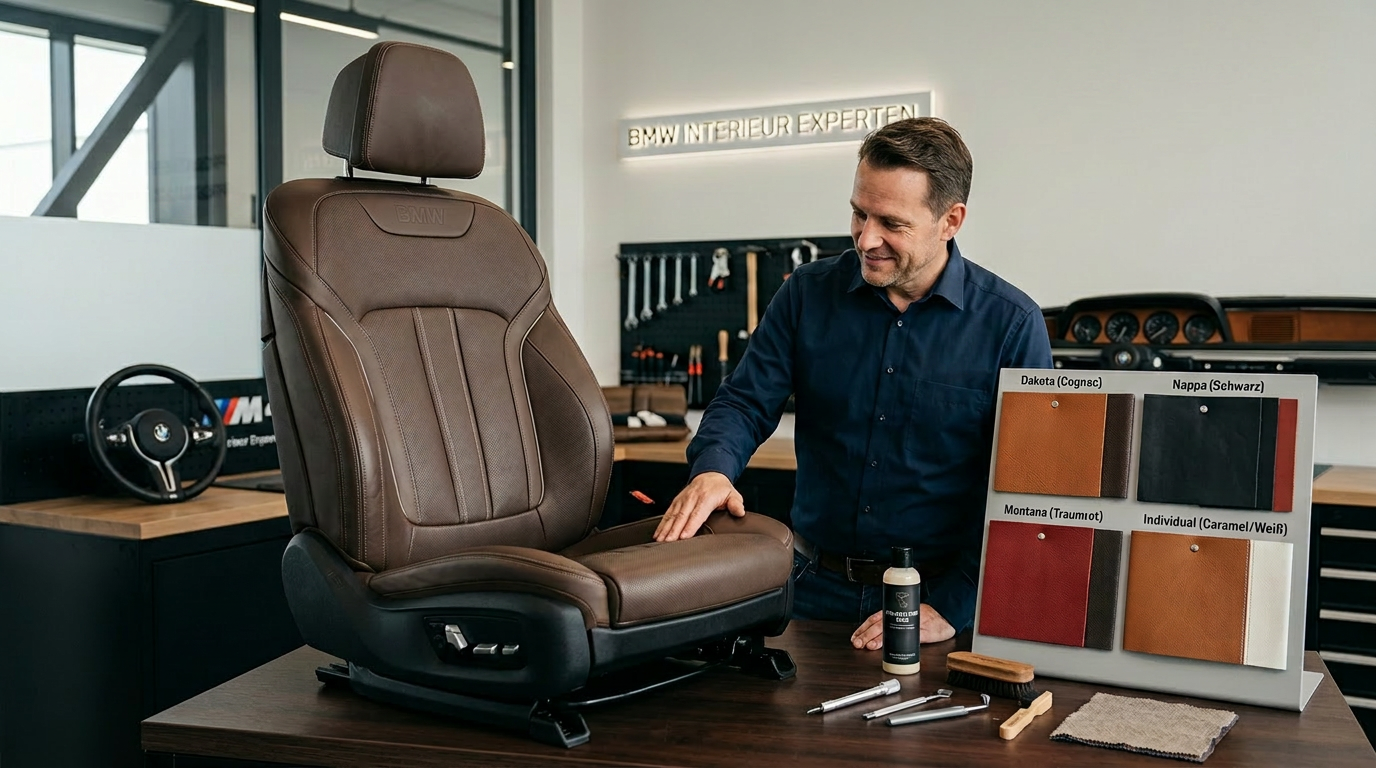
The evolution of Bavarian interior culture. Discover material properties, value retention, and authentic restoration at ProjektLeder.


Leather. Faux leather. Fabrics - Genuine quality.
€136.50
Content: 1 lenear metre / €136.50
Available, delivery time: 2-5 days
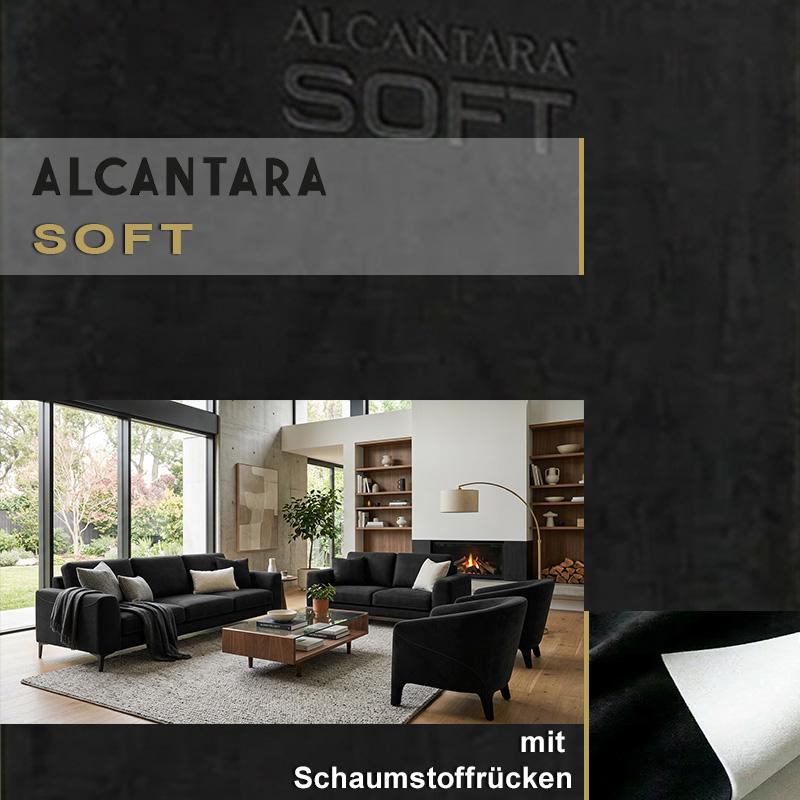
Alcantara® SOFT with integrated foam backing redefines the process of covering complex shapes and challenging surfaces. This highly elastic premium material stretches smoothly around sharp radiuses, edges, and recesses without creasing. It is the ultimate solution for precise trimming jobs, modern furniture manufacturing, and high-end interior designs that demand an absolutely flawless surface finish.
Important Application Note: The ultra-thin protective scrim (Charmeuse) applied to the back effectively prevents automotive spray adhesive from soaking too deeply into the foam or damaging it. It serves as the perfect bonding agent for long-lasting adhesion.
The technological foundation of this material is an ultra-fine, premium synthetic microfiber matrix. Featuring a modified, significantly more flexible backing, the fabric gains its exceptional stretchability while maintaining a very low weight. Professionals benefit from uncompromising material quality and a velvety-soft surface that instantly elevates any interior or vehicle design.
Despite its incredible softness and flexibility, the material is exceptionally durable, abrasion-resistant, and built for heavy everyday use. It is also remarkably easy to maintain, as dust and light surface stains can be removed effortlessly. A premium selection of deep, fade-resistant, and UV-stable colours ensures maximum creative freedom with unparalleled comfort.
Perfect for wrapping A-B-C pillars, dashboards, custom trim elements, and complex vehicle headliners.
Ideal for elegant wall and ceiling panelling as well as comfortable seating solutions in premium camper conversions.
Excellent for upholstering delicate chairs, soft sofas, luxury armchairs, and modern designer furniture.
For premium wall panels, luxury home accessories, and bespoke residential or commercial design concepts.
Whether you are a professional coachbuilder, car trimmer, custom upholstery shop, interior decorator, or a demanding DIY enthusiast: Alcantara® SOFT excels where standard upholstery fabrics fail due to a lack of elasticity. It delivers the perfect combination of technical multi-directional flexibility and the timeless, luxurious look of genuine suede. Invest in sustainable value and a noticeably exclusive atmosphere!
| Eigenschaft | Wert | Beschreibung |
|---|---|---|
| Product number: | Alc_SOFT | |
| Abrasion cycles: | ≥ 30.000 Touren martindale (Oberstoff), gemäß UNI EN ISO 12947-2 | |
What is meant by abrasion cycles (Martindale test) in genuine leather, synthetic leather, and fabrics? Abrasion cycles indicate how many rubbing movements (cycles) a material can withstand before showing visible wear or breakdown. This value is crucial for assessing abrasion resistance, especially in heavily used applications like upholstery, car seats, or clothing. The higher the number of cycles, the more durable the material. In genuine leather: · Abrasion resistance varies depending on the finish and surface treatment. · High-quality upholstery leather often withstands 10,000 to over 50,000 cycles. · The natural grain and type of finish heavily influence results. Relevant standards: - DIN EN ISO 17076-1 – Determination of abrasion resistance of leather (Martindale method) - ISO 5470-1 – Abrasion test using Taber Abraser (less common for leather) In synthetic leather: · Durability depends on the PU or PVC coating quality and the backing material. · Premium synthetic leather can achieve up to 100,000 abrasion cycles or more. · Lower-quality versions may crack or peel prematurely. Relevant standards: - ISO 12947-2 – Determination of abrasion resistance of coated textiles (Martindale) - ISO 5470-1 – Abrasion test using Taber Abraser In fabrics (textiles): · Abrasion resistance depends on the fiber type, weave, and finishing. · Standard upholstery fabrics: approx. 15,000–30,000 cycles · Contract or outdoor fabrics: up to and beyond 100,000 cycles Relevant standards: - ISO 12947-2 – Martindale method for determining abrasion resistance - DIN EN ISO 12947-1 to -4 – cover test setup, procedure, and evaluation Conclusion: Abrasion cycles (Martindale test) are a reliable measure of how well a material resists wear from friction. Especially in automotive, furniture, and textile sectors, high resistance ensures longer durability. Key testing standards include DIN EN ISO 17076, ISO 12947, and ISO 5470. | ||
| Fire behavior: | DIN 75200 - Fahrzeuge, FMVSS302 Brandverhalten von Materialien im Fahrzeuginnenraum | |
What is meant by fire behavior in genuine leather, synthetic leather, and fabrics? Fire behavior describes how a material reacts to fire or high heat exposure – such as whether it burns, how quickly it ignites, whether it drips, smokes, or releases toxic gases. This property is particularly important when selecting materials for furniture, vehicle interiors, public buildings, aviation, or protective clothing. In many areas of application, binding standards such as DIN, EN, and ISO apply, which define, test, and classify the fire behavior of materials. Genuine Leather Genuine leather is naturally flame-resistant and typically only burns under direct, prolonged flame exposure. It chars when burning and does not form melting drips. Chrome-tanned leather may show improved fire performance. Relevant standards for upholstery leather and furniture leather include: - DIN EN ISO 8191-1 / -2: Fire behavior of upholstered furniture – ignition source cigarette and match - DIN EN 1021-1 / 1021-2: Ignitability of upholstered furniture by smoldering cigarettes and small open flames - DIN EN ISO 6940 / 6941: Determination of vertical flame spread of textiles and composite materials such as coated leather - DIN EN ISO 4589-2: Oxygen index for assessing flammability of leather - ISO 3795 / DIN 75200: Burning behavior of materials in automotive interiors (e.g. leather seats or door panels) - FAR 25.853: Standard for materials used in aircraft (for aircraft-grade upholstery leather) In many applications, genuine leather meets the requirements for flame resistance even without additional flame-retardant treatments. Synthetic Leather Synthetic leather is usually made from polyurethane (PU) or polyvinyl chloride (PVC) and exhibits critical fire behavior without treatment: melting, dripping, and smoke development are possible. Its exact reaction depends on the material composition and any flame-retardant additives used. High-quality synthetic leather is often tested according to the following standards: - DIN EN 1021-1 and 1021-2 (Ignition behavior of upholstered furniture) - DIN 4102-B1/B2 (Building products: flame-resistant/normal flammability) - ISO 3795 / DIN 75200 (Automotive interiors) - FMVSS 302 (U.S. standard for vehicle interiors) Fabrics (Textiles) The fire behavior of textiles varies significantly depending on fiber type and treatment: - Cotton burns easily - Polyester melts and drips - Wool is relatively flame-resistant Textiles can also be treated with flame retardants. Relevant standards include: - DIN EN 13501-1 (Fire classification of construction products) - DIN EN 1021-1 / 1021-2 (Ignitability of upholstered furniture) - DIN 4102-B1/B2 (Classic fire protection standard) - DIN EN ISO 6940 / 6941 (Flame spread tests) - NF P92-503 (French classification M1–M4) - FAR 25.853 (Aviation standard) Conclusion: Fire behavior is a key safety criterion in material selection. Genuine leather is naturally relatively flame-resistant and often meets regulatory requirements without additional chemicals. In contrast, synthetic leather and textiles usually require flame-retardant treatment to comply with standards such as DIN EN 1021, DIN 4102, ISO 6941, or FAR 25.853. In public, commercial, or safety-critical areas, compliance with these standards is essential. | ||
| Light constancy: | 5–6, Optimal für Fahrzeug-Innenräume & Wohnmobile (UV-Stabilität), gemäß UNI EN ISO 105-B02 | |
What is meant by light fastness in genuine leather, synthetic leather, and fabrics? Light fastness refers to a material’s ability to retain its color and surface properties when exposed to prolonged natural or artificial light (especially UV radiation). It is a key quality factor for materials exposed to sunlight over time, such as furniture upholstery, car seats, or outdoor textiles. In genuine leather · Genuine leather can fade or discolor under intense light exposure—depending on the quality of the dye and surface treatment. · Fully dyed leather with lightfast pigments has higher light fastness. · This is particularly important in the automotive and furniture sectors for maintaining long-term appearance. Relevant testing standards: · DIN EN ISO 105-B02 (Determination of light fastness of leather) · DIN EN ISO 105-B06 (Combined assessment of light and heat exposure – heat and light fastness) In synthetic leather · Synthetic leather reacts differently to UV radiation depending on its base (PU, PVC). · High-quality PU synthetic leather with UV-stabilized treatments shows better light fastness than basic PVC materials. · Poor light fastness may cause discoloration, brittleness, or surface degradation. Relevant testing standards: · DIN EN ISO 105-B02 · ISO 4892-2 (Artificial weathering with xenon arc light) In fabrics (textiles) · Textiles made of synthetic fibers (e.g., polyester, acrylic) are generally more light-resistant than natural fibers like cotton or linen. · Color fastness is crucial for curtains, upholstery, sun protection, or outdoor clothing. · Even dyed fabrics may darken or fade under light exposure. Relevant testing standards: · DIN EN ISO 105-B02 · ISO 105-B04 (For outdoor applications with xenon arc light) · ISO 4892-2 (Artificial light aging) Conclusion: Light fastness is an essential material property for all applications where products are exposed to sunlight or artificial light. It helps preserve the color and surface integrity of materials over time. The most important standards for evaluating light fastness include DIN EN ISO 105-B02, B06, B04, and ISO 4892-2. | ||
| Material composition: | 68% Polyster, 32% Polyurethan | |
Was versteht man unter Materialzusammensetzung bei Kunstleder und Stoffen? Die Materialzusammensetzung beschreibt, aus welchen Rohstoffen ein Material besteht – also die prozentuale Aufteilung der einzelnen Komponenten, aus denen ein Stoff oder ein Kunstleder hergestellt wurde. Diese Information ist wichtig für: Pflegehinweise Tragekomfort / Haptik Haltbarkeit / Strapazierfähigkeit Nachhaltigkeit / Recyclingfähigkeit Allergiepotenzial 1. Materialzusammensetzung bei Kunstleder Kunstleder ist ein synthetisches Material, das echtes Leder optisch und haptisch imitieren soll. Typischerweise besteht es aus zwei Hauptbestandteilen: Trägermaterial (Textilbasis): Meist Polyester oder Baumwollgewebe Beschichtung (Deckschicht): Meist PVC (Polyvinylchlorid) oder PU (Polyurethan) Beispiel für die Materialzusammensetzung eines Kunstleders: 60 % Polyurethan (PU), 40 % Polyester 2. Materialzusammensetzung bei Stoffen (Textilien) Bei Stoffen gibt die Zusammensetzung an, welche Fasern in welchem Anteil verwendet wurden. Das ist bei Kleidung, Möbelbezügen oder Vorhängen üblich. Naturfasern: Baumwolle, Wolle, Leinen, Seide Synthetische Fasern: Polyester, Polyamid, Elastan, Acryl Beispiel für die Materialzusammensetzung eines Kleidungsstücks: 80 % Baumwolle, 18 % Polyester, 2 % Elastan Warum ist das wichtig? - Für die richtige Pflege (Waschanleitung, Bügeln) - Für Allergiker oder Menschen mit empfindlicher Haut - Für umweltbewusste Entscheidungen (z. B. Vermeidung von Mikroplastik) - Für die Beurteilung der Qualität oder Haltbarkeit | ||
| Rub fastness: | 4-5 trocken, gemäß EN ISO 105/X12, 4 nass, gemäß EN ISO 105/X12 | |
What is rub fastness in genuine leather, synthetic leather, and fabrics? Rub fastness refers to the resistance of a dyed or coated material to mechanical friction. It indicates how much color or coating rubs off or transfers to other materials under dry or wet conditions. This property is especially important for furniture, clothing, or automotive interiors. In genuine leather · Rub fastness is critical for maintaining color and finish on the leather surface. · Pigmented leathers may show color transfer if rub fastness is low. · Testing is done under both dry and wet conditions. Relevant standard: · DIN EN ISO 11640 – Leather – Determination of color fastness to rubbing In synthetic leather · For PU or PVC-coated synthetic leather, pigment adhesion to the surface is key. · Poor rub fastness leads to visible abrasion or color transfer. · Crucial in high-use areas like seating or steering wheels. Relevant standards: · DIN EN ISO 105-X12 – Textiles – Determination of color fastness to rubbing · DIN EN ISO 11640 – also applicable to coated materials In fabrics (textiles) · Rub fastness is an essential quality for garments, curtains, seat covers, etc. · Dark, highly saturated fabrics often have lower rub fastness. · Dry and wet rub fastness may differ significantly. Relevant standard: · DIN EN ISO 105-X12 – Standard method for assessing color fastness to rubbing Conclusion: Rub fastness is crucial for the appearance, functionality, and usability of leather, synthetic leather, and fabrics. It ensures that colors do not transfer onto clothing or surrounding surfaces. The key test standards are DIN EN ISO 11640 for leather and DIN EN ISO 105-X12 for synthetic leather and textiles. | ||
| Rückseite/Gewebe/Trägermaterial: | 100% Polyurethan (Hocheastischer PUR-Schaum) | |
Das stabilisierende Gewebe (Trägermaterial) Dieses Material ist ein fest aufkaschiertes Textilgewebe. Der Zweck: Dieses zusätzliche Gewebe nimmt dem Material die extreme Eigenelastizität. Es sorgt für Reißfestigkeit, Formstabilität und verhindert, dass sich der Stoff unter Belastung dauerhaft überdehnt oder ausbeult. Der Trennschnitt im Werk: Bei der Herstellung des Vliesstoffes wird der mit Polyurethan getränkte Mikrofaserblock in der Mitte durchgeschnitten. Die äußere Schicht bildet die bekannte Velours-Oberfläche, während auf die Unterseite für die Cover-Variante das Stützgewebe aufgebracht wird. | ||
| Thickness: | ca. 3.0 mm (Variante inkl. 2.2 mm Schaumstoffbasis) | |
What is meant by thickness in genuine leather, imitation leather, and fabrics? Thickness is the physical height of a material, measured in millimeters (mm). It directly influences the robustness, flexibility, suitability for processing, and intended use of a material—be it genuine leather, imitation leather, or textiles. 1. Thickness in Genuine Leather Genuine leather is a natural product and varies in thickness depending on the animal species, its position on the hide, and the finishing process. It is measured in mm or oz (ounces per square foot, especially in English-speaking countries). Common thickness ranges: - Fine leather (e.g., gloves, clothing) 0.5 – 1.0 mm - Bags, accessories 1.2 – 2.0 mm - Belts, straps 3.0 – 4.0 mm - Saddle or tool leather 4.0 mm and more Thickness significantly affects stiffness and the range of applications. 2. Thickness of Synthetic Leather Synthetic leather usually consists of a backing fabric and a coating (e.g., PU or PVC). The thickness is determined by the combined height of both layers. Typical values: - Lightweight synthetic leather (e.g., clothing) 0.5 – 0.8 mm - Upholstery synthetic leather 0.9 – 1.2 mm - Automotive or outdoor 1.2 – 2.0 mm Thicker synthetic leather is more durable but more difficult to sew. 3. Thickness of Fabrics The thickness of fabrics is less frequently specified directly, but it is certainly relevant in technical textiles or for specific applications. The thickness depends heavily on the material, weave, and finish. Fabric Types - Lightweight fabrics (e.g., chiffon) 0.1–0.3 mm - Cotton fabrics 0.3–0.6 mm - Denim 0.6–1.0 mm - Fleece, softshell 1.0–2.5 mm - Technical upholstery fabrics up to 5 mm or more Thickness affects drape, thermal performance, and sewability. Conclusion: Thickness and Weight Two materials can have the same thickness but different weights (e.g., airy vs. dense structure). Conversely, a material can be heavy but thin (e.g., tightly woven nylon). | ||
| Upholstery and padding work: | gerade Schnittkanten möglich, heften möglich, kein ausfransen der Schnittkanten, kleben möglich, nähen möglich, spannen möglich, tackern möglich, weich und dehnfähig | |
What is meant by Saddlery & Upholstery Work? Saddlery and upholstery work refers to skilled craftsmanship involving the processing of leather, synthetic leather, or fabrics to cover, repair, or rebuild seating surfaces, furniture, vehicles, or accessories. Various techniques such as gluing, sewing, stapling, tacking, and stretching are used depending on the material, shape, and function of the respective project. Saddlery Work Saddlers are specialized craftsmen who traditionally work with leather – primarily in the following areas: - Vehicle interiors (e.g. car seats, door panels, steering wheels) - Equestrian equipment (e.g. saddles, bridles, halters) - Motorcycle seats, bags, tarpaulins, vintage car restoration The focus is on robust, functional, and often custom-made leatherwork, where the material is frequently glued, sewn, or stretched. Soft and stretchable leathers are particularly suitable for complex shapes. Upholstery Work Upholstery work refers to the restoration, re-covering, or renewal of seating surfaces, particularly in: -Sofas, armchairs, and chairs (furniture upholstery) - Restaurant or commercial furniture - Vintage car or boat seats - Caravan and motorhome interiors Upholstery materials such as foam, webbing, springs, and covers are used. The cover materials are stapled, tacked, sewn, or glued depending on the application. Through stretching and shaping, smooth, wrinkle-free surfaces are created with high durability and long lifespan. Conclusion: Saddlery and upholstery work are high-quality, primarily manual crafts aimed at enhancing the functionality and appearance of seating furniture or leather-covered products. They combine traditional craftsmanship with modern techniques and rely on versatile working methods such as gluing, sewing, stapling, tacking, and stretching – ideal for custom-made solutions in the furniture, automotive, or accessories sector. | ||
| Weight: | ca. 360 g/m² | |
Was versteht man unter dem Gewicht pro Quadratmeter (g/m²) bei Kunstleder und Stoffen? Das Gewicht pro Quadratmeter (auch Flächengewicht genannt) gibt an, wie schwer ein Quadratmeter eines Materials ist, gemessen in Gramm pro Quadratmeter (g/m²). Es ist ein wichtiges Qualitäts- und Anwendungskriterium für textile Materialien und Kunstleder. 1. Bedeutung bei Kunstleder Beim Kunstleder zeigt das Gewicht pro m²: - Dicke & Strapazierfähigkeit: Ein höheres Gewicht deutet oft auf ein robusteres, dickeres Material hin. - Haptik & Verarbeitung:Schwereres Kunstleder fühlt sich oft hochwertiger an, ist aber weniger flexibel. Einsatzbereiche: - 300–400 g/m²: dünnes, flexibles Kunstleder für Bekleidung oder Deko - 500–800 g/m²: Standard für Möbel oder Fahrzeuginterieur - 800–1.200+ g/m²: sehr robust für Taschen, Sitzbezüge, Outdoor-Anwendungen 2. Bedeutung bei Stoffen Bei Stoffen beeinflusst das Gewicht: - Transparenz / Blickdichte - Wärmeleistung - Faltenwurf & Fall - Verwendungszweck Warum ist das Gewicht pro m² wichtig? - Vergleichbarkeit: Zwei Stoffe aus gleichem Material können sich unterschiedlich anfühlen – das Gewicht macht den Unterschied. - Verarbeitung: Für Näharbeiten oder Polsterprojekte muss man wissen, ob das Material zu schwer oder zu leicht ist. - Qualitätsmerkmal: Oft (aber nicht immer) steht ein höheres Gewicht für bessere Qualität. | ||
| Width: | 142 cm ± 2% | |
Breite bei Kunstleder & Stoffen Die Breite gibt die nutzbare Materialbreite pro Rolle an (meist in cm). Wichtig für Zuschnitt, Verschnittminimierung und Flächenberechnung. Typische Breiten: Kunstleder: 140 cm (Standard), 150–160 cm (Taschen/Sattel), Sondermaße 120–180 cm. Achtung: Nicht dehnbar – Nutzbreite kann durch Beschichtung leicht abweichen. Stoffe: 140 cm (Bekleidung/Deko), 150–160 cm (Jersey, Leinen), 280–300 cm (Bettwäsche/Vorhänge). Unter 100 cm bei Spezialstoffen. Warum ist die Breite wichtig? Bestimmt die benötigte Länge für deine Fläche (z. B. 2 m × 140 cm = 2,8 m²). Große Breiten sparen Verschnitt (z. B. für durchgehende Vorhänge oder Polster). Bei dehnbaren Stoffen: Nutzbreite kann etwas kleiner sein als angegeben. Tipp: Miss deine Schnittteile vor dem Kauf – so vermeidest du Überraschungen! | ||
| Gewicht: | 1.05 kg | |
 | Blog
18/05/2026
The evolution of Bavarian interior culture. Discover material properties, value retention, and authentic restoration at ProjektLeder.
Discover why genuine leather is the most sustainable choice. Learn about longevity, haptics, and eco-friendly production at ProjektLeder.

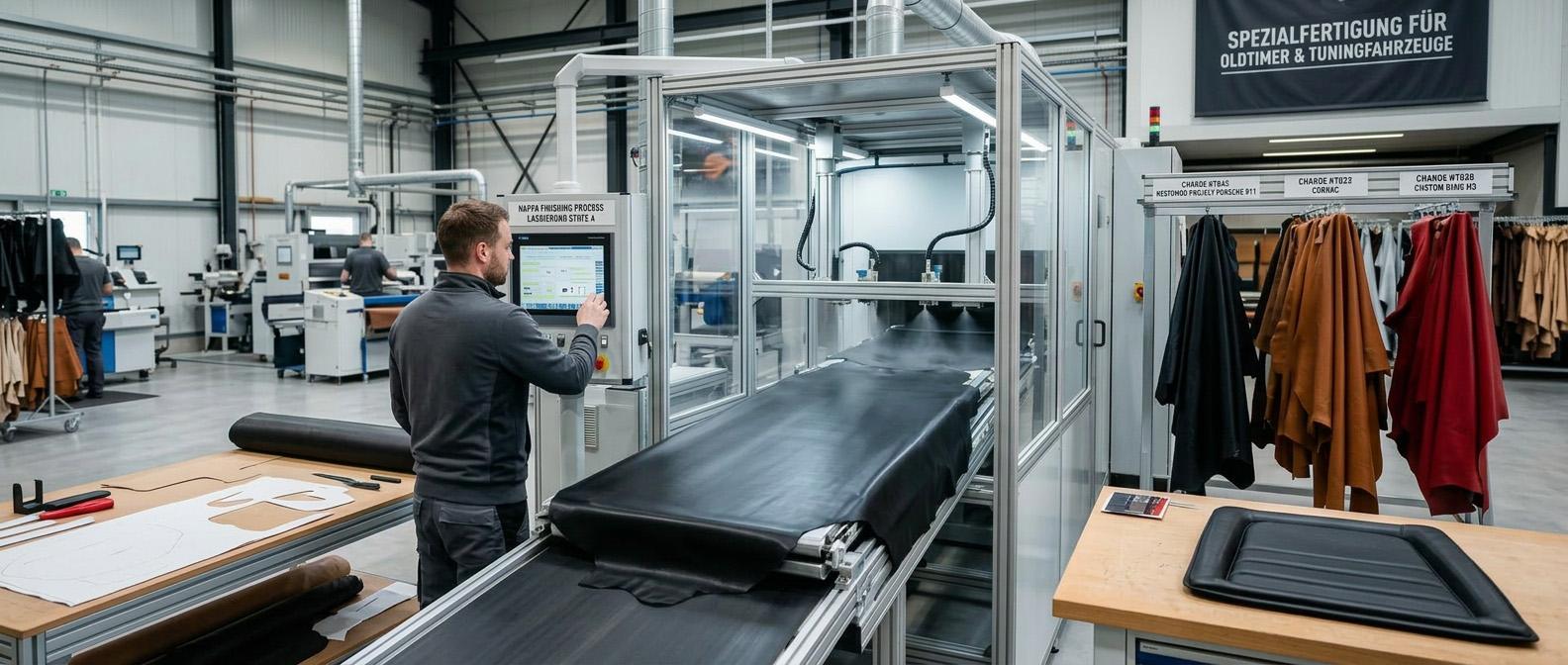
Elevate your restoration. Bespoke car leather for classics & tuning. OEM standards, UV protection & 3 color samples. Quality by ProjectLeather.
01/05/2026
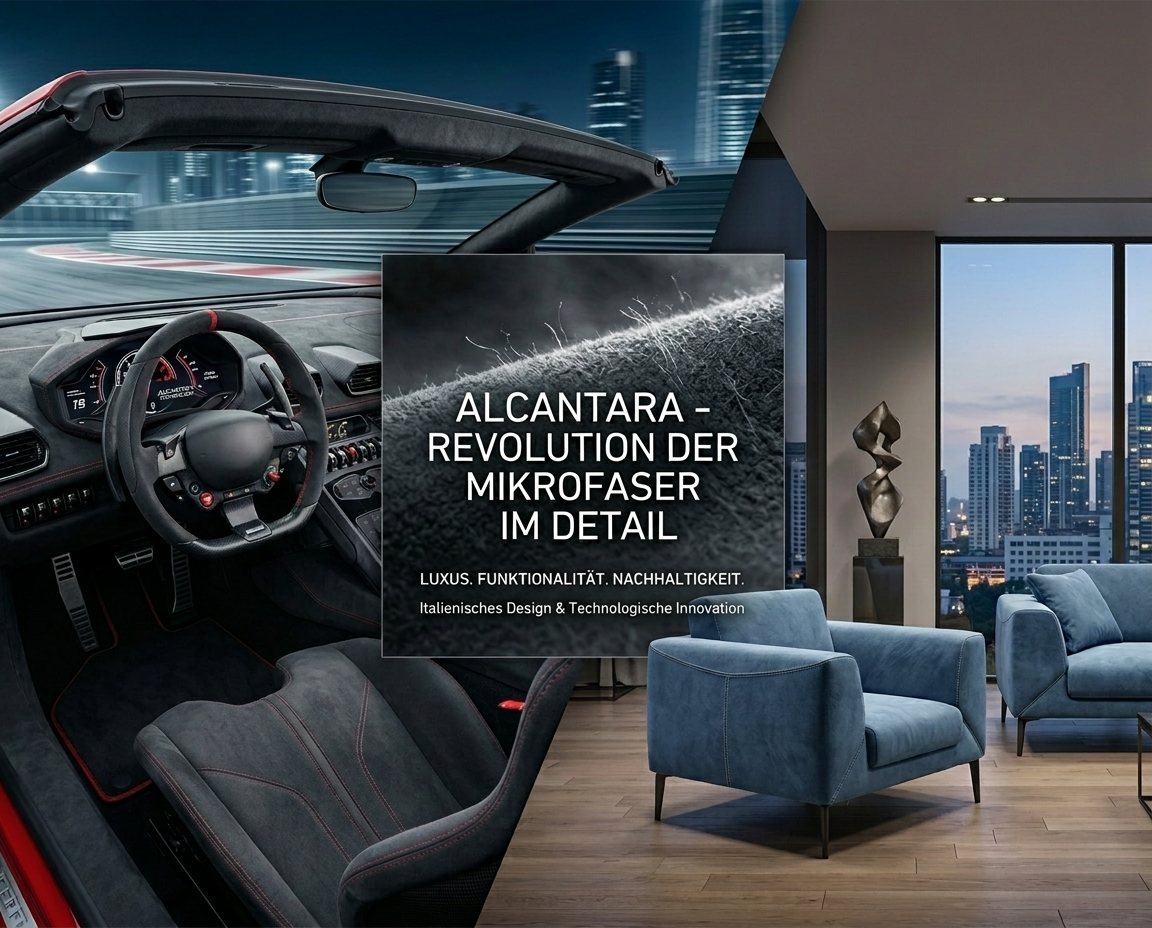
Discover the fusion of Italian style and high-tech fibers. Learn why Alcantara is the ultimate choice for automotive and furniture excellence.