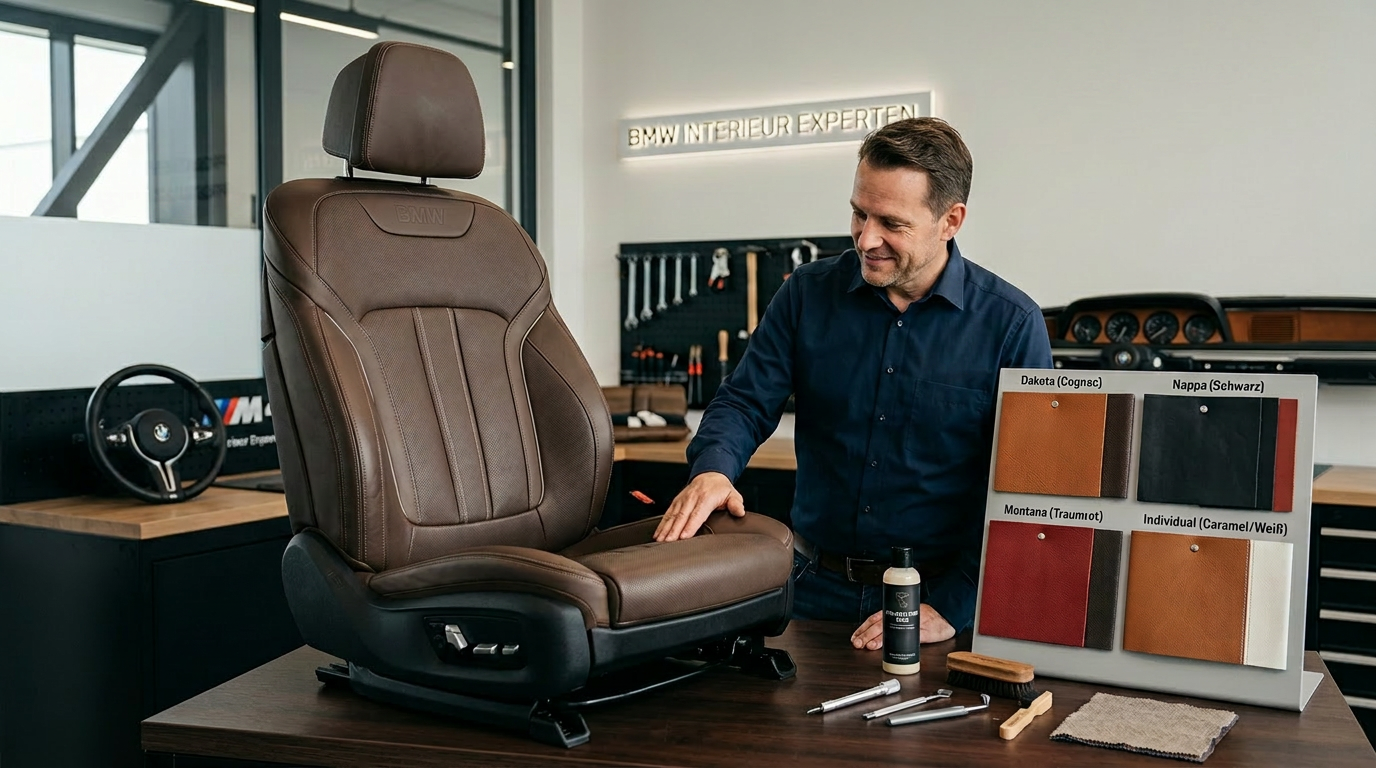
18/05/2026
BMW Leather Guide: From Dakota to Individual
The evolution of Bavarian interior culture. Discover material properties, value retention, and authentic restoration at ProjektLeder.


Leather. Faux leather. Fabrics - Genuine quality.
€99.50 / m²
Available, delivery time: 12 Arbeitstage
Perforated leather: outstanding airflow paired with exceptional feel. Smart function meets timeless design: our perforated automotive and oldtimer leather is the go-to option for anyone who cares about a comfortable seating climate. It starts with full-grain cowhide finished in an elegant matte surface, then enhanced with precision climate perforation. This genuine punched pattern isn't just a design statement — it actively circulates air through the cabin, a benefit you'll notice on every single drive.
Beyond its striking look, our perforated leather comes with certified safety credentials, meeting the strict fire-safety requirements of IMO Resolution A.652 (16).
Whether it's a modern sports car with active seat ventilation or a beloved oldtimer, the perforation brings real, practical benefits — especially noticeable on hot days.
Even with its perforated pattern, the leather stays shape-stable and hard-wearing. As a natural material, though, it appreciates a little regular attention to keep the edges of each hole soft and supple.
Seeing (and feeling) is believing — just add your chosen sample to your basket via the "Order a sample of this colour" button.
In short: Perforated genuine leather has earned its place as the gold standard for premium vehicle restorations and modern sports cars alike. It pairs an elegant look with climate benefits you can feel with every touch.
Can't find the exact shade you're after? We can perforate any leather from our collection to order — just reach out through our contact form.
| Eigenschaft | Wert | Beschreibung |
|---|---|---|
| Product number: | Perf_Al-scarlettrot- | |
| Areas of application: | Autositze, Autotuning, Designobjekte, Lederwaren, Lenkräder , Möbel, Motorrad Lederbekleidung, Motorradsitze, Objektbereich, Oldtimer geeignet, Sitzmöbel und feste Polster, Wohnbereich, Wohnmobil und Caravan Leder | |
Was versteht man unter den Einsatzbereichen bei echtem Leder, Kunstleder und Stoffen? Der Begriff Einsatzbereiche beschreibt die typischen Anwendungsgebiete eines Materials – also wo, wofür und in welcher Form echtes Leder, Kunstleder oder Stoffe verwendet werden. Diese Bereiche richten sich nach den Eigenschaften des Materials, z. B. Robustheit, Flexibilität, Pflegebedarf oder Optik. Einsatzbereiche von echtem Leder: Echtes Leder ist langlebig, atmungsaktiv und hochwertig. Es wird überall dort eingesetzt, wo man natürliche Optik, hohe Strapazierfähigkeit und edle Haptik wünscht. Typische Einsatzbereiche: - Möbelbezüge (Sofas, Sessel) - Gastronomie & Objektmöbel - Mode (Jacken, Schuhe, Taschen, Gürtel) - Fahrzeuginnenausstattung (Sitze, Lenkräder, Schaltknäufe) - Handwerk & Accessoires (Etuis, Portemonnaies, Messerhüllen) - Sattlerei, Reitsport, Motorradsitze Besonders beliebt im Premiumsegment, wenn Langlebigkeit und Prestige gefragt sind. Einsatzbereiche von Kunstleder: Kunstleder ist pflegeleicht, kostengünstiger und wasserabweisend. Es wird verwendet, wenn der Look von Leder gewünscht ist – aber nicht zwingend dessen Eigenschaften nötig sind. Typische Einsatzbereiche: - Polstermöbel (Stühle, Bänke, Sofas) - Mode (Kunstlederjacken, Hosen, Schuhe) - Taschen & Accessoires - Auto- & Boot-Innenräume (z. B. Sitzbezüge) - Gastronomie & Objektmöbel (leicht abwischbar, hygienisch) - Tierbedarf (Halsbänder, Leinen) Besonders geeignet für preisbewusste, vegane oder hygienisch anspruchsvolle Anwendungen. Einsatzbereiche von Stoffen: Stoffe sind extrem vielseitig – von feinen Kleidungsstoffen bis zu robusten Outdoor-Materialien. Sie variieren stark je nach Faserart und Webtechnik. Typische Einsatzbereiche: - Bekleidung (Shirts, Kleider, Hosen, Unterwäsche) - Wohntextilien (Vorhänge, Kissen, Decken, Bettwäsche) - Polsterstoffe (Sofas, Sessel) - Taschen, Rucksäcke, Bezüge - Technische Textilien (Outdoor, Medizin, Filtration) DIY, Hobby, Patchwork, Deko Stoffe bieten durch ihre Vielfalt eine fast unbegrenzte Bandbreite an Verwendungsoptionen – von alltagstauglich bis spezialtechnisch. Fazit: Echtes Leder wird bevorzugt dort eingesetzt, wo Qualität, Langlebigkeit und Prestige gefragt sind. Kunstleder findet seinen Einsatz vor allem in funktionalen, pflegeleichten oder kostengünstigen Anwendungen, während Stoffe durch ihre große Vielfalt nahezu überall zum Einsatz kommen – von Kleidung bis Möbel, von Alltag bis Technik. | ||
| Care instructions: | Das Leder kann mit einem feuchten Tuch und einer neutralen Seifenlösung gereinigt werden, Wir empfehlen zur Pflege unsere KERALUX, CORALUX und SEDICUR Pflegeprodukte | |
Was versteht man unter Pflegehinweisen bei echtem Leder, Kunstleder und Stoffen? Pflegehinweise sind Empfehlungen zur richtigen Reinigung, Behandlung und Lagerung eines Materials, um dessen Qualität, Aussehen und Lebensdauer zu erhalten. Je nach Materialart – echtes Leder, Kunstleder oder Stoff – unterscheiden sich die Anforderungen und Vorgehensweisen deutlich. Die Pflegehinweise helfen dabei, Schäden durch falsche Behandlung zu vermeiden und die Funktionalität sowie Optik möglichst lange zu erhalten. Pflegehinweise für echtes Leder: - Echtes Leder ist ein natürliches Material und benötigt regelmäßige Pflege, um geschmeidig, atmungsaktiv und langlebig zu bleiben. Empfehlung: - Leder sollte regelmäßig mit einem trockenen oder leicht feuchten Tuch abgestaubt werden. - Keine aggressiven Reinigungsmittel oder viel Wasser verwenden. - Spezielle Lederpflegeprodukte wie Lederfett oder Lederbalsam anwenden (ca. alle 3–6 Monate). - Vor direkter Sonneneinstrahlung und Heizquellen schützen (Austrocknungsgefahr). - Nicht in der Waschmaschine waschen. - Bei Flecken: sanft reinigen, im Zweifel professionelle Lederreinigung, wie die Projektleder Pflegeserie nutzen. Pflegehinweise für Kunstleder: Kunstleder ist deutlich pflegeleichter als echtes Leder, da es wasserabweisend und unempfindlicher gegenüber äußeren Einflüssen ist. Empfehlung: - Mit einem feuchten Tuch oder mildem Seifenwasser abwischen. - Keine Lösungsmittel oder scharfen Reiniger verwenden (Gefahr von Rissbildung). - Nicht mit Ölen oder Fetten behandeln – das Material nimmt es nicht auf. - Regelmäßiges Abwischen verhindert das Einziehen von Schmutz. - Direkte Sonneneinstrahlung über längere Zeit vermeiden (Ausbleichen, Versprödung möglich). - Bei Flecken: sanft reinigen, im Zweifel professionelle Lederreinigung, wie die Projektleder Pflegeserie nutzen. Pflegehinweise für Stoffe: Stoffe sind je nach Material (z. B. Baumwolle, Polyester, Leinen) unterschiedlich zu pflegen. Die Pflegehinweise sind in der Regel auf Etiketten oder beim Hersteller angegeben. Typische Hinweise: - Waschanleitung beachten (Temperatur, Schleudern, Waschmittel). - Manche Stoffe sind maschinenwaschbar, andere nur für Handwäsche geeignet. - Empfindliche Stoffe wie Wolle oder Seide brauchen Spezialpflege. - Polsterstoffe: regelmäßiges Absaugen, bei Bedarf feucht abwischen oder mit Polsterreiniger behandeln. - Nicht alle Stoffe sind für den Trockner geeignet. Fazit: Pflegehinweise geben wichtige Informationen darüber, wie Materialien wie echtes Leder, Kunstleder und Stoffe richtig behandelt werden sollten. Während echtes Leder eine intensive Pflege mit speziellen Produkten benötigt, ist Kunstleder deutlich pflegeleichter. Stoffe hingegen sind abhängig vom Fasertyp sehr unterschiedlich zu behandeln. Wer die Pflegehinweise beachtet, verlängert die Lebensdauer und bewahrt das Aussehen des Materials. | ||
| Characteristics: | abriebfest, dehnfähig, edel, exklusiv, langlebig, lichtecht, nachhaltig, OEM Qualität (Original Equipment Manufacturer), pflegeleicht, reißfest, weich | |
Was versteht man unter den Eigenschaften bei echtem Leder, Kunstleder und Stoffen? Die Eigenschaften dieser Materialien beziehen sich auf ihre technischen, optischen, haptischen und funktionalen Merkmale, die ihre Eignung für bestimmte Einsatzzwecke bestimmen – z. B. Kleidung, Polster, Taschen, Möbel oder Fahrzeug-Innenausstattung. 1. Eigenschaften von echtem Leder Echtes Leder ist ein natürliches Material, das aus Tierhaut gewonnen wird – meist von Rind, Schwein oder Ziege. Typische Eigenschaften (Merkmale und Beschreibung): - Atmungsaktivität: Hoch – Leder "lebt" und lässt Luft durch - Strapazierfähigkeit: Sehr hoch, besonders bei Dickleder - Optik: Einzigartige Narbung, oft mit Patina - Haptik: Warm, weich, hochwertig - Wasserresistenz: Mittel – kann imprägniert werden - Pflegebedarf: Ab und an Lederpflege notwendig - Umweltaspekt: Naturprodukt 2. Eigenschaften von Kunstleder Kunstleder (PU, PVC) ist ein synthetisch hergestelltes Imitat von echtem Leder. Typische Eigenschaften (Merkmal und Beschreibung): - Atmungsaktivität: Gering, abhängig vom Produkt - Strapazierfähigkeit: Sehr gut, abhängig von der Qualität - Optik: Gleichmäßig, kann echtes Leder gut imitieren - Wasserresistenz: Hoch – sehr pflegeleicht - Pflegebedarf: Niedrig – einfach abwischbar - Umweltaspekt: Meist aus Erdöl-basierten Kunststoffen, es gibt aber auch "Vegane Produkte) 3. Eigenschaften von Stoffen (Textilien) Stoffe bestehen aus natürlichen oder synthetischen Fasern, die gewebt, gestrickt oder gefilzt sind. Typische Eigenschaften (Merkmal und Beschreibung): - Atmungsaktivität: Hoch bei Baumwolle, Leinen etc. - Strapazierfähigkeit: Variiert stark je nach Faser & Verarbeitung - Optik: Große Vielfalt – von fein bis grob - Haptik: Weich, angenehm (z. B. bei Naturfasern) - Wasserresistenz: Meist gering, es sei denn speziell beschichtet - Pflegebedarf: Waschmaschinengeeignet, pflegeleicht - Umweltaspekt: Naturfasern nachhaltig, Synthetik oft kritisch Fazit – Eigenschaften von echtem Leder, Kunstleder und Stoffen in Worten zusammengefasst: Echtes Leder überzeugt durch seine hohe Atmungsaktivität, natürliche Haptik und außergewöhnliche Langlebigkeit. Es wirkt hochwertig und entwickelt mit der Zeit eine schöne Patina. Kunstleder ist eine günstigere Alternative, die optisch oft kaum von echtem Leder zu unterscheiden ist. Es ist pflegeleicht, wasserabweisend und gleichmäßig in der Optik. Dafür fehlt ihm die Atmungsaktivität, es fühlt sich etwas kälter und künstlicher an. Stoffe sind sehr vielfältig in Aussehen und Eigenschaften. Sie sind meist atmungsaktiv, angenehm auf der Haut und pflegeleicht. Ihre Strapazierfähigkeit variiert jedoch stark – je nach Faserart und Verarbeitung. Naturfasern wie Baumwolle oder Leinen gelten als besonders nachhaltig, während synthetische Stoffe eher kritisch zu bewerten sind. Kurz auf den Punkt gebracht: Echtes Leder steht für Natürlichkeit und Langlebigkeit, Kunstleder für Funktionalität und Pflegeleichtigkeit, und Stoffe für Vielseitigkeit und Komfort. | ||
| Continuous buckling behavior: | 50.000 – keine Veränderungen gemäß EN ISO 5402 | |
What is meant by flex durability in genuine leather and synthetic leather? Flex durability refers to a material’s ability to withstand repeated folding, bending, or creasing over an extended period of time without visible damage such as cracks, breaks, or delamination. It is a key quality factor for materials used in high-stress applications such as upholstery, shoes, bags, or vehicle interiors. In genuine leather Genuine leather generally has very good flex durability because it is elastic, tear-resistant, and fiber-stable. Thanks to its natural structure, it adapts well to mechanical stress without tearing quickly. Especially high-quality tanned leather (e.g., drum-tanned leather) demonstrates long-lasting durability under continuous load. Open-pore or very soft leather types may be more sensitive to creasing. Common testing procedures for flex durability in leather are defined in the DIN EN ISO 5402-1 standard. This describes the method for determining crease resistance through repeated movement over a small radius (flexing endurance test). In synthetic leather The flex durability of synthetic leather depends greatly on the quality of the backing (usually textile) and the top coating (e.g., PU or PVC). Low-grade synthetic leather may crack, peel, or become brittle under frequent use. High-quality PU synthetic leather with an elastic coating and textile backing is significantly more durable. Here too, DIN EN ISO 5402-1 is the most important standard for evaluating flex durability. In addition, the ISO 20932-1 standard (Determination of the stretch properties of coated fabrics) can be used to support material evaluation. Conclusion: Good flex durability is essential for long-lasting products made of leather or synthetic leather. While genuine leather impresses with its natural elasticity, synthetic leather requires careful attention to material quality and processing. The DIN EN ISO 5402-1 standard provides an internationally recognized test basis for assessing flex durability in both material types. | ||
| Enviromental properties: | entspricht der PCP-Verbotsverordnung, ohne Einsatz von AZO-Farbstoffen, umweltschonende Herstellung | |
What is meant by environmental properties and their impact in genuine leather, synthetic leather, and fabrics? Environmental properties refer to how materials affect the environment throughout their life cycle – from production to use and disposal. These include energy consumption, emissions, chemical usage, biodegradability, recyclability, and social impacts. For consumers, producers, and regulators, such factors are increasingly crucial for sustainable material choices. In genuine leather · When responsibly produced, leather can be sustainable, especially through vegetable tanning, low emissions, and local sourcing. · Chrome tanning poses environmental and health risks, particularly with poor waste management. · Leather is biodegradable unless heavily coated or chemically treated. Relevant standards and regulations: · DIN EN ISO 14001 – Environmental management systems · DIN EN ISO 17075-1/-2 – Determination of chromium(VI) in leather · REACH Regulation (EC) No. 1907/2006 – Chemical safety in the EU In synthetic leather · Typically made from PVC or PU, synthetic leather relies on fossil fuels. · Its production can be energy-intensive and result in non-biodegradable waste. · High-quality PU is often lower in emissions than PVC but less biodegradable than leather. Relevant standards and regulations: · ISO 14040 / ISO 14044 – Life Cycle Assessment (LCA) · OEKO-TEX® Standard 100 – Testing for harmful substances in textiles · ISO 12460-3 – Formaldehyde emissions from plastics In fabrics (textiles) · Environmental impact varies by fiber type: natural fibers like cotton are biodegradable but may involve high water and pesticide usage. · Synthetic fibers like polyester are recyclable but petroleum-based and slow to degrade. · Textiles may be treated with environmentally harmful dyes, finishes, or plasticizers. Relevant standards and regulations: · ISO 14001 – Environmental management · GOTS (Global Organic Textile Standard) – ecological textile certification · OEKO-TEX® Standard 100 Conclusion: Environmental impacts of leather, synthetic leather, and fabrics depend on material type, production methods, and disposal. While genuine leather can be sustainable under eco-friendly practices, synthetic materials offer opportunities through recycling or low-emission manufacturing. Key standards like ISO 14001, REACH, and OEKO-TEX® support informed and sustainable material decisions. | ||
| Fire behavior: | BS 5852 IS-0+1, BS EN 1021-1/2, FMVSS302 Brandverhalten von Materialien im Fahrzeuginnenraum, IMO A.652/16 - Boots- & Yachtleder , schwer entflammbar | |
What is meant by fire behavior in genuine leather, synthetic leather, and fabrics? Fire behavior describes how a material reacts to fire or high heat exposure – such as whether it burns, how quickly it ignites, whether it drips, smokes, or releases toxic gases. This property is particularly important when selecting materials for furniture, vehicle interiors, public buildings, aviation, or protective clothing. In many areas of application, binding standards such as DIN, EN, and ISO apply, which define, test, and classify the fire behavior of materials. Genuine Leather Genuine leather is naturally flame-resistant and typically only burns under direct, prolonged flame exposure. It chars when burning and does not form melting drips. Chrome-tanned leather may show improved fire performance. Relevant standards for upholstery leather and furniture leather include: - DIN EN ISO 8191-1 / -2: Fire behavior of upholstered furniture – ignition source cigarette and match - DIN EN 1021-1 / 1021-2: Ignitability of upholstered furniture by smoldering cigarettes and small open flames - DIN EN ISO 6940 / 6941: Determination of vertical flame spread of textiles and composite materials such as coated leather - DIN EN ISO 4589-2: Oxygen index for assessing flammability of leather - ISO 3795 / DIN 75200: Burning behavior of materials in automotive interiors (e.g. leather seats or door panels) - FAR 25.853: Standard for materials used in aircraft (for aircraft-grade upholstery leather) In many applications, genuine leather meets the requirements for flame resistance even without additional flame-retardant treatments. Synthetic Leather Synthetic leather is usually made from polyurethane (PU) or polyvinyl chloride (PVC) and exhibits critical fire behavior without treatment: melting, dripping, and smoke development are possible. Its exact reaction depends on the material composition and any flame-retardant additives used. High-quality synthetic leather is often tested according to the following standards: - DIN EN 1021-1 and 1021-2 (Ignition behavior of upholstered furniture) - DIN 4102-B1/B2 (Building products: flame-resistant/normal flammability) - ISO 3795 / DIN 75200 (Automotive interiors) - FMVSS 302 (U.S. standard for vehicle interiors) Fabrics (Textiles) The fire behavior of textiles varies significantly depending on fiber type and treatment: - Cotton burns easily - Polyester melts and drips - Wool is relatively flame-resistant Textiles can also be treated with flame retardants. Relevant standards include: - DIN EN 13501-1 (Fire classification of construction products) - DIN EN 1021-1 / 1021-2 (Ignitability of upholstered furniture) - DIN 4102-B1/B2 (Classic fire protection standard) - DIN EN ISO 6940 / 6941 (Flame spread tests) - NF P92-503 (French classification M1–M4) - FAR 25.853 (Aviation standard) Conclusion: Fire behavior is a key safety criterion in material selection. Genuine leather is naturally relatively flame-resistant and often meets regulatory requirements without additional chemicals. In contrast, synthetic leather and textiles usually require flame-retardant treatment to comply with standards such as DIN EN 1021, DIN 4102, ISO 6941, or FAR 25.853. In public, commercial, or safety-critical areas, compliance with these standards is essential. | ||
| Haftung der Zurichtung: | ≥ 4 N/cm gemäß UNI EN ISO 11644 | |
Unter Haftung der Zurichtung bei Autoleder versteht man gemäß IUF 470 bzw. DIN ISO 11644 die Haftfestigkeit der aufgebrachten Zurichtungsschichten (Finish) auf dem Ledergrund. Bedeutung Die Zurichtung (z. B. Pigmentschicht, Decklack) muss dauerhaft am Leder haften. Eine unzureichende Haftung führt im Fahrzeug zu: * Abblättern oder Abreiben der Oberfläche * optischen Mängeln * verminderter Lebensdauer des Leders (v. a. bei Sitzflächen, Lenkrädern) Prüfnorm: DIN ISO 11644 / IUF 470 Die Norm beschreibt eine Gitterschnitt-/Klebebandprüfung zur Beurteilung der Haftung. Kurzbeschreibung des Prüfverfahrens: 1. In die Lederoberfläche wird ein definiertes Gitterschnittmuster eingeschnitten (ohne das Leder selbst zu beschädigen). 2. Ein standardisiertes Klebeband wird fest auf die eingeschnittene Fläche gedrückt. 3. Das Klebeband wird in einem festgelegten Winkel und mit konstanter Geschwindigkeit abgezogen. 4. Anschließend wird beurteilt, ob und wie viel Zurichtung sich ablöst. Bewertung * Die Haftung wird visuell bewertet (Grad der Ablösung der Zurichtung). * Für Automobilleder gelten in der Regel sehr hohe Anforderungen, d. h.: * keine oder nur minimale Ablösung der Zurichtung ist zulässig. Zusammengefasst Haftung der Zurichtung bezeichnet also: Die Fähigkeit der Finishschichten eines Autolethers, dauerhaft und fest auf dem Leder zu haften, geprüft nach einem genormten Gitterschnitt-Klebebandtest gemäß DIN ISO 11644 / IUF 470. | ||
| Herstellung: | nach den weltweit strengsten Umweltauflagen hergestellt. Hergestellt in der EU. | |
In Bezug auf Schadstoffe und gesetzliche Vorgaben versteht man unter der Herstellung von echtem Leder nicht nur die Gerbung der Tierhaut, sondern auch die kontrollierte Auswahl von Chemikalien während Gerbung, Färbung und Zurichtung, damit das Leder gesundheitlich unbedenklich und gesetzeskonform ist. 1. AZO-Farbstoffe · AZO-Farbstoffe wurden früher zum **Färben von Leder** eingesetzt. · Bestimmte AZO-Farbstoffe können sich **spalten** und dabei **krebserregende aromatische Amine** freisetzen. · In der EU verboten**, wenn sie diese Amine freisetzen. · Echtes Leder darf nur mit **zugelassenen, schadstofffreien Farbstoffen** gefärbt werden. Bedeutung: Schutz der Haut des Verbrauchers (z. B. bei Schuhen, Handschuhen). 2. PCP-Verordnung (Pentachlorphenol) PCP ist ein hochgiftiges Biozid, früher genutzt: · zur Konservierung von Häuten · als Schimmel- und Insektenschutz · In der EU seit Jahren verboten. · Echtes Leder darf keine oder nur minimalste Rückstände enthalten. Bedeutung: Vermeidung von Umweltgiften und Gesundheitsrisiken. 3. PCB (Polychlorierte Biphenyle) PCB wurden früher in: · Fetten, Ölen, Farben · Maschinen und Lederhilfsmitteln eingesetzt. · Stark gesundheits- und umweltschädlich, heute verboten. · Modern hergestelltes Leder muss PCB-frei sein. Bedeutung: Langzeitgesundheit und Umweltschutz. 4. Chrom VI (Chrom(VI)) · Bei der Chromgerbung wird Chrom III verwendet (erlaubt). · Streng geregelt (Grenzwerte in der EU). · Echtes Leder darf keinen oder nur extrem geringe Chrom-VI-Gehalte aufweisen. Bedeutung:Besonders wichtig bei Schuhen, Gurten, Möbeln (Hautkontakt). 5. FCKW (Fluorchlorkohlenwasserstoffe) FCKW wurden früher: · als Treibgase · bei der Schaum- oder Sprühzurichtung verwendet. · Wegen Ozonabbau verboten. · In der Lederherstellung heute nicht mehr zulässig. Bedeutung:Klimaschutz und Umweltschutz. 6. Zurichtung von Leder Die Zurichtung ist der letzte Verarbeitungsschritt: · Auftragen von: - Farbschichten - Lacken - Wachsen - Kunstharzen · Ziel: - Schutz - Optik (Glanz, Matt, Struktur) - Abriebfestigkeit In Bezug auf Schadstoffe heißt das: * Keine verbotenen Lösemittel * Keine PCB-, PCP- oder AZO-haltigen Stoffe * Keine Bildung von Chrom VI * Einhaltung gesetzlicher Grenzwerte usammengefasst: Die Herstellung von echtem Leder bedeutet nicht nur Tierhaut zu gerben, sondern auch: ✔️ Verwendung schadstofffreier Chemikalien ✔️ Einhaltung gesetzlicher Umwelt- und Gesundheitsvorschriften ✔️ Kontrollierte Färbung und Zurichtung ✔️Verbraucherschutz Alle unsere echten Leder und Kunstleder unterliegen selbstverständlich diesen Vorschriften und werden auch so gefertigt. | ||
| Light constancy: | ≥ 4 gemäß EN ISO 105 – B02 | |
What is meant by light fastness in genuine leather, synthetic leather, and fabrics? Light fastness refers to a material’s ability to retain its color and surface properties when exposed to prolonged natural or artificial light (especially UV radiation). It is a key quality factor for materials exposed to sunlight over time, such as furniture upholstery, car seats, or outdoor textiles. In genuine leather · Genuine leather can fade or discolor under intense light exposure—depending on the quality of the dye and surface treatment. · Fully dyed leather with lightfast pigments has higher light fastness. · This is particularly important in the automotive and furniture sectors for maintaining long-term appearance. Relevant testing standards: · DIN EN ISO 105-B02 (Determination of light fastness of leather) · DIN EN ISO 105-B06 (Combined assessment of light and heat exposure – heat and light fastness) In synthetic leather · Synthetic leather reacts differently to UV radiation depending on its base (PU, PVC). · High-quality PU synthetic leather with UV-stabilized treatments shows better light fastness than basic PVC materials. · Poor light fastness may cause discoloration, brittleness, or surface degradation. Relevant testing standards: · DIN EN ISO 105-B02 · ISO 4892-2 (Artificial weathering with xenon arc light) In fabrics (textiles) · Textiles made of synthetic fibers (e.g., polyester, acrylic) are generally more light-resistant than natural fibers like cotton or linen. · Color fastness is crucial for curtains, upholstery, sun protection, or outdoor clothing. · Even dyed fabrics may darken or fade under light exposure. Relevant testing standards: · DIN EN ISO 105-B02 · ISO 105-B04 (For outdoor applications with xenon arc light) · ISO 4892-2 (Artificial light aging) Conclusion: Light fastness is an essential material property for all applications where products are exposed to sunlight or artificial light. It helps preserve the color and surface integrity of materials over time. The most important standards for evaluating light fastness include DIN EN ISO 105-B02, B06, B04, and ISO 4892-2. | ||
| Minimum order quantity: | ab einer ½ Haut ca. 2.5 m² | |
Was versteht man unter der Mindestabnahme bei echtem Leder, Kunstleder und Stoffen? Die Mindestabnahme bezeichnet die kleinste Menge eines Materials, die man bei Projektleder kaufen muss. Sie hängt von Materialart und der Verpackungseinheit ab – und kann variieren. 1. Mindestabnahme bei echtem Leder Echtes Leder wird immer pro halbe Haut oder pro ganze Haut verkauft, da es sich um natürliche Tierhäute handelt. Typisch ist: Verkauf pro Haut, oder Halbhäute nach m². Mindestabnahme: Halbe Haut oder ganze Haut (z. B. 2.5 oder 5 m²) Hinweis: Da jede Haut unterschiedlich groß ist, ist die Fläche nicht exakt planbar. 2. Mindestabnahme bei Kunstleder Kunstleder wird meterweise, also per Laufmeter oder per Rolle verkauft, meist mit genormter Breite (z. B. 140 cm). Übliche Mindestabnahme: 1-2 Laufmeter 3. Mindestabnahme bei Stoffen (Textilien) Stoffe sind besonders flexibel erhältlich, sowohl für Hobbynäher als auch im industriellen Maßstab. Übliche Mindestabnahmen: 1-2 Laufmeter Bei Stoffen mit individuellem Druck oder Färbung (z. B. Digitaldruck) gelten oft projektbezogene Mindestabnahmen. Zusammengefasst: Die Mindestabnahme variiert stark je nach Materialart und Vertriebskanal. Echtes Leder wird in der Regel als halbe oder ganze Haut verkauft, sodass selbst kleine Bestellungen mehrere Quadratmeter umfassen können. Kunstleder ist häufig ab einem oder 2 Laufmeter erhältlich. | ||
| Rawhides: | 100% Echtes Rindleder | |
What is meant by raw hides and their origin in genuine leather? Raw hides are untreated animal skins that serve as the base material for the production of genuine leather. They typically arise as a by-product of meat processing and are not obtained primarily for leather production. The raw hide is in its natural state after the animal has been skinned – not yet tanned, preserved, or processed. Without immediate processing or preservation, the hide begins to decompose quickly. The origin of raw hides refers to the animal species, the geographical source, and the rearing conditions of the animals. These factors significantly affect the quality of the finished leather. Typical sources of origin: Cowhides: widespread globally, especially from Europe, South America, India, and the USA Calf hides: often from Europe (e.g. Italy, France) – very fine-grained and high quality Goat and sheepskins: commonly from North Africa, Asia, and the Mediterranean region Buffalo hides: mainly from India, Pakistan, and Southeast Asia Pigskins: primarily from Europe and North America Wild hides (e.g. deer, elk): mostly from hunting in Europe or North America The quality of a raw hide depends on the animal’s living conditions, nutrition, and handling. Free-range animals often have more scars or insect bites, while animals raised in controlled environments tend to have smoother, more flawless hides. Conclusion: Raw hides are the natural, untreated base material for genuine leather. Their origin – in terms of animal species, rearing conditions, and country of origin – has a direct impact on the quality, texture, and usability of the resulting leather. | ||
| Resistance to perspiration: | ≥ 4 gemäß UNI EN ISO 11641 | |
What is sweat resistance in genuine leather, synthetic leather, and fabrics? Sweat resistance refers to a material’s ability to withstand the effects of human perspiration. It assesses whether the color, coating, or structure of the material deteriorates, fades, or becomes damaged when in contact with acidic or alkaline sweat. This property is especially important for clothing, seat surfaces, automotive interiors, and accessories that come into contact with skin. In genuine leather · Genuine leather can be sensitive to sweat, especially light-colored or untreated types. · Sweat may dissolve dyes or cause swelling of the surface. · High-quality finishes and dyeing methods improve sweat resistance. Relevant standards: · DIN EN ISO 11641 – Leather – Determination of color fastness to perspiration · ISO 105-E04 – Can be used for comparison in assessing fastness In synthetic leather · PU or PVC synthetic leather is generally more resistant to sweat than natural leather. · Low-quality materials may show discoloration or sticky surfaces. · UV stabilizers and abrasion-resistant coatings enhance sweat resistance. Relevant standards: · ISO 105-E04 – Color fastness to perspiration for textiles and coated materials · ISO 24444 – Supplementary for assessing skin contact suitability In fabrics (textiles) · Sweat resistance is crucial for garments and sportswear. · Natural fibers like cotton are more prone to discoloration than synthetics. · Dye quality plays a significant role. Relevant standard: · ISO 105-E04 – Determination of color fastness to perspiration under defined conditions Conclusion: Sweat resistance is an essential material property for all products with direct skin contact. It ensures protection from color loss, material degradation, and skin irritation. Key testing standards include DIN EN ISO 11641 for leather and ISO 105-E04 for synthetic leather and textiles. | ||
| Rub fastness: | ≥ 4 alkalisch gemäß EN ISO 11640, ≥ 4 nass gemäß EN ISO 11640, ≥ 4 trocken gemäß EN ISO 11640 | |
What is rub fastness in genuine leather, synthetic leather, and fabrics? Rub fastness refers to the resistance of a dyed or coated material to mechanical friction. It indicates how much color or coating rubs off or transfers to other materials under dry or wet conditions. This property is especially important for furniture, clothing, or automotive interiors. In genuine leather · Rub fastness is critical for maintaining color and finish on the leather surface. · Pigmented leathers may show color transfer if rub fastness is low. · Testing is done under both dry and wet conditions. Relevant standard: · DIN EN ISO 11640 – Leather – Determination of color fastness to rubbing In synthetic leather · For PU or PVC-coated synthetic leather, pigment adhesion to the surface is key. · Poor rub fastness leads to visible abrasion or color transfer. · Crucial in high-use areas like seating or steering wheels. Relevant standards: · DIN EN ISO 105-X12 – Textiles – Determination of color fastness to rubbing · DIN EN ISO 11640 – also applicable to coated materials In fabrics (textiles) · Rub fastness is an essential quality for garments, curtains, seat covers, etc. · Dark, highly saturated fabrics often have lower rub fastness. · Dry and wet rub fastness may differ significantly. Relevant standard: · DIN EN ISO 105-X12 – Standard method for assessing color fastness to rubbing Conclusion: Rub fastness is crucial for the appearance, functionality, and usability of leather, synthetic leather, and fabrics. It ensures that colors do not transfer onto clothing or surrounding surfaces. The key test standards are DIN EN ISO 11640 for leather and DIN EN ISO 105-X12 for synthetic leather and textiles. | ||
| Size of the hides: | ca. 5 qm | |
Was versteht man unter der Größe von Lederhäuten? Die Größe von Lederhäuten bezeichnet die Gesamtfläche einer einzelnen Tierhaut, nachdem sie gegerbt und zugeschnitten wurde. Diese Fläche wird in der Regel in Quadratmetern (m²) oder seltener in Quadratfuß (sqft) angegeben. Die tatsächliche Größe hängt von der Tierart, dem Zuschnitt (z. B. ganze Haut, Halbhäute, Croupon) und dem Verwendungszweck ab. Lederhäute sind Naturprodukte und daher nicht genormt. Jede Haut unterscheidet sich in Form und Größe. Die angegebene Fläche bezieht sich auf die verwendbare Fläche, also den Teil, der verarbeitet werden kann. Typische Größen nach Tierart: - Rindsleder (ganze Haut): ca. 4 bis 6 m² - Rindsleder (Halbhäute): ca. 2 bis 3 m² - Büffelleder: ca. 4 bis 6 m² - Ziegenleder: ca. 0,4 bis 0,7 m² - Kalbsleder: ca. 1 bis 1,8 m² - Wildleder, Velourleder, Rauhleder: bis ca. 2 m² Wichtiger Hinweis: Da Lederhäute unregelmäßig geformt sind, ist die verfügbare Fläche nicht rechteckig und muss bei Zuschnittplänen individuell berücksichtigt werden. Händler geben die Größe in der Regel exakt pro Stück an, oft mit leichter Abweichung nach oben oder unten. Fazit: Die Größe von Lederhäuten beschreibt die verarbeitbare Fläche einer Tierhaut in Quadratmetern. Sie variiert je nach Tierart, Zuschnitt und natürlicher Form und ist eine zentrale Kenngröße beim Einkauf und der Verarbeitung von Leder. | ||
| Strain test: | ≥ 130 N Höchstzugkraft, gemäß UNI EN ISO 3376 | |
What is meant by elongation testing in genuine leather and synthetic leather? Elongation testing (also referred to as tensile or stretch testing) describes the determination of how much a material can stretch under tensile load before it tears or becomes permanently deformed. It is an important part of mechanical material testing and provides information about elasticity, strength, and behavior under stress. In genuine leather Genuine leather has a natural fiber structure, which shows different elongation properties depending on the animal species, tanning method, and finishing. Elongation testing is used to assess the load-bearing capacity and tensile strength of the leather, especially in highly stressed applications such as upholstery, footwear, or bags. Typical elongation values range from 30–70% before tearing – depending on the type and quality of the leather. The standard DIN EN ISO 3376 is the key test method for determining the tensile strength and elongation of leather. In this method, a standardized leather strip is stretched until it breaks, and the maximum elongation is recorded. In synthetic leather Synthetic leather consists of a backing material (usually textile) and a coated surface (e.g., PU or PVC), which results in varying stretch capabilities depending on the construction. Lower-quality synthetic leather often shows reduced elongation and tends to tear or delaminate under high stress. High-quality PU synthetic leather with an elastic textile backing provides better elongation performance. For synthetic leather, the relevant test standard is ISO 20932-1, which defines procedures for determining the elongation properties of coated textiles under defined force loads. Conclusion: Elongation testing is an essential method for evaluating the mechanical properties of leather and synthetic leather. While genuine leather excels due to its natural elasticity, the stretchability of synthetic leather depends heavily on its construction and material quality. The standards DIN EN ISO 3376 (for leather) and ISO 20932-1 (for synthetic leather) provide established testing methods for reliable material evaluation. | ||
| Surface texture: | Pigmentierte Zurichtung erhält die Lichtechtheit und Farbe | |
What is meant by surface characteristics in genuine leather, synthetic leather, and fabrics? The surface characteristics describe the visible and tactile properties of a material – such as texture, smoothness, grain, porosity, softness, or coatings. These factors influence not only the look and feel but also the functionality and care requirements of a product. In genuine leather · The surface shows natural features such as grain, pores, or wrinkles, depending on the leather type and finish. · Full-grain, nubuck, suede, or embossed leather differ significantly in appearance and touch. · Finishes can add gloss, color, or protective layers. Relevant standards: · DIN EN ISO 2418 – Leather sampling and preparation · DIN EN ISO 2589 – Determination of leather thickness · DIN EN ISO 3377-1 – Tensile strength test for surface finish adhesion In synthetic leather · The surface is manufactured, typically with embossed grain patterns or smooth finishes on the PU/PVC layer. · It can be structured, smooth, matte, or glossy depending on the design. · Protective coatings for UV resistance, scratch protection, or stain repellency are often applied. Relevant standards: · ISO 7619-1 – Shore hardness test for coatings · ISO 7765-1 – Impact resistance testing · ISO 2286-2 – Thickness measurement of coated fabrics In fabrics (textiles) · The surface varies depending on fiber type, weave pattern, and finishing treatments. · Cotton, linen, polyester, or microfiber each have distinct textures and feels. · Coated textiles may be water-repellent, breathable, or dirt-resistant. Relevant standards: · ISO 2060 – Yarn linear density · ISO 139 – Conditioning for testing · ISO 12947 – Martindale abrasion test (indirect indicator of surface durability) Conclusion: Surface characteristics significantly affect the aesthetics, maintenance, tactile experience, and usability of leather, synthetic leather, and textiles. Standards like DIN EN ISO 2589, ISO 2286-2, and ISO 12947 provide reliable benchmarks for assessing these properties. | ||
| Tanning: | Mit hochwertigen Farbstoffen, im Fass durchgefärbt. | |
What is meant by tanning in genuine leather? Tanning is a central processing step in the production of genuine leather. During this process, raw animal hides are transformed into durable, rot-resistant material using chemical or vegetable tanning agents. Without tanning, the hide would dry out, harden, or mold. The type of tanning used has a significant influence on the characteristics of the leather, including its color, odor, elasticity, strength, and environmental compatibility. Overview of common tanning methods: - Chrome tanning The most commonly used method, which utilizes chromium(III) salts (usually chromium sulfate). Produces supple, durable leather with good heat resistance. Commonly used for upholstery, shoe, and garment leather. Relevant standard: DIN EN ISO 5398-1 to -4 (determination of chromium content in leather). Chromium(VI) is toxic and must not be detectable in the final product according to the REACH regulation. - Vegetable tanning Uses plant-based tanning agents derived from bark, wood, or fruit (e.g., quebracho, mimosa, oak bark). Results in firmer, more dimensionally stable leather with a distinctive natural smell. Ideal for belts, bags, saddles, or eco-friendly products. More environmentally friendly but slower than chrome tanning. Testing standards: DIN EN ISO 4045 (pH value) and ISO 14001 (environmental management systems in production). - Aldehyde tanning (e.g., with glutaraldehyde) Chrome-free, usually light-colored leather with a soft feel. Often used for baby products or medical-grade leather. Formaldehyde limits must be strictly observed. Standard: DIN EN ISO 17226-1 (determination of formaldehyde content in leather). - Synthetic tanning (e.g., with resins) Often used in combination with other methods. Produces soft, lightweight leather – typical for clothing or lining leather. - Combination tanning A blend of multiple tanning processes to optimize material properties (e.g., chrome + vegetable). Widely used in high-end furniture or automotive leather production. Conclusion: Tanning transforms raw animal hides into durable leather. Depending on the method used, the resulting leather will exhibit different characteristics, areas of application, and environmental impact. Standards such as DIN EN ISO 5398, DIN EN ISO 4045, DIN EN ISO 17226-1, and regulations like REACH ensure the quality and safety of modern leather products. | ||
| Thickness: | 1.0 - 1.2 mm | |
What is meant by thickness in genuine leather, imitation leather, and fabrics? Thickness is the physical height of a material, measured in millimeters (mm). It directly influences the robustness, flexibility, suitability for processing, and intended use of a material—be it genuine leather, imitation leather, or textiles. 1. Thickness in Genuine Leather Genuine leather is a natural product and varies in thickness depending on the animal species, its position on the hide, and the finishing process. It is measured in mm or oz (ounces per square foot, especially in English-speaking countries). Common thickness ranges: - Fine leather (e.g., gloves, clothing) 0.5 – 1.0 mm - Bags, accessories 1.2 – 2.0 mm - Belts, straps 3.0 – 4.0 mm - Saddle or tool leather 4.0 mm and more Thickness significantly affects stiffness and the range of applications. 2. Thickness of Synthetic Leather Synthetic leather usually consists of a backing fabric and a coating (e.g., PU or PVC). The thickness is determined by the combined height of both layers. Typical values: - Lightweight synthetic leather (e.g., clothing) 0.5 – 0.8 mm - Upholstery synthetic leather 0.9 – 1.2 mm - Automotive or outdoor 1.2 – 2.0 mm Thicker synthetic leather is more durable but more difficult to sew. 3. Thickness of Fabrics The thickness of fabrics is less frequently specified directly, but it is certainly relevant in technical textiles or for specific applications. The thickness depends heavily on the material, weave, and finish. Fabric Types - Lightweight fabrics (e.g., chiffon) 0.1–0.3 mm - Cotton fabrics 0.3–0.6 mm - Denim 0.6–1.0 mm - Fleece, softshell 1.0–2.5 mm - Technical upholstery fabrics up to 5 mm or more Thickness affects drape, thermal performance, and sewability. Conclusion: Thickness and Weight Two materials can have the same thickness but different weights (e.g., airy vs. dense structure). Conversely, a material can be heavy but thin (e.g., tightly woven nylon). | ||
| Type of leather: | Nappaleder, Rindleder | |
What is meant by leather type and its origin in genuine leather? The term leather type refers to the classification of genuine leather based on the animal species from which the hide originates. Each leather type has specific characteristics such as thickness, grain, flexibility, strength, or appearance – and is therefore suitable for different applications. Additionally, the origin of the leather plays a major role, as animal husbandry, climate, and processing traditions significantly affect the quality of the leather. Here is an overview of common leather types and their typical countries of origin: Cowhide Origin: Europe (Germany, Italy, France, Austria, and Switzerland), South America (Brazil, Argentina), USA Characteristics: durable, versatile, medium to high thickness Applications: upholstered furniture, shoes, bags, belts, automotive interiors Calf leather Origin: Italy, France, Switzerland, Germany Characteristics: fine pores, very soft, high quality, even surface Applications: luxury shoes, high-end bags, clothing, leather goods Buffalo leather Origin: India, Pakistan, Bangladesh, parts of Southeast Asia Characteristics: coarse grain, very strong, thick Applications: belts, rugged furniture, bags, outdoor products Goat leather Origin: India, Morocco, Pakistan, Nigeria Characteristics: soft, stretchable yet durable, fine grain Applications: clothing, gloves, fine bags, bookbinding Sheepskin leather Origin: United Kingdom, New Zealand, Australia, Turkey Characteristics: very soft, lightweight, elastic Applications: clothing, linings, gloves Suede or velour leather (e.g. cow, calf, deer) Origin: Europe (especially Germany, Austria, Scandinavia), North America Characteristics: velvety surface (suede), soft, flexible, natural appearance Applications: traditional wear, gloves, shoes, hunting clothing Additional common applications of genuine leather: - Furniture and interior design Sofas, armchairs, chairs (upholstery), car seats, steering wheels, gear knobs (automotive interiors), door panels, wall coverings, home accessories - Fashion and clothing Leather jackets, coats, vests, leather pants, skirts, dresses, gloves, belts, hats, caps, shoes, boots, sandals - Bags and accessories Handbags, shoulder bags, backpacks, wallets, pouches, keychains, smartphone and laptop cases, folders, briefcases - Craftsmanship and equestrian sports Saddles, bridles, halters, knife and tool pouches, dog collars and leashes, leather for archery, swords, or historical armor - Luxury and designer products High-end watch straps, designer furniture and custom pieces, tailor-made garments and shoes, exclusive car interiors (e.g. luxury vehicles) - Musical instruments and handicrafts Drum heads (e.g. djembe, conga), leather book or Bible covers, art objects, wall hangings, masks - Industrial and technical uses Welding aprons, cut-resistant gloves, seals, membranes, technical padding, workwear for specialized environments - Tradition and culture Traditional clothing (e.g. lederhosen, deerskin gloves), historical costumes, museum exhibits, saddlery and shoemaking craft, religious or ceremonial objects Conclusion: The leather type refers to the animal species from which the leather is obtained, while origin refers to the country or region where the animals were raised. Both factors significantly influence the quality, appearance, and usability of the leather. Europe is known especially for high-quality calf and cowhide leather, while countries like India and Pakistan are leading producers of buffalo and goat leather. | ||
| Upholstery and padding work: | heften möglich, kleben möglich, nähen möglich, spannen möglich, tackern möglich, weich und dehnfähig | |
What is meant by Saddlery & Upholstery Work? Saddlery and upholstery work refers to skilled craftsmanship involving the processing of leather, synthetic leather, or fabrics to cover, repair, or rebuild seating surfaces, furniture, vehicles, or accessories. Various techniques such as gluing, sewing, stapling, tacking, and stretching are used depending on the material, shape, and function of the respective project. Saddlery Work Saddlers are specialized craftsmen who traditionally work with leather – primarily in the following areas: - Vehicle interiors (e.g. car seats, door panels, steering wheels) - Equestrian equipment (e.g. saddles, bridles, halters) - Motorcycle seats, bags, tarpaulins, vintage car restoration The focus is on robust, functional, and often custom-made leatherwork, where the material is frequently glued, sewn, or stretched. Soft and stretchable leathers are particularly suitable for complex shapes. Upholstery Work Upholstery work refers to the restoration, re-covering, or renewal of seating surfaces, particularly in: -Sofas, armchairs, and chairs (furniture upholstery) - Restaurant or commercial furniture - Vintage car or boat seats - Caravan and motorhome interiors Upholstery materials such as foam, webbing, springs, and covers are used. The cover materials are stapled, tacked, sewn, or glued depending on the application. Through stretching and shaping, smooth, wrinkle-free surfaces are created with high durability and long lifespan. Conclusion: Saddlery and upholstery work are high-quality, primarily manual crafts aimed at enhancing the functionality and appearance of seating furniture or leather-covered products. They combine traditional craftsmanship with modern techniques and rely on versatile working methods such as gluing, sewing, stapling, tacking, and stretching – ideal for custom-made solutions in the furniture, automotive, or accessories sector. | ||
| ph value: | 3.5 gemäß DIN EN ISO 4045 | |
What is meant by the pH value in genuine leather, synthetic leather, and fabrics? The pH value indicates the level of acidity or alkalinity of a material or its water-soluble components. It is a crucial parameter for skin compatibility, material aging, and chemical stability. An excessively low or high pH value can damage the structure of leather and textiles or cause skin irritation. In genuine leather · The pH value reflects potential residues from tanning or dyeing processes. · A very low pH (below 3.5) may harm the fiber structure. · The ideal pH range for leather is between 3.5 and 5.5. Relevant standard: · DIN EN ISO 4045 – Determination of pH and buffer salt concentration difference in leather. In synthetic leather · The pH value mainly concerns the textile backing or adhesives beneath the coating. · Residual chemicals (e.g., from plasticizers or binders) can influence the pH. · A neutral to slightly acidic pH (5–7) is preferred to prevent skin irritation and material degradation. Relevant standard: · ISO 3071 – Textiles – Determination of pH of aqueous extracts. In fabrics (textiles) · For garments or upholstery fabrics, pH is vital for skin safety. · Detergent or dye residues can alter the pH value. · An ideal range lies between 4.0 and 7.5. Relevant standards: · ISO 3071 – pH value in textile samples · OEKO-TEX® Standard 100 – Requires skin-friendly pH values for certified textiles Conclusion: The pH value is a key quality and safety criterion for leather, synthetic leather, and textiles. It affects both material durability and human health. Standards like DIN EN ISO 4045 (for leather) and ISO 3071 (for textiles) provide a reliable framework for pH testing. | ||
| Gewicht: | 5.3 kg | |
 | Blog
18/05/2026
The evolution of Bavarian interior culture. Discover material properties, value retention, and authentic restoration at ProjektLeder.

Discover why genuine leather is the most sustainable choice. Learn about longevity, haptics, and eco-friendly production at ProjektLeder.

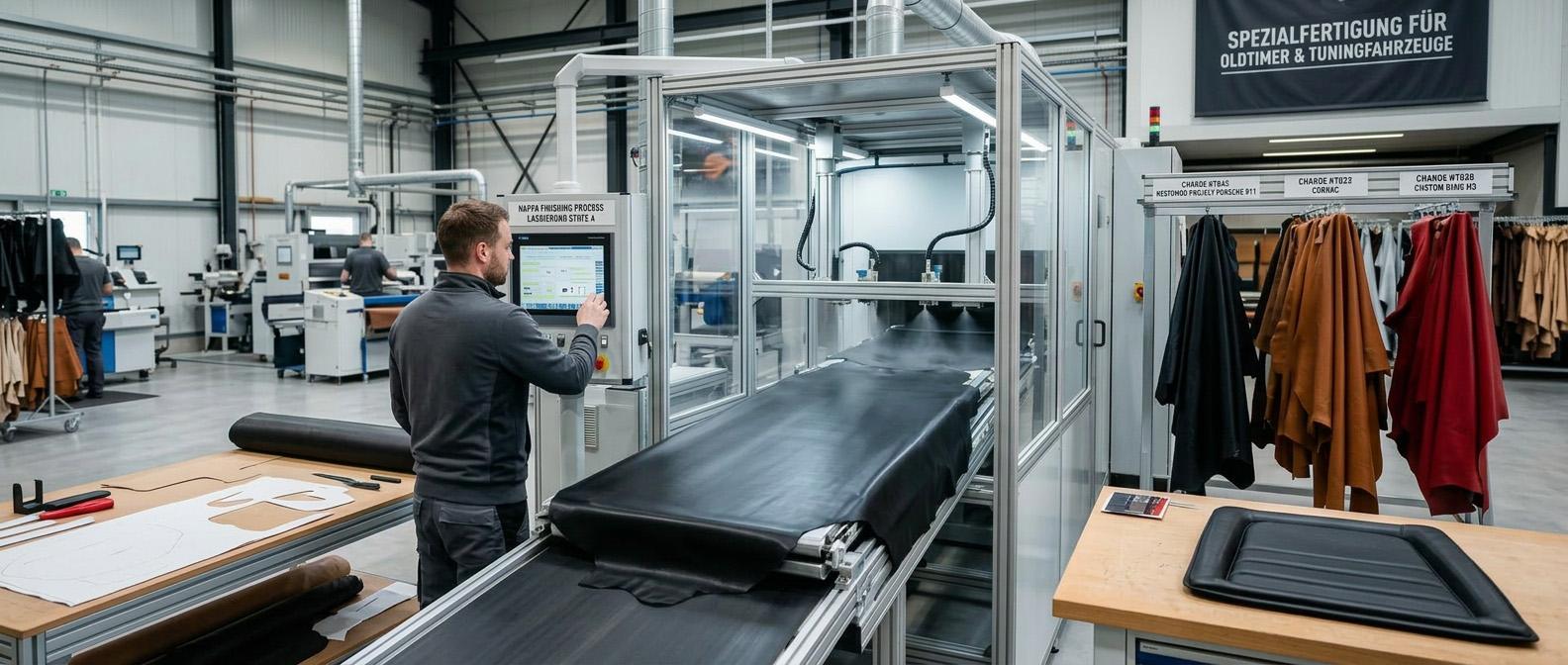
Elevate your restoration. Bespoke car leather for classics & tuning. OEM standards, UV protection & 3 color samples. Quality by ProjectLeather.
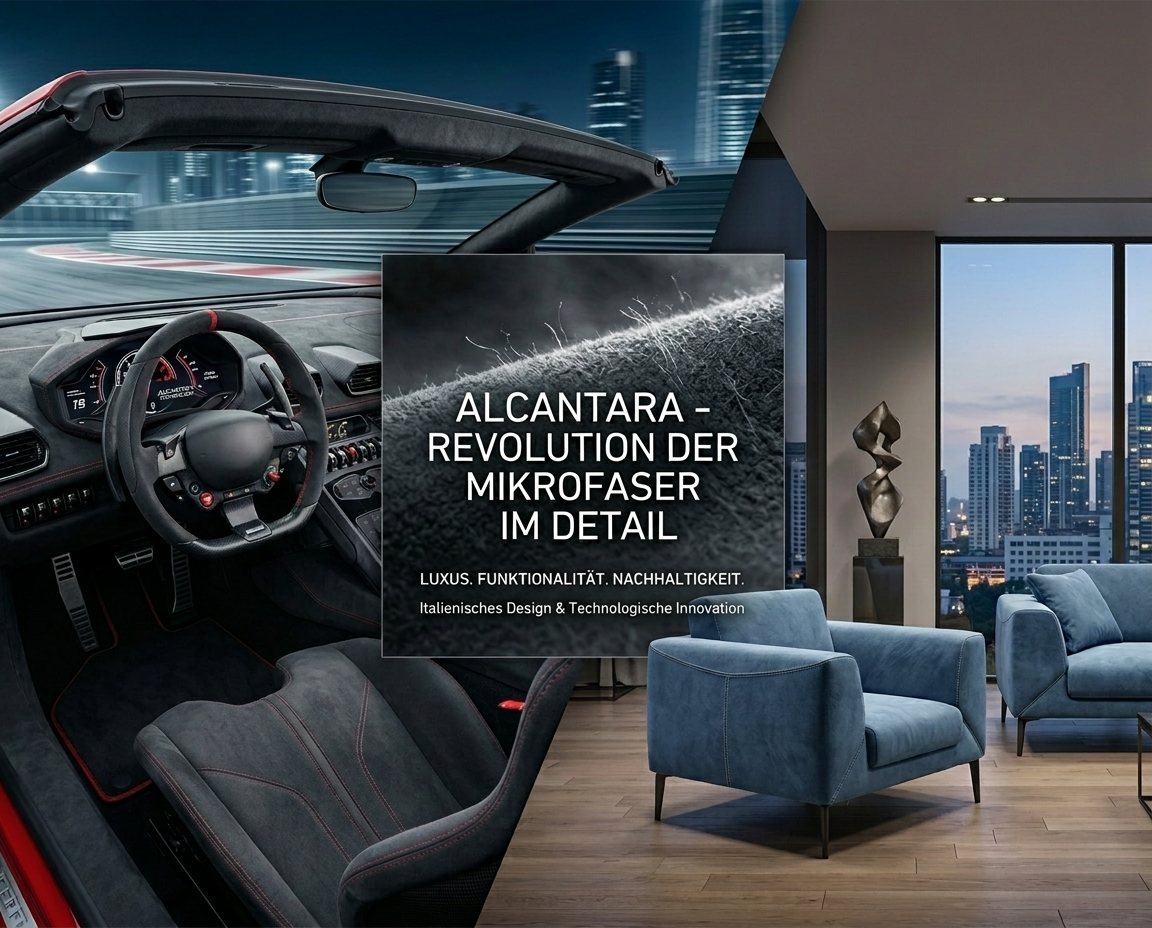
01/05/2026
Discover the fusion of Italian style and high-tech fibers. Learn why Alcantara is the ultimate choice for automotive and furniture excellence.