18/05/2026
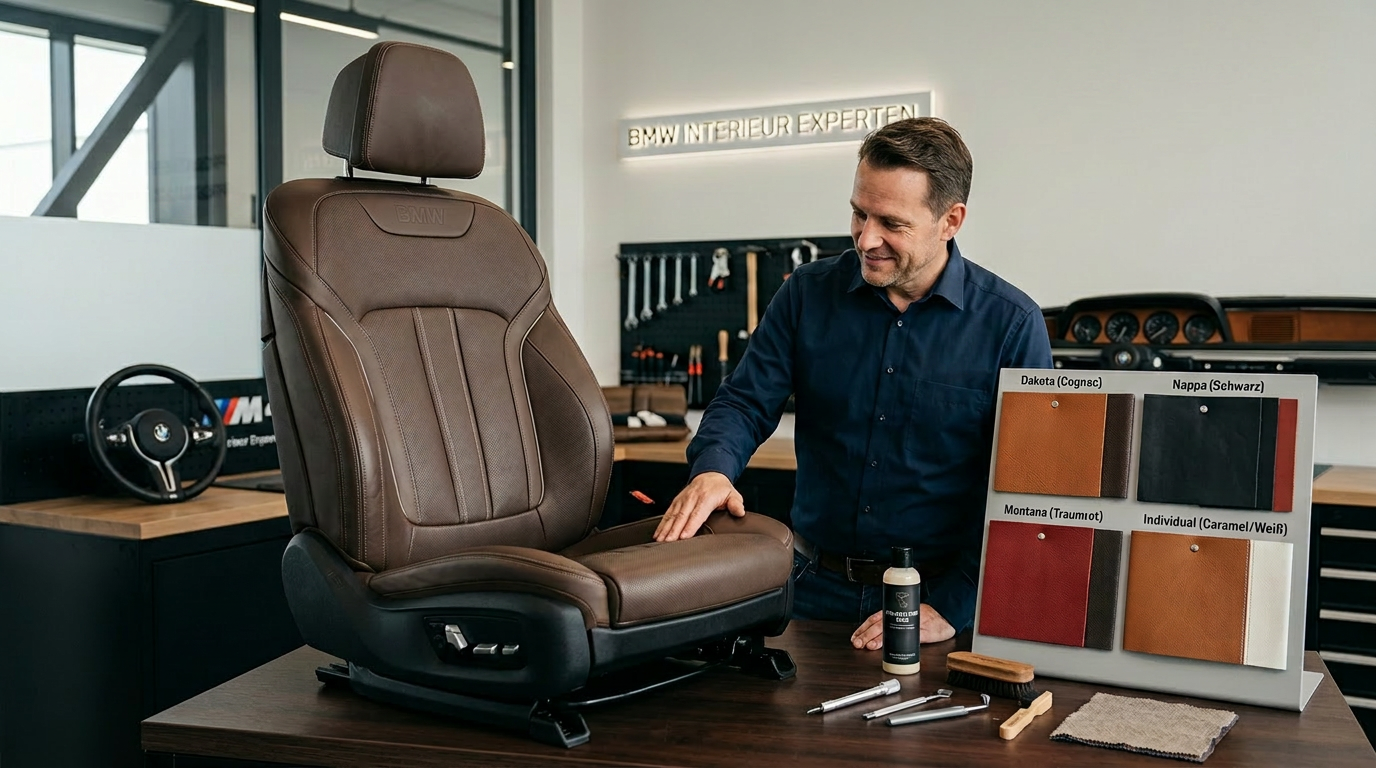
BMW Leather Guide: From Dakota to Individual
The evolution of Bavarian interior culture. Discover material properties, value retention, and authentic restoration at ProjektLeder.


Leather. Faux leather. Fabrics - Genuine quality.
€54.50 / m²
Available, delivery time: 2-5 days
Genuine Buffalo Leather – Natural, Full-Grain and Full of Character. This full-grain water buffalo leather features a subtle pull-up effect and a restrained vintage aesthetic. Its natural markings – including grain variations, scars and colour shifts – are intentionally left visible. That's not a flaw; it's the point.
A rustic yet supple buffalo leather with a naturally textured grain surface. Highly breathable and moisture-regulating, the Savanne water buffalo leather collection stands out for its texture, softness, flexibility and air permeability. It is tough enough for everyday use and develops a beautiful, individual patina over time.
Thanks to its durability and softness, Savanne buffalo leather is a true all-rounder for a wide range of premium products.
Drum-dyed throughout using high-quality, lightfast dyes. Ecologically responsible mineral tanning process, free from harmful substances in compliance with German regulatory standards.
The leather can be cleaned with a damp cloth and a mild, pH-neutral soap solution. For ongoing conditioning, we recommend our Projektleder leather care range.
Conclusion: Savanne buffalo leather is a robust, hard-wearing material that still delivers comfort, style and aesthetic appeal. An outstanding choice for crafting high-quality products built to last.
| Eigenschaft | Wert | Beschreibung |
|---|---|---|
| Product number: | Savanne-anthracite-gray | |
| Areas of application: | Accessoires, Applikationen, Autotuning, Bankauflagen aus Leder, Bondage Leder, Designobjekte, Fetischleder, Gaststätten, Gürtel, Handtaschen, Hotels, Jagdzubehör, Kissen und Polster, Kleiderwaren, Küchenstühle, Esszimmerstühle, Lederwaren, Möbel, Nackenrollen aus Leder, Objektbereich, Outdoor Ausrüstung, Polstermöbel (Couch, Sofa, Sessel, Stühle), Reitsport Leder, Sattlerbedarf, Sitzkissen aus Leder, Sitzmöbel und feste Polster, Wandpaneelen aus Leder, Wandpolster aus Leder, Wohnbereich, Wohnmobil und Caravan Leder, Zierkissen aus Leder | |
Was versteht man unter den Einsatzbereichen bei echtem Leder, Kunstleder und Stoffen? Der Begriff Einsatzbereiche beschreibt die typischen Anwendungsgebiete eines Materials – also wo, wofür und in welcher Form echtes Leder, Kunstleder oder Stoffe verwendet werden. Diese Bereiche richten sich nach den Eigenschaften des Materials, z. B. Robustheit, Flexibilität, Pflegebedarf oder Optik. Einsatzbereiche von echtem Leder: Echtes Leder ist langlebig, atmungsaktiv und hochwertig. Es wird überall dort eingesetzt, wo man natürliche Optik, hohe Strapazierfähigkeit und edle Haptik wünscht. Typische Einsatzbereiche: - Möbelbezüge (Sofas, Sessel) - Gastronomie & Objektmöbel - Mode (Jacken, Schuhe, Taschen, Gürtel) - Fahrzeuginnenausstattung (Sitze, Lenkräder, Schaltknäufe) - Handwerk & Accessoires (Etuis, Portemonnaies, Messerhüllen) - Sattlerei, Reitsport, Motorradsitze Besonders beliebt im Premiumsegment, wenn Langlebigkeit und Prestige gefragt sind. Einsatzbereiche von Kunstleder: Kunstleder ist pflegeleicht, kostengünstiger und wasserabweisend. Es wird verwendet, wenn der Look von Leder gewünscht ist – aber nicht zwingend dessen Eigenschaften nötig sind. Typische Einsatzbereiche: - Polstermöbel (Stühle, Bänke, Sofas) - Mode (Kunstlederjacken, Hosen, Schuhe) - Taschen & Accessoires - Auto- & Boot-Innenräume (z. B. Sitzbezüge) - Gastronomie & Objektmöbel (leicht abwischbar, hygienisch) - Tierbedarf (Halsbänder, Leinen) Besonders geeignet für preisbewusste, vegane oder hygienisch anspruchsvolle Anwendungen. Einsatzbereiche von Stoffen: Stoffe sind extrem vielseitig – von feinen Kleidungsstoffen bis zu robusten Outdoor-Materialien. Sie variieren stark je nach Faserart und Webtechnik. Typische Einsatzbereiche: - Bekleidung (Shirts, Kleider, Hosen, Unterwäsche) - Wohntextilien (Vorhänge, Kissen, Decken, Bettwäsche) - Polsterstoffe (Sofas, Sessel) - Taschen, Rucksäcke, Bezüge - Technische Textilien (Outdoor, Medizin, Filtration) DIY, Hobby, Patchwork, Deko Stoffe bieten durch ihre Vielfalt eine fast unbegrenzte Bandbreite an Verwendungsoptionen – von alltagstauglich bis spezialtechnisch. Fazit: Echtes Leder wird bevorzugt dort eingesetzt, wo Qualität, Langlebigkeit und Prestige gefragt sind. Kunstleder findet seinen Einsatz vor allem in funktionalen, pflegeleichten oder kostengünstigen Anwendungen, während Stoffe durch ihre große Vielfalt nahezu überall zum Einsatz kommen – von Kleidung bis Möbel, von Alltag bis Technik. | ||
| Characteristics: | abriebfest, dehnfähig, exklusiv, langlebig, lichtecht, nachhaltig, pflegeleicht, reißfest, weich | |
Was versteht man unter den Eigenschaften bei echtem Leder, Kunstleder und Stoffen? Die Eigenschaften dieser Materialien beziehen sich auf ihre technischen, optischen, haptischen und funktionalen Merkmale, die ihre Eignung für bestimmte Einsatzzwecke bestimmen – z. B. Kleidung, Polster, Taschen, Möbel oder Fahrzeug-Innenausstattung. 1. Eigenschaften von echtem Leder Echtes Leder ist ein natürliches Material, das aus Tierhaut gewonnen wird – meist von Rind, Schwein oder Ziege. Typische Eigenschaften (Merkmale und Beschreibung): - Atmungsaktivität: Hoch – Leder "lebt" und lässt Luft durch - Strapazierfähigkeit: Sehr hoch, besonders bei Dickleder - Optik: Einzigartige Narbung, oft mit Patina - Haptik: Warm, weich, hochwertig - Wasserresistenz: Mittel – kann imprägniert werden - Pflegebedarf: Ab und an Lederpflege notwendig - Umweltaspekt: Naturprodukt 2. Eigenschaften von Kunstleder Kunstleder (PU, PVC) ist ein synthetisch hergestelltes Imitat von echtem Leder. Typische Eigenschaften (Merkmal und Beschreibung): - Atmungsaktivität: Gering, abhängig vom Produkt - Strapazierfähigkeit: Sehr gut, abhängig von der Qualität - Optik: Gleichmäßig, kann echtes Leder gut imitieren - Wasserresistenz: Hoch – sehr pflegeleicht - Pflegebedarf: Niedrig – einfach abwischbar - Umweltaspekt: Meist aus Erdöl-basierten Kunststoffen, es gibt aber auch "Vegane Produkte) 3. Eigenschaften von Stoffen (Textilien) Stoffe bestehen aus natürlichen oder synthetischen Fasern, die gewebt, gestrickt oder gefilzt sind. Typische Eigenschaften (Merkmal und Beschreibung): - Atmungsaktivität: Hoch bei Baumwolle, Leinen etc. - Strapazierfähigkeit: Variiert stark je nach Faser & Verarbeitung - Optik: Große Vielfalt – von fein bis grob - Haptik: Weich, angenehm (z. B. bei Naturfasern) - Wasserresistenz: Meist gering, es sei denn speziell beschichtet - Pflegebedarf: Waschmaschinengeeignet, pflegeleicht - Umweltaspekt: Naturfasern nachhaltig, Synthetik oft kritisch Fazit – Eigenschaften von echtem Leder, Kunstleder und Stoffen in Worten zusammengefasst: Echtes Leder überzeugt durch seine hohe Atmungsaktivität, natürliche Haptik und außergewöhnliche Langlebigkeit. Es wirkt hochwertig und entwickelt mit der Zeit eine schöne Patina. Kunstleder ist eine günstigere Alternative, die optisch oft kaum von echtem Leder zu unterscheiden ist. Es ist pflegeleicht, wasserabweisend und gleichmäßig in der Optik. Dafür fehlt ihm die Atmungsaktivität, es fühlt sich etwas kälter und künstlicher an. Stoffe sind sehr vielfältig in Aussehen und Eigenschaften. Sie sind meist atmungsaktiv, angenehm auf der Haut und pflegeleicht. Ihre Strapazierfähigkeit variiert jedoch stark – je nach Faserart und Verarbeitung. Naturfasern wie Baumwolle oder Leinen gelten als besonders nachhaltig, während synthetische Stoffe eher kritisch zu bewerten sind. Kurz auf den Punkt gebracht: Echtes Leder steht für Natürlichkeit und Langlebigkeit, Kunstleder für Funktionalität und Pflegeleichtigkeit, und Stoffe für Vielseitigkeit und Komfort. | ||
| Continuous buckling behavior: | 30.000 – keine Veränderungen gemäß EN ISO 11640 | |
What is meant by flex durability in genuine leather and synthetic leather? Flex durability refers to a material’s ability to withstand repeated folding, bending, or creasing over an extended period of time without visible damage such as cracks, breaks, or delamination. It is a key quality factor for materials used in high-stress applications such as upholstery, shoes, bags, or vehicle interiors. In genuine leather Genuine leather generally has very good flex durability because it is elastic, tear-resistant, and fiber-stable. Thanks to its natural structure, it adapts well to mechanical stress without tearing quickly. Especially high-quality tanned leather (e.g., drum-tanned leather) demonstrates long-lasting durability under continuous load. Open-pore or very soft leather types may be more sensitive to creasing. Common testing procedures for flex durability in leather are defined in the DIN EN ISO 5402-1 standard. This describes the method for determining crease resistance through repeated movement over a small radius (flexing endurance test). In synthetic leather The flex durability of synthetic leather depends greatly on the quality of the backing (usually textile) and the top coating (e.g., PU or PVC). Low-grade synthetic leather may crack, peel, or become brittle under frequent use. High-quality PU synthetic leather with an elastic coating and textile backing is significantly more durable. Here too, DIN EN ISO 5402-1 is the most important standard for evaluating flex durability. In addition, the ISO 20932-1 standard (Determination of the stretch properties of coated fabrics) can be used to support material evaluation. Conclusion: Good flex durability is essential for long-lasting products made of leather or synthetic leather. While genuine leather impresses with its natural elasticity, synthetic leather requires careful attention to material quality and processing. The DIN EN ISO 5402-1 standard provides an internationally recognized test basis for assessing flex durability in both material types. | ||
| Fire behavior: | DIN EN 1021-1+2 EUFAC-Richtlinie | |
What is meant by fire behavior in genuine leather, synthetic leather, and fabrics? Fire behavior describes how a material reacts to fire or high heat exposure – such as whether it burns, how quickly it ignites, whether it drips, smokes, or releases toxic gases. This property is particularly important when selecting materials for furniture, vehicle interiors, public buildings, aviation, or protective clothing. In many areas of application, binding standards such as DIN, EN, and ISO apply, which define, test, and classify the fire behavior of materials. Genuine Leather Genuine leather is naturally flame-resistant and typically only burns under direct, prolonged flame exposure. It chars when burning and does not form melting drips. Chrome-tanned leather may show improved fire performance. Relevant standards for upholstery leather and furniture leather include: - DIN EN ISO 8191-1 / -2: Fire behavior of upholstered furniture – ignition source cigarette and match - DIN EN 1021-1 / 1021-2: Ignitability of upholstered furniture by smoldering cigarettes and small open flames - DIN EN ISO 6940 / 6941: Determination of vertical flame spread of textiles and composite materials such as coated leather - DIN EN ISO 4589-2: Oxygen index for assessing flammability of leather - ISO 3795 / DIN 75200: Burning behavior of materials in automotive interiors (e.g. leather seats or door panels) - FAR 25.853: Standard for materials used in aircraft (for aircraft-grade upholstery leather) In many applications, genuine leather meets the requirements for flame resistance even without additional flame-retardant treatments. Synthetic Leather Synthetic leather is usually made from polyurethane (PU) or polyvinyl chloride (PVC) and exhibits critical fire behavior without treatment: melting, dripping, and smoke development are possible. Its exact reaction depends on the material composition and any flame-retardant additives used. High-quality synthetic leather is often tested according to the following standards: - DIN EN 1021-1 and 1021-2 (Ignition behavior of upholstered furniture) - DIN 4102-B1/B2 (Building products: flame-resistant/normal flammability) - ISO 3795 / DIN 75200 (Automotive interiors) - FMVSS 302 (U.S. standard for vehicle interiors) Fabrics (Textiles) The fire behavior of textiles varies significantly depending on fiber type and treatment: - Cotton burns easily - Polyester melts and drips - Wool is relatively flame-resistant Textiles can also be treated with flame retardants. Relevant standards include: - DIN EN 13501-1 (Fire classification of construction products) - DIN EN 1021-1 / 1021-2 (Ignitability of upholstered furniture) - DIN 4102-B1/B2 (Classic fire protection standard) - DIN EN ISO 6940 / 6941 (Flame spread tests) - NF P92-503 (French classification M1–M4) - FAR 25.853 (Aviation standard) Conclusion: Fire behavior is a key safety criterion in material selection. Genuine leather is naturally relatively flame-resistant and often meets regulatory requirements without additional chemicals. In contrast, synthetic leather and textiles usually require flame-retardant treatment to comply with standards such as DIN EN 1021, DIN 4102, ISO 6941, or FAR 25.853. In public, commercial, or safety-critical areas, compliance with these standards is essential. | ||
| Gewicht: | 2.5 kg | |
 | Blog
18/05/2026
The evolution of Bavarian interior culture. Discover material properties, value retention, and authentic restoration at ProjektLeder.

Discover why genuine leather is the most sustainable choice. Learn about longevity, haptics, and eco-friendly production at ProjektLeder.

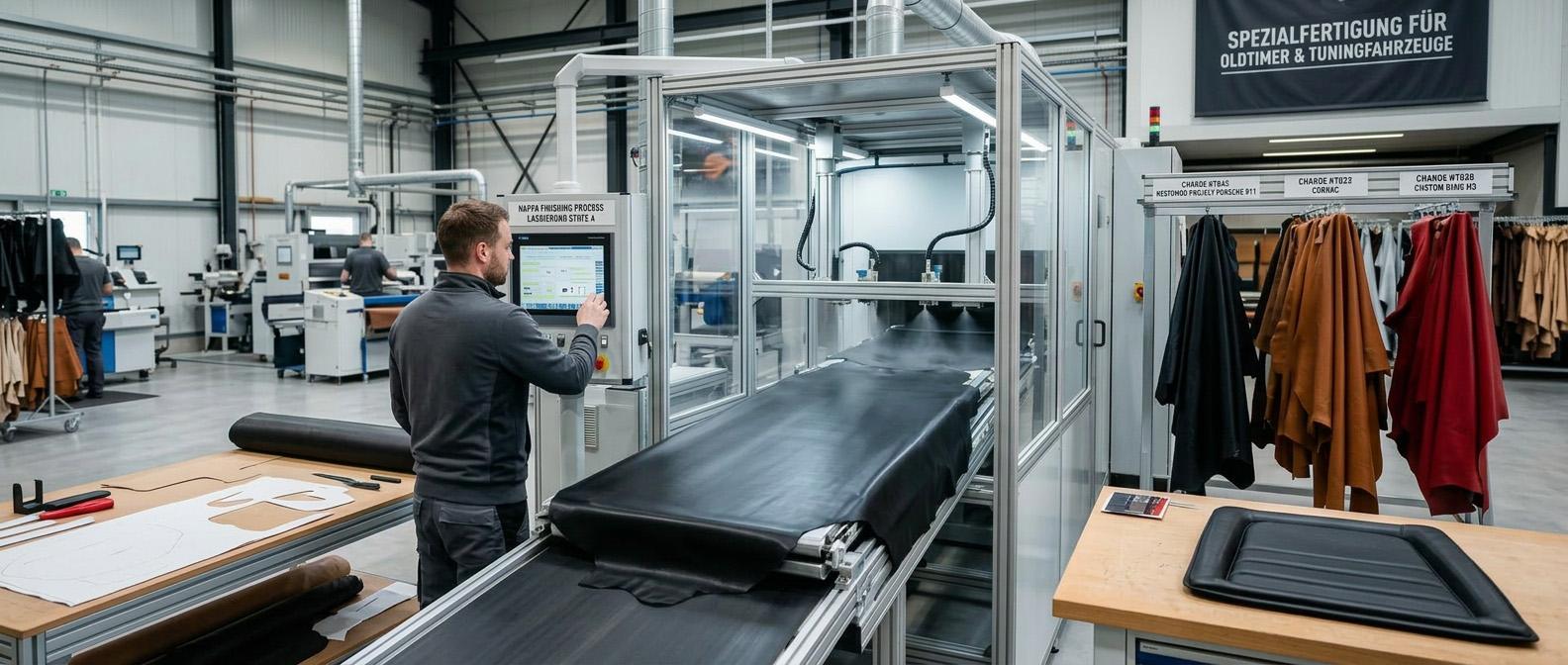
Elevate your restoration. Bespoke car leather for classics & tuning. OEM standards, UV protection & 3 color samples. Quality by ProjectLeather.
01/05/2026
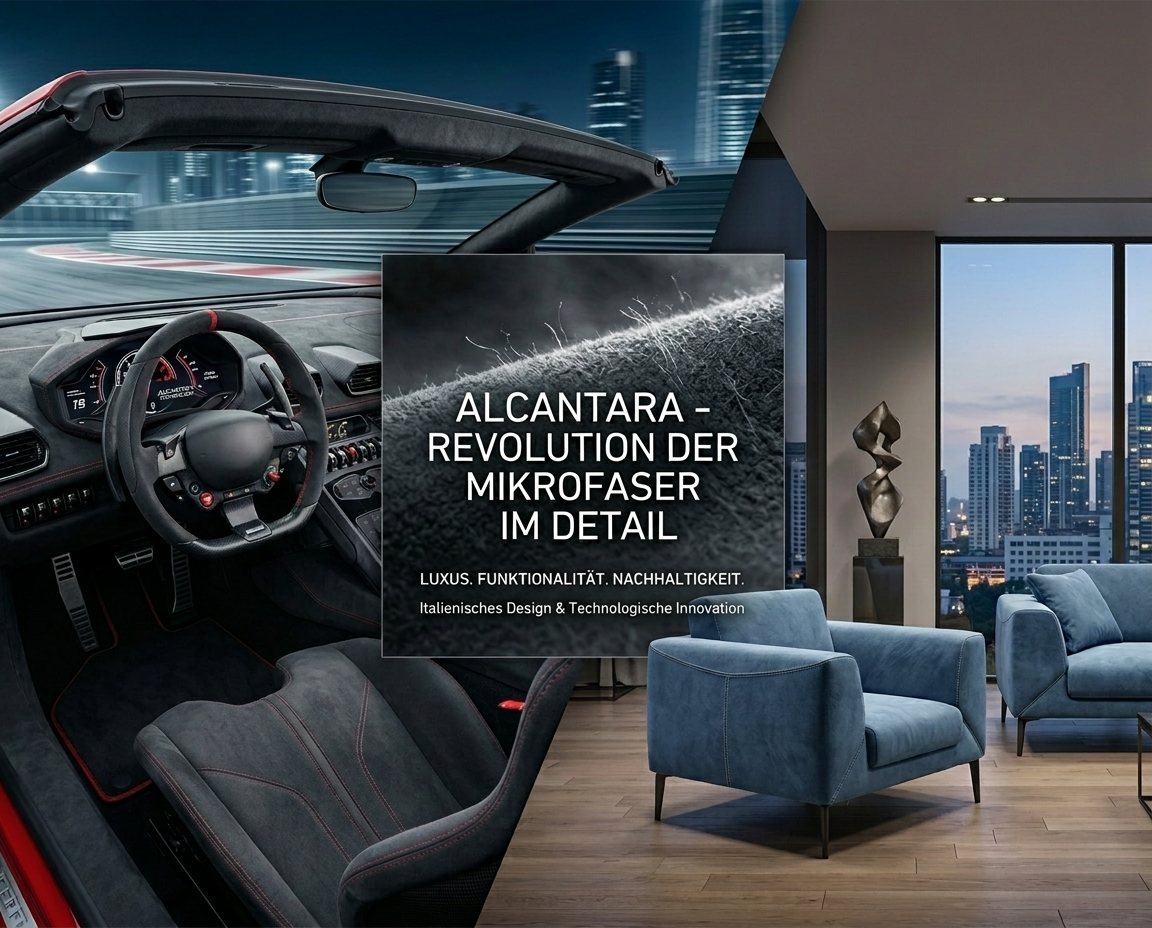
Discover the fusion of Italian style and high-tech fibers. Learn why Alcantara is the ultimate choice for automotive and furniture excellence.