
18/05/2026
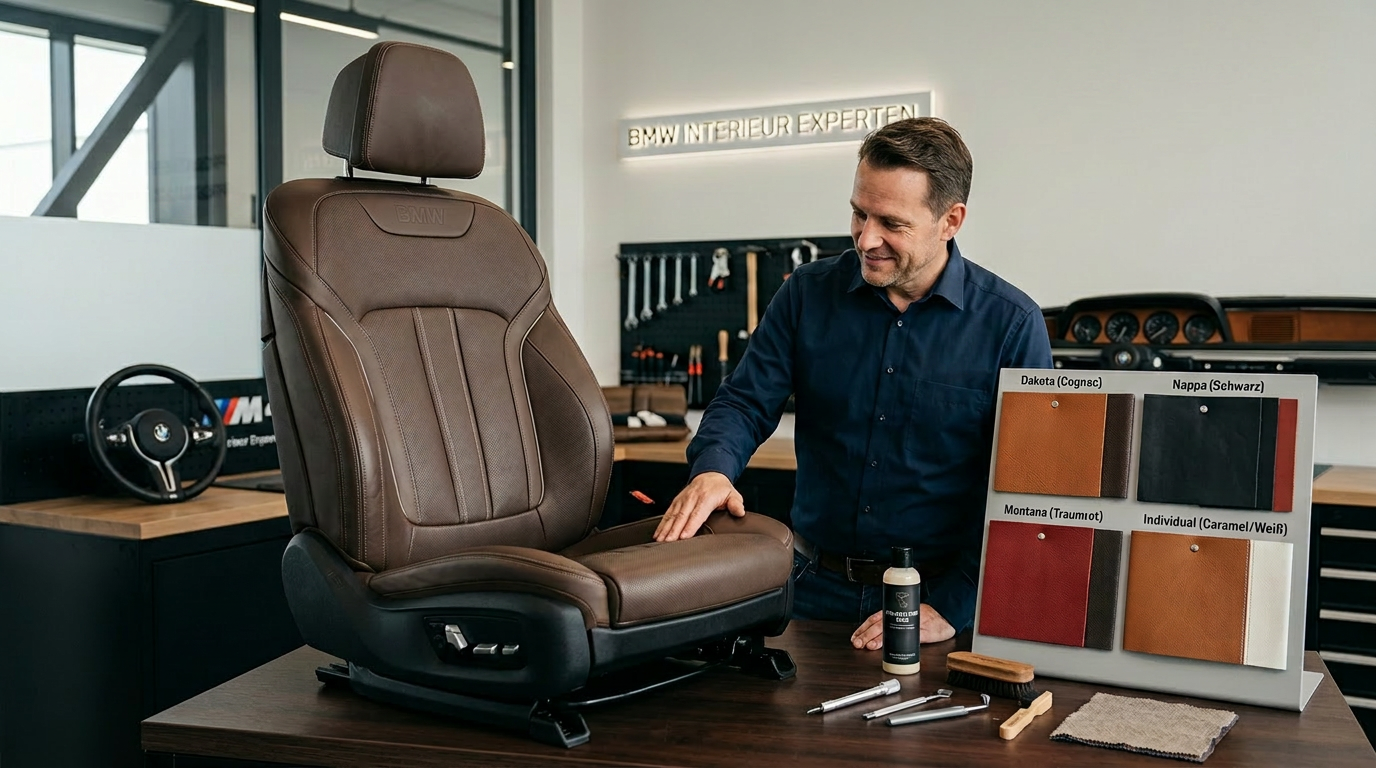
BMW Leather Guide: From Dakota to Individual
The evolution of Bavarian interior culture. Discover material properties, value retention, and authentic restoration at ProjektLeder.


Leather. Faux leather. Fabrics - Genuine quality.
€59.50
Content: 1 lenear metre / €59.50
Available, delivery time: 2-5 days
Contemporary design meets smart surface protection: skai® Tovega EN was developed specifically for hygiene-sensitive, high-traffic environments. The material carries Peta's "Vegan approved" certification. Thanks to the innovative staynu technology, persistent staining becomes a thing of the past, while the fine micro-pore structure gives the surface a smooth, professional finish.
Tovega EN meets fire safety class B1, satisfying strict standards (DIN 4102 B1, EN 1021 1+2) required for public buildings. The idea behind staynu is a special surface seal that stops dirt from penetrating the material, keeping it on the surface instead:
Tovega EN stands out not only for its clean surface but also for what's underneath — a durable, responsible choice for modern interior projects.
Its soft handling makes Tovega EN easy to process for virtually any type of upholstery.
Combining hygiene with durability, Tovega EN has become the go-to choice across several industries:
In summary: skai® Tovega EN | staynu is the design-forward answer to the toughest hygiene and durability requirements. For anyone looking for a long-lasting, low-maintenance and visually appealing surface for healthcare or hospitality settings, this premium material is hard to overlook.
Simply request samples. Up to 3 samples are free of charge.
| Eigenschaft | Wert | Beschreibung |
|---|---|---|
| Product number: | Skai_Tovega-pearl | |
| Characteristics: | abriebfest, blutbeständig, dehnfähig, desinfekionsmittelbeständig, erfüllt Medizinproduktgesetz, erfüllt Spielzeugnorm, fett- und ölbeständig, langlebig, lichtecht, lösungsmittelfrei, nachhaltig, pflegeleicht, phthalatfrei, schweißbeständig, Träger aus recycelter PES Faser, urinbeständig, VEGAN "approved", weich | |
Was versteht man unter den Eigenschaften bei echtem Leder, Kunstleder und Stoffen? Die Eigenschaften dieser Materialien beziehen sich auf ihre technischen, optischen, haptischen und funktionalen Merkmale, die ihre Eignung für bestimmte Einsatzzwecke bestimmen – z. B. Kleidung, Polster, Taschen, Möbel oder Fahrzeug-Innenausstattung. 1. Eigenschaften von echtem Leder Echtes Leder ist ein natürliches Material, das aus Tierhaut gewonnen wird – meist von Rind, Schwein oder Ziege. Typische Eigenschaften (Merkmale und Beschreibung): - Atmungsaktivität: Hoch – Leder "lebt" und lässt Luft durch - Strapazierfähigkeit: Sehr hoch, besonders bei Dickleder - Optik: Einzigartige Narbung, oft mit Patina - Haptik: Warm, weich, hochwertig - Wasserresistenz: Mittel – kann imprägniert werden - Pflegebedarf: Ab und an Lederpflege notwendig - Umweltaspekt: Naturprodukt 2. Eigenschaften von Kunstleder Kunstleder (PU, PVC) ist ein synthetisch hergestelltes Imitat von echtem Leder. Typische Eigenschaften (Merkmal und Beschreibung): - Atmungsaktivität: Gering, abhängig vom Produkt - Strapazierfähigkeit: Sehr gut, abhängig von der Qualität - Optik: Gleichmäßig, kann echtes Leder gut imitieren - Wasserresistenz: Hoch – sehr pflegeleicht - Pflegebedarf: Niedrig – einfach abwischbar - Umweltaspekt: Meist aus Erdöl-basierten Kunststoffen, es gibt aber auch "Vegane Produkte) 3. Eigenschaften von Stoffen (Textilien) Stoffe bestehen aus natürlichen oder synthetischen Fasern, die gewebt, gestrickt oder gefilzt sind. Typische Eigenschaften (Merkmal und Beschreibung): - Atmungsaktivität: Hoch bei Baumwolle, Leinen etc. - Strapazierfähigkeit: Variiert stark je nach Faser & Verarbeitung - Optik: Große Vielfalt – von fein bis grob - Haptik: Weich, angenehm (z. B. bei Naturfasern) - Wasserresistenz: Meist gering, es sei denn speziell beschichtet - Pflegebedarf: Waschmaschinengeeignet, pflegeleicht - Umweltaspekt: Naturfasern nachhaltig, Synthetik oft kritisch Fazit – Eigenschaften von echtem Leder, Kunstleder und Stoffen in Worten zusammengefasst: Echtes Leder überzeugt durch seine hohe Atmungsaktivität, natürliche Haptik und außergewöhnliche Langlebigkeit. Es wirkt hochwertig und entwickelt mit der Zeit eine schöne Patina. Kunstleder ist eine günstigere Alternative, die optisch oft kaum von echtem Leder zu unterscheiden ist. Es ist pflegeleicht, wasserabweisend und gleichmäßig in der Optik. Dafür fehlt ihm die Atmungsaktivität, es fühlt sich etwas kälter und künstlicher an. Stoffe sind sehr vielfältig in Aussehen und Eigenschaften. Sie sind meist atmungsaktiv, angenehm auf der Haut und pflegeleicht. Ihre Strapazierfähigkeit variiert jedoch stark – je nach Faserart und Verarbeitung. Naturfasern wie Baumwolle oder Leinen gelten als besonders nachhaltig, während synthetische Stoffe eher kritisch zu bewerten sind. Kurz auf den Punkt gebracht: Echtes Leder steht für Natürlichkeit und Langlebigkeit, Kunstleder für Funktionalität und Pflegeleichtigkeit, und Stoffe für Vielseitigkeit und Komfort. | ||
| Fire behavior: | BS 5852 IS-0+1, FMVSS302 Brandverhalten von Materialien im Fahrzeuginnenraum, IMO FTPC 2010 Part 8 , IMO Resolution 0161/2025, schwer entflammbar | |
What is meant by fire behavior in genuine leather, synthetic leather, and fabrics? Fire behavior describes how a material reacts to fire or high heat exposure – such as whether it burns, how quickly it ignites, whether it drips, smokes, or releases toxic gases. This property is particularly important when selecting materials for furniture, vehicle interiors, public buildings, aviation, or protective clothing. In many areas of application, binding standards such as DIN, EN, and ISO apply, which define, test, and classify the fire behavior of materials. Genuine Leather Genuine leather is naturally flame-resistant and typically only burns under direct, prolonged flame exposure. It chars when burning and does not form melting drips. Chrome-tanned leather may show improved fire performance. Relevant standards for upholstery leather and furniture leather include: - DIN EN ISO 8191-1 / -2: Fire behavior of upholstered furniture – ignition source cigarette and match - DIN EN 1021-1 / 1021-2: Ignitability of upholstered furniture by smoldering cigarettes and small open flames - DIN EN ISO 6940 / 6941: Determination of vertical flame spread of textiles and composite materials such as coated leather - DIN EN ISO 4589-2: Oxygen index for assessing flammability of leather - ISO 3795 / DIN 75200: Burning behavior of materials in automotive interiors (e.g. leather seats or door panels) - FAR 25.853: Standard for materials used in aircraft (for aircraft-grade upholstery leather) In many applications, genuine leather meets the requirements for flame resistance even without additional flame-retardant treatments. Synthetic Leather Synthetic leather is usually made from polyurethane (PU) or polyvinyl chloride (PVC) and exhibits critical fire behavior without treatment: melting, dripping, and smoke development are possible. Its exact reaction depends on the material composition and any flame-retardant additives used. High-quality synthetic leather is often tested according to the following standards: - DIN EN 1021-1 and 1021-2 (Ignition behavior of upholstered furniture) - DIN 4102-B1/B2 (Building products: flame-resistant/normal flammability) - ISO 3795 / DIN 75200 (Automotive interiors) - FMVSS 302 (U.S. standard for vehicle interiors) Fabrics (Textiles) The fire behavior of textiles varies significantly depending on fiber type and treatment: - Cotton burns easily - Polyester melts and drips - Wool is relatively flame-resistant Textiles can also be treated with flame retardants. Relevant standards include: - DIN EN 13501-1 (Fire classification of construction products) - DIN EN 1021-1 / 1021-2 (Ignitability of upholstered furniture) - DIN 4102-B1/B2 (Classic fire protection standard) - DIN EN ISO 6940 / 6941 (Flame spread tests) - NF P92-503 (French classification M1–M4) - FAR 25.853 (Aviation standard) Conclusion: Fire behavior is a key safety criterion in material selection. Genuine leather is naturally relatively flame-resistant and often meets regulatory requirements without additional chemicals. In contrast, synthetic leather and textiles usually require flame-retardant treatment to comply with standards such as DIN EN 1021, DIN 4102, ISO 6941, or FAR 25.853. In public, commercial, or safety-critical areas, compliance with these standards is essential. | ||
| Material composition: | 89 % PVC Compound, ca. 11 % Recycling PES Gestrick | |
Was versteht man unter Materialzusammensetzung bei Kunstleder und Stoffen? Die Materialzusammensetzung beschreibt, aus welchen Rohstoffen ein Material besteht – also die prozentuale Aufteilung der einzelnen Komponenten, aus denen ein Stoff oder ein Kunstleder hergestellt wurde. Diese Information ist wichtig für: Pflegehinweise Tragekomfort / Haptik Haltbarkeit / Strapazierfähigkeit Nachhaltigkeit / Recyclingfähigkeit Allergiepotenzial 1. Materialzusammensetzung bei Kunstleder Kunstleder ist ein synthetisches Material, das echtes Leder optisch und haptisch imitieren soll. Typischerweise besteht es aus zwei Hauptbestandteilen: Trägermaterial (Textilbasis): Meist Polyester oder Baumwollgewebe Beschichtung (Deckschicht): Meist PVC (Polyvinylchlorid) oder PU (Polyurethan) Beispiel für die Materialzusammensetzung eines Kunstleders: 60 % Polyurethan (PU), 40 % Polyester 2. Materialzusammensetzung bei Stoffen (Textilien) Bei Stoffen gibt die Zusammensetzung an, welche Fasern in welchem Anteil verwendet wurden. Das ist bei Kleidung, Möbelbezügen oder Vorhängen üblich. Naturfasern: Baumwolle, Wolle, Leinen, Seide Synthetische Fasern: Polyester, Polyamid, Elastan, Acryl Beispiel für die Materialzusammensetzung eines Kleidungsstücks: 80 % Baumwolle, 18 % Polyester, 2 % Elastan Warum ist das wichtig? - Für die richtige Pflege (Waschanleitung, Bügeln) - Für Allergiker oder Menschen mit empfindlicher Haut - Für umweltbewusste Entscheidungen (z. B. Vermeidung von Mikroplastik) - Für die Beurteilung der Qualität oder Haltbarkeit | ||
| Thickness: | 1.3 +/- 0.2 mm | |
What is meant by thickness in genuine leather, imitation leather, and fabrics? Thickness is the physical height of a material, measured in millimeters (mm). It directly influences the robustness, flexibility, suitability for processing, and intended use of a material—be it genuine leather, imitation leather, or textiles. 1. Thickness in Genuine Leather Genuine leather is a natural product and varies in thickness depending on the animal species, its position on the hide, and the finishing process. It is measured in mm or oz (ounces per square foot, especially in English-speaking countries). Common thickness ranges: - Fine leather (e.g., gloves, clothing) 0.5 – 1.0 mm - Bags, accessories 1.2 – 2.0 mm - Belts, straps 3.0 – 4.0 mm - Saddle or tool leather 4.0 mm and more Thickness significantly affects stiffness and the range of applications. 2. Thickness of Synthetic Leather Synthetic leather usually consists of a backing fabric and a coating (e.g., PU or PVC). The thickness is determined by the combined height of both layers. Typical values: - Lightweight synthetic leather (e.g., clothing) 0.5 – 0.8 mm - Upholstery synthetic leather 0.9 – 1.2 mm - Automotive or outdoor 1.2 – 2.0 mm Thicker synthetic leather is more durable but more difficult to sew. 3. Thickness of Fabrics The thickness of fabrics is less frequently specified directly, but it is certainly relevant in technical textiles or for specific applications. The thickness depends heavily on the material, weave, and finish. Fabric Types - Lightweight fabrics (e.g., chiffon) 0.1–0.3 mm - Cotton fabrics 0.3–0.6 mm - Denim 0.6–1.0 mm - Fleece, softshell 1.0–2.5 mm - Technical upholstery fabrics up to 5 mm or more Thickness affects drape, thermal performance, and sewability. Conclusion: Thickness and Weight Two materials can have the same thickness but different weights (e.g., airy vs. dense structure). Conversely, a material can be heavy but thin (e.g., tightly woven nylon). | ||
| Weight: | 740 (+/- 50) g/m² | |
Was versteht man unter dem Gewicht pro Quadratmeter (g/m²) bei Kunstleder und Stoffen? Das Gewicht pro Quadratmeter (auch Flächengewicht genannt) gibt an, wie schwer ein Quadratmeter eines Materials ist, gemessen in Gramm pro Quadratmeter (g/m²). Es ist ein wichtiges Qualitäts- und Anwendungskriterium für textile Materialien und Kunstleder. 1. Bedeutung bei Kunstleder Beim Kunstleder zeigt das Gewicht pro m²: - Dicke & Strapazierfähigkeit: Ein höheres Gewicht deutet oft auf ein robusteres, dickeres Material hin. - Haptik & Verarbeitung:Schwereres Kunstleder fühlt sich oft hochwertiger an, ist aber weniger flexibel. Einsatzbereiche: - 300–400 g/m²: dünnes, flexibles Kunstleder für Bekleidung oder Deko - 500–800 g/m²: Standard für Möbel oder Fahrzeuginterieur - 800–1.200+ g/m²: sehr robust für Taschen, Sitzbezüge, Outdoor-Anwendungen 2. Bedeutung bei Stoffen Bei Stoffen beeinflusst das Gewicht: - Transparenz / Blickdichte - Wärmeleistung - Faltenwurf & Fall - Verwendungszweck Warum ist das Gewicht pro m² wichtig? - Vergleichbarkeit: Zwei Stoffe aus gleichem Material können sich unterschiedlich anfühlen – das Gewicht macht den Unterschied. - Verarbeitung: Für Näharbeiten oder Polsterprojekte muss man wissen, ob das Material zu schwer oder zu leicht ist. - Qualitätsmerkmal: Oft (aber nicht immer) steht ein höheres Gewicht für bessere Qualität. | ||
| Width: | 140 cm ± 2% | |
Breite bei Kunstleder & Stoffen Die Breite gibt die nutzbare Materialbreite pro Rolle an (meist in cm). Wichtig für Zuschnitt, Verschnittminimierung und Flächenberechnung. Typische Breiten: Kunstleder: 140 cm (Standard), 150–160 cm (Taschen/Sattel), Sondermaße 120–180 cm. Achtung: Nicht dehnbar – Nutzbreite kann durch Beschichtung leicht abweichen. Stoffe: 140 cm (Bekleidung/Deko), 150–160 cm (Jersey, Leinen), 280–300 cm (Bettwäsche/Vorhänge). Unter 100 cm bei Spezialstoffen. Warum ist die Breite wichtig? Bestimmt die benötigte Länge für deine Fläche (z. B. 2 m × 140 cm = 2,8 m²). Große Breiten sparen Verschnitt (z. B. für durchgehende Vorhänge oder Polster). Bei dehnbaren Stoffen: Nutzbreite kann etwas kleiner sein als angegeben. Tipp: Miss deine Schnittteile vor dem Kauf – so vermeidest du Überraschungen! | ||
| Gewicht: | 2.5 kg | |
 | Blog
18/05/2026
The evolution of Bavarian interior culture. Discover material properties, value retention, and authentic restoration at ProjektLeder.

Discover why genuine leather is the most sustainable choice. Learn about longevity, haptics, and eco-friendly production at ProjektLeder.

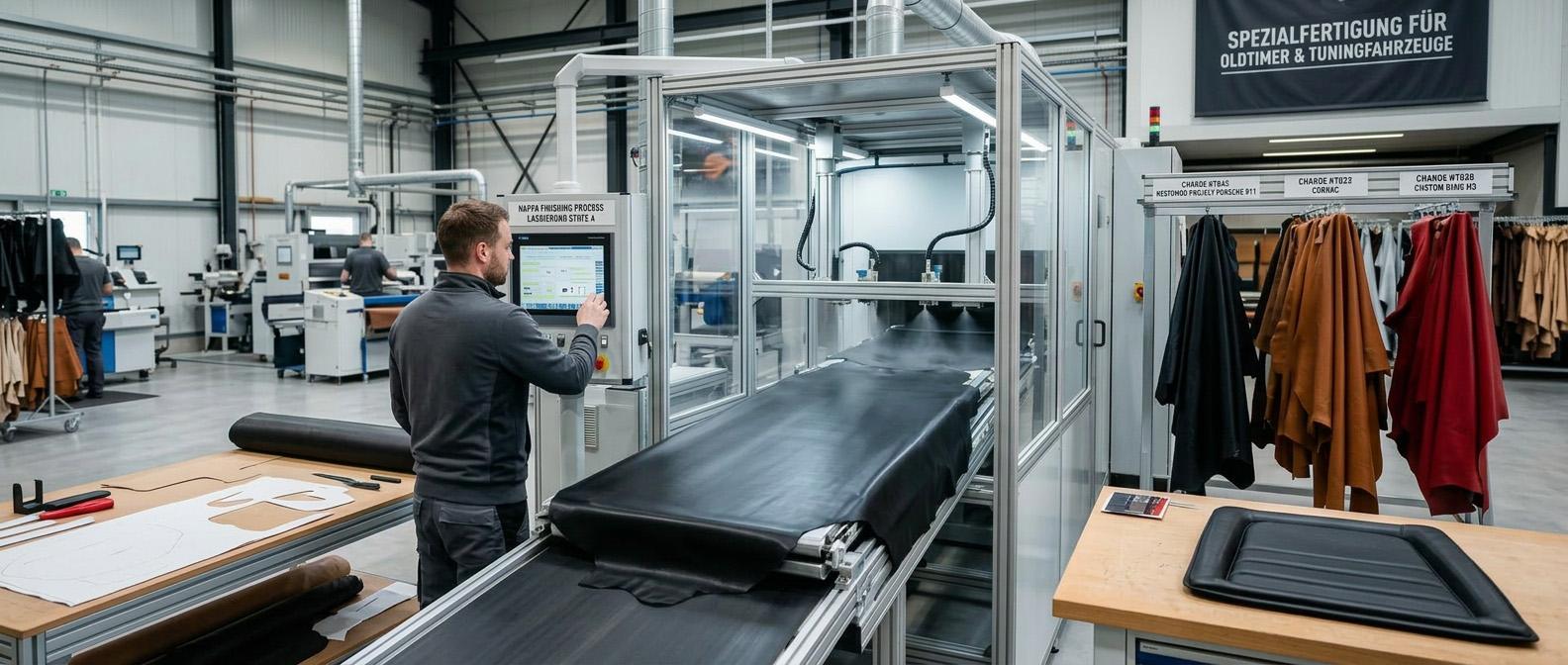
Elevate your restoration. Bespoke car leather for classics & tuning. OEM standards, UV protection & 3 color samples. Quality by ProjectLeather.
01/05/2026
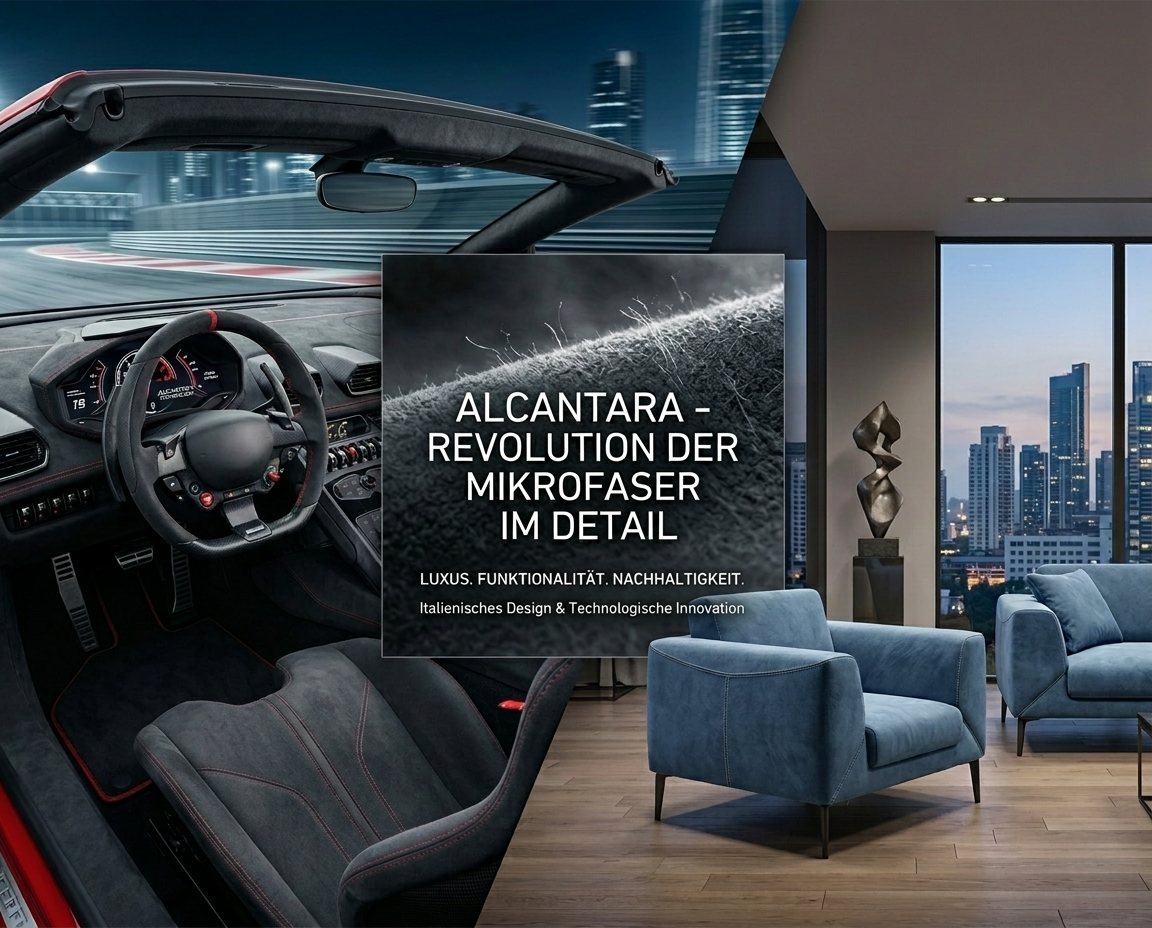
Discover the fusion of Italian style and high-tech fibers. Learn why Alcantara is the ultimate choice for automotive and furniture excellence.